How Does Smoking Affect Dental Implants?
Dental implants are a marvel of modern dentistry. They are the gold standard for replacing missing teeth, offering a level of stability, function, and aesthetics that dentures and bridges simply cannot match. The process relies on a remarkable biological phenomenon called osseointegration, where the titanium implant fuses directly with the living bone of your jaw.
However, this intricate healing process is not guaranteed. It requires a healthy environment to succeed. This is where lifestyle factors come into play, and none is more significant than smoking.
If you are a smoker considering dental implants, you have likely heard that it could be a problem. The advice is not meant to judge or scold; it is grounded in decades of clinical evidence. The purpose of this guide is to provide a clear, honest, and detailed explanation of exactly how smoking affects dental implants, why the risks are so serious, and what your options are.
The Science of Osseointegration: Why a Healthy Environment Matters
To understand the impact of smoking, it helps to understand what your body is trying to do after an implant is placed.
After the titanium post is inserted into the bone, the healing process begins. The goal is for the surrounding bone cells to grow and attach directly to the surface of the implant, locking it firmly in place. This is not a superficial connection; it is a structural one. For this to happen, the bone needs a constant, rich supply of oxygen and nutrients, delivered by a healthy network of blood vessels.
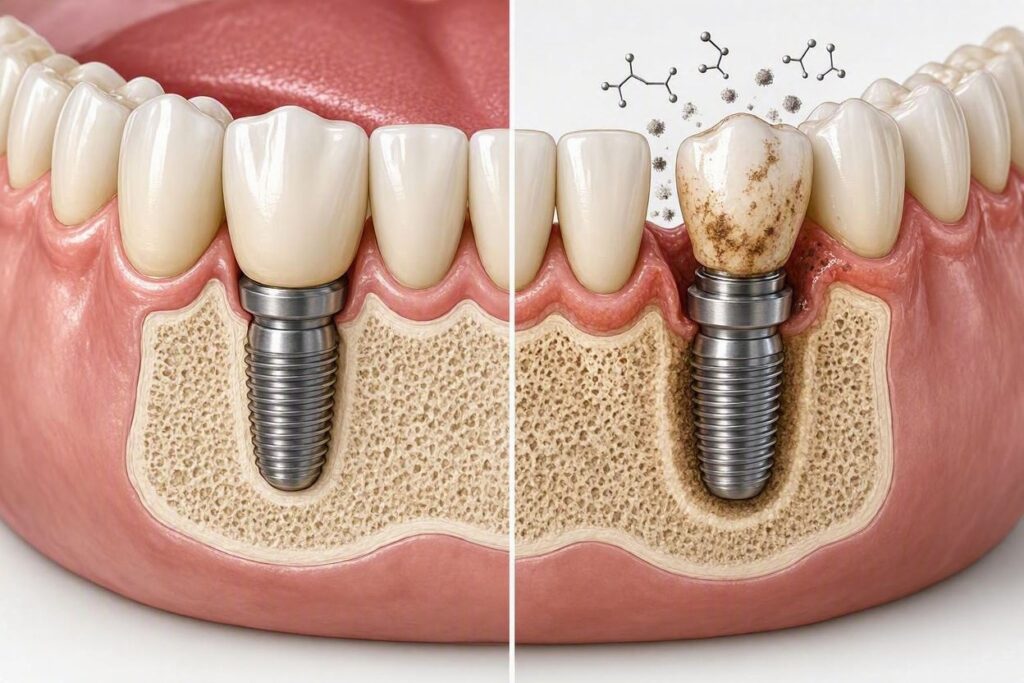
Anything that compromises this blood supply will compromise the healing process. This is the fundamental problem with smoking. The chemicals in cigarette smoke, particularly nicotine and carbon monoxide, are known to constrict blood vessels and reduce the oxygen-carrying capacity of the blood. In essence, smoking starves the healing bone of the very resources it needs to integrate with the implant.
The Direct Impact of Smoking on Your Dental Implant
The negative effects of smoking are not theoretical; they are measurable and well-documented. They touch every stage of the implant process, from the initial surgery to the long-term maintenance of the restoration.
Reduced Blood Flow and Impaired Healing
As mentioned, nicotine is a powerful vasoconstrictor. It causes the blood vessels in the gums and jawbone to narrow. This reduces the amount of blood reaching the surgical site. With less blood flow, the area receives fewer oxygen and immune cells. This leads to slower healing, a higher risk of infection, and a more uncomfortable recovery period. The body’s natural repair process is directly inhibited.
Higher Risk of Infection (Peri-implantitis)
Peri-implantitis is an inflammatory disease that affects the tissues around an integrated dental implant. It is similar to gum disease (periodontitis) but occurs around implants. It starts with inflammation of the gums (peri-implant mucositis) and, if left untreated, progresses to the destruction of the bone supporting the implant.
Smoking is a primary risk factor for this devastating condition. The reduced blood flow and compromised immune response make it much harder for the body to fight off the bacteria that cause the infection. Studies have shown that smokers have a significantly higher risk of developing peri-implantitis, which can lead to bone loss, implant loosening, and ultimately, implant failure.
Increased Risk of Early Implant Failure
The most critical period for an implant is the healing phase, where osseointegration is occurring. Because smoking directly hinders this process, the risk that the bone will fail to fuse with the implant is substantially higher in smokers. If this fusion fails, the implant will become loose and must be removed.
The statistics are revealing. Research has consistently shown that the dental implant failure rate for smokers is considerably higher than for non-smokers. While a non-smoker might face a failure rate of 1-3 percent, a smoker’s risk can be double, triple, or even higher, depending on the study and the number of cigarettes smoked.
Long-Term Bone Loss and Implant Longevity
The detrimental effects of smoking do not stop once the implant has successfully healed. The ongoing assault on the bone and gum tissue continues. Smokers are more prone to the chronic, progressive bone loss associated with peri-implantitis. This can compromise the long-term stability of the implant, leading to its loss years after it was successfully placed. Smoking essentially shortens the lifespan of a dental implant.
Here is a comparison of the potential outcomes for smokers versus non-smokers.
| Factor | Non-Smoker | Smoker |
|---|---|---|
| Blood Flow to Gums & Bone | Normal, healthy. | Significantly reduced due to nicotine. |
| Healing Speed | Normal and predictable. | Slower, with a higher risk of complications. |
| Risk of Post-Op Infection | Low. | Significantly higher. |
| Risk of Early Implant Failure | Low (often below 3%). | Elevated (can be several times higher). |
| Risk of Long-Term Bone Loss (Peri-implantitis) | Lower, but still possible with poor hygiene. | Much higher, leading to long-term failure risk. |
| Overall Implant Success Rate | Very high (over 95% over 10 years). | Noticeably lower, with compromised longevity. |
How Much Smoking is Too Much?
There is no “safe” level of smoking when it comes to dental implants. The body’s healing response is sensitive, and even “light” smoking has a negative impact.
However, the risk is dose-dependent. This means the more you smoke, the greater the danger.
- Heavy Smokers (a pack a day or more): This group faces the highest risk. The constant presence of nicotine and other chemicals in the system severely impairs healing and the immune response. Many surgeons are hesitant to place implants in heavy smokers without a strict commitment to quitting.
- Light Smokers (a few cigarettes a day): While the risk is lower than for a heavy smoker, it is still significantly higher than for a non-smoker. There is no threshold below which smoking has no effect.
The habit of smoking is more than just the nicotine. The act of drawing on a cigarette creates a negative pressure in the mouth, which can also dislodge the blood clot that forms after surgery, leading to a painful condition known as dry socket. This is another reason why smoking is strongly prohibited in the immediate post-operative period.
Is it Different with Vaping or E-Cigarettes?
This is a common question, and the assumption is often that vaping is a safer alternative. The reality is more complex. While vaping may not contain the thousands of harmful chemicals found in tobacco smoke, it almost always contains nicotine. Since nicotine is the primary culprit in reducing blood flow and impairing healing, vaping is not a safe alternative for dental implant patients.
The heat and chemicals in the vapor can also irritate the delicate gum tissue and dry out the mouth, which is not conducive to healing. If you are considering dental implants, it is best to avoid both smoking and vaping.
The Critical Timeline: Before and After Your Surgery
If you are a smoker and want to get a dental implant, the most important advice you can receive is to quit. The timing of this is crucial.
Quitting Before the Implant Surgery
You should aim to be smoke-free for a significant period before your surgery. Many dental professionals recommend quitting at least two weeks before the implant placement. This gives your body time to begin clearing the carbon monoxide and other toxins from your system, allowing blood flow to start improving. The longer the period of cessation before surgery, the better your body will be prepared for the healing process.
The Strict No-Smoking Window After Surgery
The absolute most critical time to avoid smoking is in the days and weeks immediately following your surgery. This is when the initial healing and blood clot formation are happening. Smoking during this period dramatically increases the risk of infection, dry socket, and failed osseointegration.
Most dentists will advise a strict no-smoking period of at least two to eight weeks after the implant is placed. This is the window where the foundation for success is laid.
The Long-Term Commitment
A dental implant is a lifelong investment. To protect that investment, the best long-term strategy is to quit smoking for good. Continuing to smoke after a successful implant placement significantly increases the risk of developing peri-implantitis, which can cause you to lose the implant many years down the road.
A Note of Encouragement: Quitting smoking is one of the most difficult things a person can do, but also one of the most beneficial. It is a profound act of self-care. If you are finding it hard, do not be ashamed. Talk to your doctor or dentist about resources, such as nicotine replacement therapy, counseling, or support groups. Your dental team wants you to succeed and can offer guidance and support throughout the process.
Conclusion
The evidence is clear and overwhelming: smoking has a profoundly negative impact on the success and longevity of dental implants. It undermines the fundamental biological process of osseointegration by restricting blood flow, starving the healing bone of vital oxygen and nutrients. This leads to a higher risk of infection, a greater chance of early implant failure, and a significant vulnerability to long-term bone loss from peri-implantitis.
While quitting is difficult, it is the single most important thing you can do to ensure your dental implant is a lasting success. Your dental implant is an investment in your health, and giving up smoking is the best way to protect it.
Frequently Asked Questions
Can I have a dental implant if I am a smoker?
Yes, but your risk of complications and implant failure is significantly higher. Many dentists will perform the procedure, but they will strongly advise you to quit smoking for a period of time before and after the surgery to improve your chances of success.
How long should I stop smoking before dental implant surgery?
Most dental professionals recommend that you stop smoking at least two weeks before your scheduled surgery. A longer period, such as a month or more, is even better as it allows your body more time to recover its natural healing capacity.
What happens if I smoke right after getting a dental implant?
Smoking in the immediate days after surgery is extremely risky. It can restrict blood flow, prevent proper healing, dislodge the protective blood clot (causing dry socket), and dramatically increase the risk of infection and early implant failure.
Are the effects of smoking on implants permanent?
The negative effects are not necessarily permanent if you quit. Your body has an incredible ability to heal. Blood flow can improve, and the immune system can begin to function more effectively once you stop smoking. Quitting at any point will benefit your oral and overall health.
Does nicotine gum or patches affect dental implants?
While these are better than smoking, they still deliver nicotine to your system, which can impair healing. It is best to discuss all forms of nicotine replacement with your dentist, with the ultimate goal of becoming nicotine-free before your procedure.
Additional Resource
For more information and support on quitting smoking, please visit the CDC’s dedicated resource page: https://www.cdc.gov/tobacco/campaign/tips/quit-smoking/index.html