Can Dental Implant Crowns Be Replaced?
A dental implant crown is the visible, tooth-shaped restoration attached to the implant body. It is subjected to years of chewing forces, dietary staining, and the same oral environment as natural teeth. No dental crown, whether on a natural tooth or an implant, is a permanent, lifetime restoration. Implant crowns can and frequently do require replacement. The question is not whether replacement is possible—it is routine—but when and why it becomes necessary, how the procedure is performed, and what the replacement costs. This guide provides a comprehensive explanation of implant crown replacement, from the clinical reasons to the step-by-step procedure and the financial considerations.
The Distinction: Implant Crown vs. Implant Body
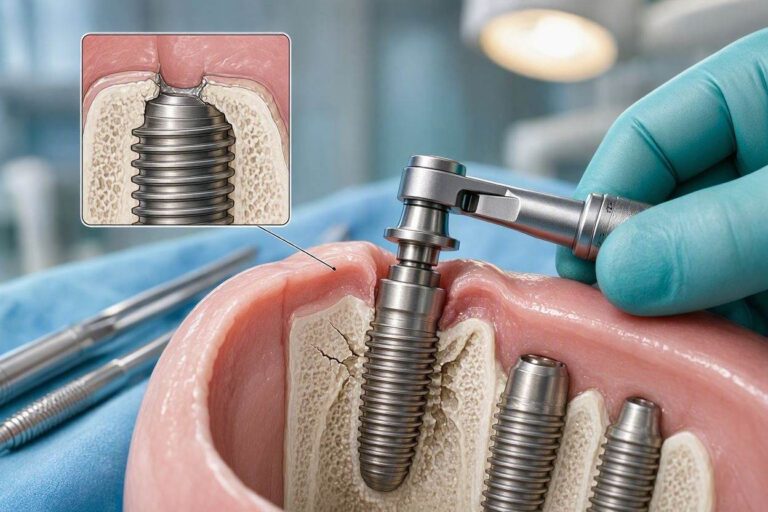
The implant complex consists of three distinct components. The implant body is the titanium or zirconia fixture osseointegrated into the jawbone. The abutment is the connector that screws into the implant body and emerges through the gum tissue. The crown is the visible tooth that is either cemented onto the abutment or screwed directly into the implant body.
When a crown fails or requires replacement, the implant body and often the abutment remain healthy and stable in the bone. Replacing the crown does not require removing the implant. This is a fundamental advantage of implant dentistry. The biological foundation is permanent; the prosthetic superstructure is replaceable.
Reasons for Implant Crown Replacement
Implant crowns are replaced for a variety of biological, mechanical, and aesthetic reasons. Identifying the specific reason guides the replacement approach.
Porcelain Fracture or Chipping
The most common reason for implant crown replacement is material failure. Porcelain fused to metal or layered over zirconia can chip or fracture. A minor chip at the incisal edge may be repairable with composite resin bonding without crown replacement. A major fracture that exposes the underlying metal or zirconia framework, or a fracture that extends below the gumline, requires crown replacement.
Full-zirconia monolithic crowns have dramatically reduced the incidence of porcelain chipping, but they are not indestructible. A severe occlusal overload can fracture even a solid zirconia crown.
Aesthetic Deterioration or Desire for Upgrade
The patient may be dissatisfied with the appearance of the original crown. An older porcelain-fused-to-metal crown may show a dark gray margin at the gumline as the tissue recedes slightly with age. The ceramic may have lost its glaze and luster after years of abrasive toothpaste and dietary acids. The shade may no longer match the adjacent natural teeth, which have darkened or been whitened.
A patient who received an implant crown years ago may desire a new crown with modern, high-translucency materials like layered zirconia or lithium disilicate, which offer superior aesthetics.
Screw Loosening or Prosthetic Screw Failure
In screw-retained implant crowns, the prosthetic screw that secures the crown to the implant body can loosen over time. Simple screw loosening does not require crown replacement; the dentist cleans and retorques the screw. However, if the screw has repeatedly loosened, the screw threads in the implant body may be worn or damaged. If the screw fractures and the fragment cannot be retrieved, the implant may be non-restorable through the original screw channel, and a new crown with a custom-milled abutment or an alternative retention method may be necessary.
Changes in the Peri-Implant Soft Tissue or Bone
Over years, the gum tissue and bone around the implant may remodel. Minor recession can expose the abutment margin or the implant collar. If the original crown contour no longer harmonizes with the new soft tissue architecture, a new crown with a modified emergence profile and a different margin position can restore the aesthetic appearance.
Crown Margin Caries or Decementation
Although the implant crown itself cannot decay, the cement seal between a cemented crown and the abutment can fail. Bacteria and fluids penetrate the cement layer, leading to abutment corrosion or, in rare cases, microbial infiltration into the implant connection. A decemented crown that comes off in one piece can sometimes be cleaned and recemented. If the crown is damaged, or if the abutment is compromised, a new crown (and possibly a new abutment) is required.
The Replacement Procedure: Step-by-Step
Replacing an implant crown is a restorative procedure that does not involve surgery on the bone. It is less invasive and less costly than the initial implant placement.
Step 1: Removal of the Existing Crown
The method of removal depends on the retention type. A screw-retained crown is the simplest to remove. The dentist locates the access hole on the occlusal or lingual surface of the crown, removes the composite filling material covering the screw, and uses the appropriate driver to unscrew the prosthetic screw. The crown lifts off the implant. The implant connection is undamaged.
A cemented crown requires more effort. The dentist uses crown removal instruments, such as a crown remover with a sliding hammer or a pneumatic crown extractor, to break the cement seal. A small access hole may be drilled through the crown to allow insertion of a removal device. The crown is sectioned with a dental drill if necessary, cut into pieces, and removed. The underlying abutment is then inspected. If the abutment is intact and well-positioned, it may be retained. If the abutment is damaged during removal or is aesthetically compromised, it is unscrewed and replaced.
Step 2: Evaluation of the Implant Platform and Abutment
With the crown and possibly the abutment removed, the dentist inspects the implant platform under magnification. The internal connection is examined for damage, debris, or corrosion. The implant is probed to confirm osseointegration. A periapical X-ray is taken to verify the bone level around the implant and the absence of any pathology.
If the abutment is being retained, it is checked for fit, damage, and margin integrity. If a new abutment is required, the dentist selects or fabricates one that matches the implant system and the new crown design.
Step 3: Impression and Temporization
An impression is taken of the implant platform at the implant level (if the abutment was removed) or at the abutment level (if the abutment is retained). Digital intraoral scanning is increasingly the standard, capturing a precise three-dimensional image without physical impression material.
A temporary crown or healing abutment is placed to maintain the soft tissue contour and provide aesthetics during the laboratory fabrication period, which is typically 2 to 4 weeks.
Step 4: Delivery of the New Crown
The new crown is tried in. The fit, shade, contour, and occlusion are evaluated. Adjustments are made. For a screw-retained crown, the prosthetic screw is torqued to the manufacturer’s specification, and the access hole is sealed with composite and a cotton pellet. For a cemented crown, the crown is cemented onto the abutment with a definitive cement, and all excess cement is meticulously removed.
A final X-ray confirms complete seating of the restoration and the absence of residual cement.
The Cost of Implant Crown Replacement
The replacement of an implant crown is a separate restorative procedure with its own fee. The cost is not covered by the initial implant placement fee, which was for the original surgical and restorative treatment.
| Replacement Scenario | Fee Range (Cash, Per Crown) |
|---|---|
| Screw-Retained Crown, Simple Replacement (No Abutment Change) | $1,200 – $2,000 |
| Cemented Crown, Requires Abutment Removal and New Abutment | $1,500 – $2,500 |
| Full Zirconia or e.max Crown, New Custom Abutment | $1,800 – $3,000 |
| Complex Replacement Involving Soft Tissue Grafting for Recession | $2,500 – $5,000+ |
These fees are for the restorative phase only. They do not involve surgery on the implant body.
Dental Insurance Coverage for Replacement
Dental insurance coverage for implant crown replacement is subject to the plan’s frequency limitations for major restorative services. A typical PPO plan will cover a replacement crown after a specified period, often 5 to 7 years from the original crown’s placement date. If the crown is being replaced within a shorter timeframe, the plan may deny the claim, attributing the failure to the original provider or to patient factors.
If the plan covers the replacement, it applies the major service coinsurance (typically 50% of the allowed amount) and the remaining annual maximum. The patient’s out-of-pocket cost is similar to the original crown’s cost-share.
How to Maximize the Lifespan of an Implant Crown
The service life of an implant crown is determined by the material, the occlusion, and the patient’s maintenance and habits.
Material Selection
Monolithic zirconia crowns are the most fracture-resistant. Lithium disilicate (e.max) offers excellent aesthetics and good strength for anterior and premolar sites. Porcelain-fused-to-metal has the longest track record but is susceptible to porcelain chipping. The choice of material at the initial restoration influences the replacement interval.
Occlusal Management
The implant crown must be in proper occlusion. The dentist adjusts the bite so that the implant crown has lighter contact than the natural teeth during heavy clenching. The patient must report any changes in bite sensation immediately. A night guard is mandatory for patients with diagnosed bruxism (grinding or clenching). The guard absorbs the destructive forces and protects the implant crown and the natural teeth.
Professional Maintenance and Home Care
The patient must maintain meticulous home care, with interdental cleaning around the implant crown daily, and attend professional maintenance visits every 3 to 6 months. The hygienist debrides the crown and abutment surfaces with non-metal instruments and monitors the peri-implant tissue health. Plaque-induced peri-implantitis attacks the bone, not the crown, but bone loss can alter the soft tissue architecture and expose the crown margin, necessitating replacement.
Conclusion
Dental implant crowns can be routinely replaced without disturbing the osseointegrated implant body, using a restorative procedure that involves removing the existing crown, evaluating the abutment and implant platform, taking a new impression, and fabricating a new crown in the dental laboratory over 2 to 4 weeks. The most common reasons for replacement are porcelain fracture, aesthetic dissatisfaction, screw loosening complications, and soft tissue recession, with costs ranging from $1,200 to $3,000 depending on the need for a new abutment and the crown material. Maximizing the crown’s lifespan through proper material selection, occlusal protection with a night guard, and rigorous professional maintenance defers the replacement expense for a decade or more.
Frequently Asked Questions
How long does an implant crown typically last?
A well-fabricated and well-maintained implant crown has an average service life of 10 to 15 years, with many lasting significantly longer. Zirconia crowns are expected to exceed 15 years. Porcelain-fused-to-metal crowns average 10 to 15 years, with porcelain chipping being the primary failure mode. Patient factors, particularly bruxism and oral hygiene, heavily influence longevity.
Can I replace just the crown without changing the abutment?
Yes, if the existing abutment is undamaged, well-positioned, and compatible with the new crown design. The dentist removes the old crown, inspects the abutment, and takes an impression at the abutment level. A new crown is fabricated to fit the existing abutment. This is the most cost-effective replacement scenario.
Will my insurance pay to replace an implant crown that is only 3 years old?
Many dental plans have a frequency limitation of 5 to 7 years for crown replacement on the same tooth or implant. A crown failing at 3 years may be considered premature, and the plan may deny coverage or request documentation of the clinical reason for failure. A predetermination of benefits should be submitted before proceeding.
Is the replacement procedure painful?
No. The replacement of an implant crown does not involve the bone or the implant body. Local anesthesia is typically not required for a screw-retained crown removal. For a cemented crown, local anesthesia may be administered if the gum tissue is manipulated. The procedure is non-invasive and causes minimal to no postoperative discomfort.
Additional Resource
The American College of Prosthodontists provides a patient education section at gotoapro.org. A prosthodontist is a specialist in the restoration and replacement of teeth, including implant crowns. The site offers a “Find a Prosthodontist” tool, educational videos on implant crown materials, and guidance on maintaining implant restorations for maximum longevity.