Can Dental Implants Last Forever?
You are considering dental implants, or you already have them. The promise you have heard is seductive: a permanent solution. A tooth replacement that lasts a lifetime. No more decay. No more root canals. Just a titanium post and a beautiful crown that will serve you until your final days. Is this promise true? Can a dental implant truly last forever, or is that marketing hyperbole? This guide will provide an honest, evidence-based answer. We will explore the longevity of each component of an implant restoration, the factors that determine its lifespan, and the realistic expectations you should hold. By the end, you will understand the difference between a surviving implant and a successful, functional, aesthetic implant that endures for decades.
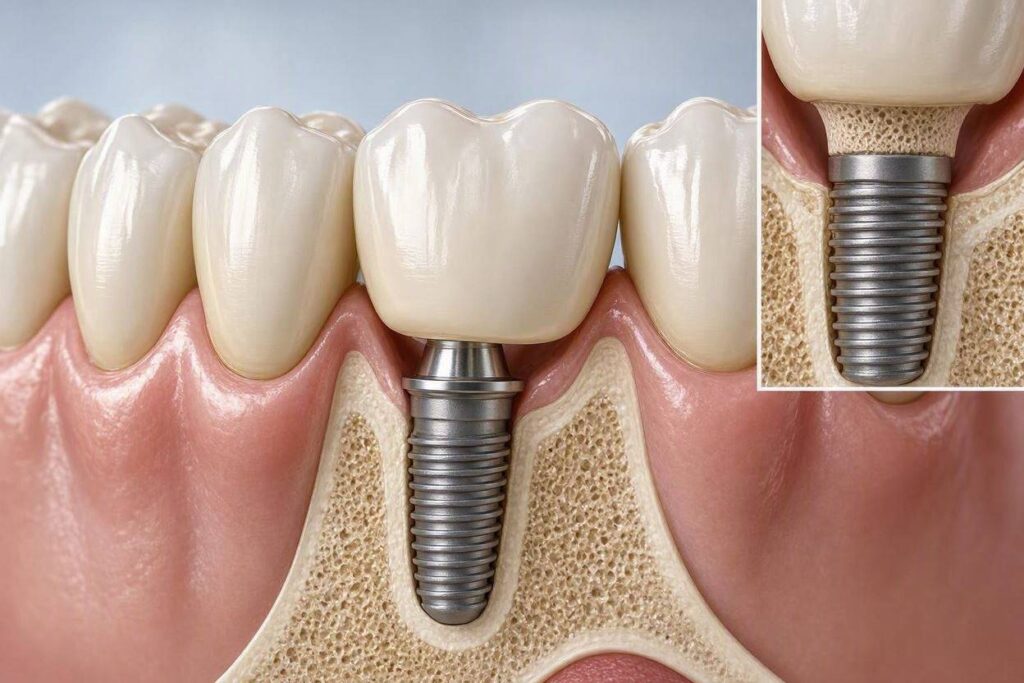
Defining “Forever”: The Human Lifespan Context
The first step is to define terms. A dental implant does not have an intrinsic expiration date. It is not programmed to fail after a certain number of years. The materials from which it is made, titanium or zirconia, are remarkably durable and corrosion-resistant. In a laboratory setting, under ideal conditions, these materials could last indefinitely.
However, the implant does not exist in a laboratory. It exists in a complex, dynamic biological environment: the human body. The implant is subjected to millions of cycles of chewing force, bacterial challenges, temperature fluctuations, and the systemic changes of aging and health. The question “Can it last forever?” is better phrased as “Can it last for the remaining decades of my life?” For a patient who receives an implant at age 60, “forever” means 30 or 40 years. For a patient at 30, “forever” means 50, 60, or even 70 years. The implant must survive and function for an extraordinarily long time.
The Data: What Survival Rates Tell Us
We have robust long-term data on dental implant survival. Systematic reviews and meta-analyses of studies with 10- to 20-year follow-up periods report implant survival rates, meaning the implant is still physically in the mouth, of over 95% for single-tooth implants and over 90% for full-arch prostheses at 10 years. At 20 years, survival rates remain high, often in the 85% to 95% range depending on the study and the patient population.
These numbers are impressive. They place dental implants among the most successful medical devices ever developed, comparable to hip replacements. But they are not 100%. A survival rate of 95% means that 5 out of every 100 implants are lost over a decade. Over a lifetime, the cumulative risk of implant loss increases. Survival is not the same as success. An implant can survive, still be in the mouth, but have significant bone loss, a poor aesthetic appearance, or a malfunctioning restoration. Success is defined more rigorously: no mobility, no persistent pain or infection, minimal bone loss over time, and a functional, aesthetic crown.
The Three Components and Their Different Lifespans
To understand whether an implant can last forever, we must analyze the three components separately. They age at different rates.
The Implant Fixture
The titanium or zirconia post in the bone has the potential to last a lifetime. The metal is biocompatible, corrosion-resistant, and fatigue-resistant. In the absence of peri-implantitis or catastrophic overload, the implant fixture itself does not wear out. It does not decay. It does not need replacement. Fracture of the implant body is rare. The fixture is the component most likely to achieve “forever” status. Many patients who received implants in the 1980s and 1990s still have their original fixtures in function today, four decades later.
The Abutment and Abutment Screw
The abutment and its connecting screw are mechanical components subject to fatigue. The abutment screw is the weakest mechanical link. Over decades, repeated loading can cause the screw to loosen or, rarely, to fracture. A loose abutment screw can be retightened. A fractured screw must be retrieved and replaced. These are maintenance events, not implant failures. They do not mean the implant is lost. They mean a component needs servicing.
The Crown
The crown is the component most likely to need replacement during the patient’s lifetime. Whether made of porcelain fused to metal, lithium disilicate, or zirconia, the crown is subjected to occlusal forces, wear, and the acidic and thermal conditions of the oral cavity. Porcelain can chip or fracture. The cement seal of a cemented crown can fail. The crown can wear down over decades, losing its shape and function. The aesthetic appearance of the crown, the shade, the surface texture, and the gum interface, may become compromised over time as the natural teeth darken or the gum recedes.
The average lifespan of a well-made implant crown is 15 to 25 years. Many last longer. Some require replacement earlier. The crown is a consumable item. Replacing an implant crown after 20 years is not a failure of the implant. It is normal maintenance, much like replacing the tires on a car. The implant fixture remains intact.
The Arch-Nemesis of Longevity: Peri-Implantitis
The single greatest threat to the long-term survival of a dental implant is peri-implantitis. This bacterial infection causes progressive bone loss around the implant. It is the leading cause of late implant failure. Peri-implantitis is largely preventable with meticulous home care and regular professional maintenance. A patient who brushes, flosses, uses a water flosser, and attends their three- to six-month recall visits is at low risk. A patient who neglects their implant, smokes, or has uncontrolled diabetes is at high risk.
Peri-implantitis can begin insidiously, with little to no pain. Bone is lost silently. By the time the patient notices bleeding, a bad taste, or mobility, significant damage may have occurred. This underscores the critical importance of maintenance. An implant is not a “set it and forget it” solution. It is a permanent commitment to lifelong care.
The Role of Occlusion and Biomechanics
Excessive or poorly directed forces can shorten the lifespan of an implant restoration. A heavy bite, bruxism, clenching, or a poorly designed occlusion can cause the crown to chip, the abutment screw to loosen or fracture, or the bone around the implant to resorb. An implant does not have a periodontal ligament to absorb shock. The forces are transmitted directly to the bone-implant interface and the mechanical components.
A well-designed occlusion for an implant is slightly different from that of a natural tooth. The implant crown should have light contact in maximum intercuspation and should not be subjected to heavy lateral forces during excursive movements. A nightguard is essential for patients who grind their teeth. Protecting the implant from biomechanical overload is a key factor in achieving long-term success.
The Human Factor: The Patient’s Role
The most important variable in the equation of implant longevity is the human being attached to the implant. The patient’s daily habits, commitment to oral hygiene, compliance with maintenance visits, and overall health status are the dominant predictors of long-term success. An implant placed by the world’s best surgeon using the most advanced technology will fail if the patient neglects it. A mediocre implant can survive for decades in a fastidious, healthy patient.
Your role is active, not passive. You must clean the implant meticulously. You must see your dentist or periodontist for professional maintenance. You must not smoke. You must control your diabetes. You must wear your nightguard if you clench or grind. You must contact your dentist at the first sign of a problem. The implant is a partnership between you and your dental team.
Case Studies of Lifelong Implants
Professor Per-Ingvar Brånemark, the Swedish orthopedic surgeon who discovered osseointegration and is considered the father of modern dental implantology, placed the first titanium dental implants in a human volunteer, Gösta Larsson, in 1965. Mr. Larsson was edentulous and received a full set of mandibular implants. He lived with those implants for over 40 years, until his death in 2006. The implants were still functioning when he died. This is the most famous case of lifelong implant survival. It demonstrates the biological possibility. However, it is a single case under the care of the pioneer of the field. Real-world populations will have a distribution of outcomes.
The Concept of “Forever” and Realistic Expectations
So, can dental implants last forever? The implant fixture can, and in many patients, it does. The restoration, the crown, will likely need replacement at some point during a long lifetime. The supporting bone and gum tissue require constant maintenance to prevent disease. The mechanical components, the abutment screw, may require occasional servicing.
A realistic, honest answer is this: A dental implant can last a lifetime with proper care, but it does not maintain itself. It requires the same diligent maintenance as the rest of your body. A patient who expects an implant to be a “forever tooth” with zero effort is headed for disappointment. A patient who embraces the implant as a permanent commitment to daily care and regular professional maintenance has an excellent chance of keeping their implant for life.
Summary of Key Points on Implant Longevity
- The titanium implant fixture has the potential to last a lifetime and is the most durable component.
- The implant crown is the component most likely to require replacement, typically after 15 to 25 years.
- Peri-implantitis is the leading cause of late implant failure and is largely preventable with meticulous care.
- Occlusal forces and bruxism can damage the mechanical components and the supporting bone.
- The patient’s daily habits, oral hygiene, and compliance with maintenance are the most critical determinants of long-term success.
Conclusion
Dental implants are the closest modern dentistry has come to a permanent tooth replacement. The implant fixture itself is designed to last a lifetime, and in many patients, it does. The crown, like any man-made object subjected to daily use in a harsh environment, has a finite lifespan and will likely need replacement. The biological environment surrounding the implant must be actively maintained through rigorous oral hygiene and regular professional care to prevent peri-implantitis, the arch-nemesis of implant longevity. If you are willing to be a lifelong partner in the care of your implant, you have an excellent chance of taking it to your grave. It will not last forever on its own, but with your help, it can last a lifetime.
Frequently Asked Questions (FAQ)
1. What is the average lifespan of a dental implant?
Studies show survival rates over 90-95% at 10-20 years. The implant fixture can last a lifetime. The crown may need replacement every 15-25 years.
2. Can an implant fail after 10 years?
Yes. Late failures are usually due to peri-implantitis or occlusal overload. Regular maintenance reduces this risk.
3. How do I maximize the lifespan of my dental implant?
Practice meticulous oral hygiene, attend professional maintenance visits every 3-6 months, do not smoke, control systemic diseases, and wear a nightguard if you grind your teeth.
4. Is it true that the first dental implants lasted for decades?
Yes. The first patient treated with modern titanium implants lived with them for over 40 years until his death.
5. Will I need to replace the crown on my implant?
Likely yes, at some point in your lifetime. Crowns are subject to wear, chipping, and aesthetic changes over decades.
6. Can an implant rust or corrode over time?
No. Titanium and zirconia are highly corrosion-resistant and do not rust in the oral environment.
7. Do dental implants have a warranty?
Many implant manufacturers offer a limited lifetime warranty on the implant fixture itself, covering replacement if the implant fractures. This does not cover the surgical or restorative fees.
Additional Resource
For more information on the long-term care and success of dental implants, visit the American Academy of Periodontology:
American Academy of Periodontology – Dental Implants