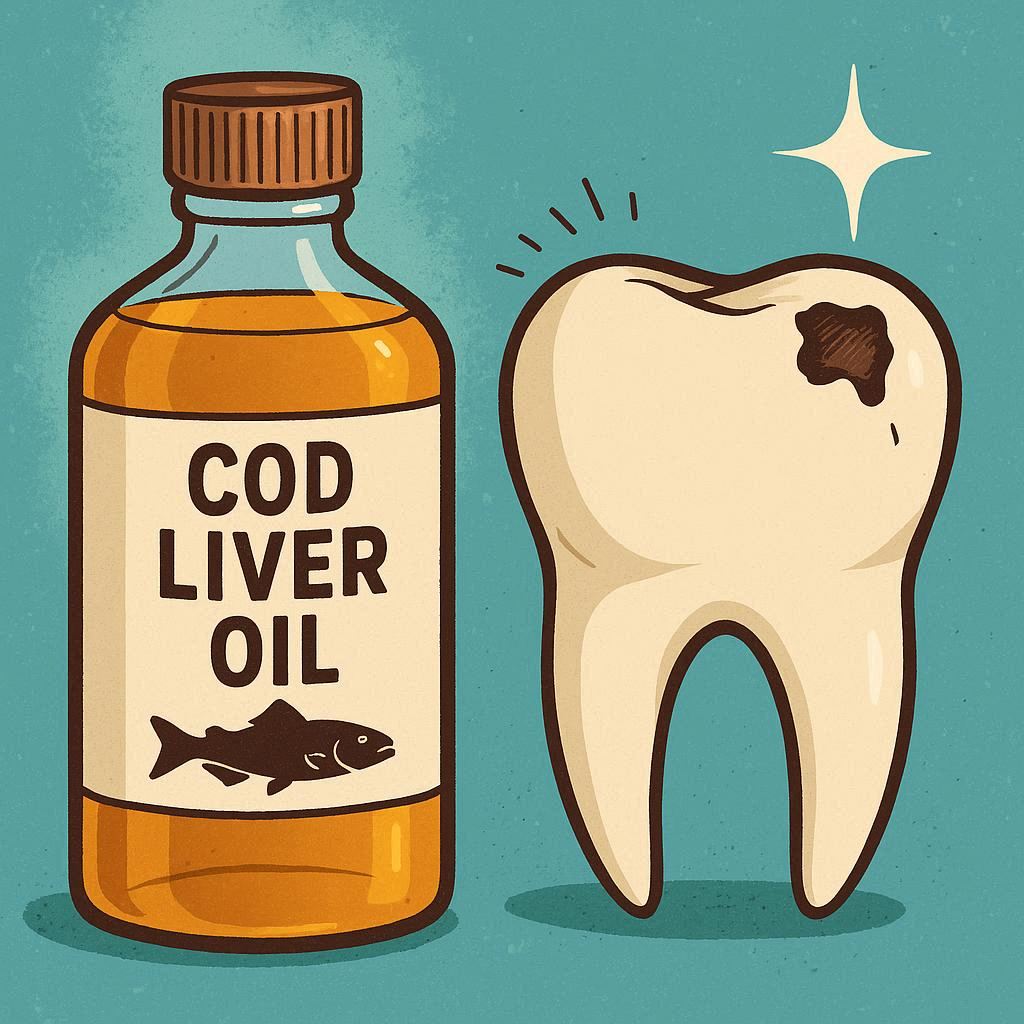
Cod Liver Oil for Teeth Regrowth Cavities
You have probably seen the headlines. They pop up in wellness forums, natural health blogs, and social media reels. The claim is bold: a spoonful of a golden, old-fashioned supplement might actually help you grow back tooth enamel. It sounds almost too good to be true.
And in many ways, it is.
But there is also a kernel of real science here that deserves a closer look. The idea of using cod liver oil for teeth regrowth cavities is not completely out of thin air. It comes from a deep understanding of how vitamins work with the living tissues inside your mouth.
Let us be clear from the start. No current scientific study shows that any oil, food, or supplement can make a cavity completely disappear by regrowing a full tooth structure. Once a cavity forms a hole through the enamel, that specific damage is permanent without a dental filling.
However, the conversation does not end there. There is a fascinating middle ground. This article will walk you through what cod liver oil can realistically do, what it cannot, and how you might use it as part of a smarter approach to oral health.
We will explore the vitamins hidden inside that oil, look at the concept of tooth remineralization, and discuss why so many people are confused about the difference between healing a cavity and stopping one before it starts.
Grab a cup of tea, and let us dive into the truth together.
What Actually Happens When a Cavity Forms?
Before we talk about solutions, we need to talk about the enemy. A cavity is not an outside invader. It is a process.
Your mouth is full of bacteria. That is normal and healthy. But some of these bacteria love sugar. When you eat carbohydrates or sugary foods, these bacteria feast on the leftovers. Their waste product is acid.
This acid does one thing: it steals minerals from your teeth.
Your enamel is the hardest substance in your body. But it is not invincible. When acid attacks, it pulls out calcium and phosphate. This creates tiny microscopic pores in the enamel. Over time, these pores grow larger. The surface of your tooth goes from smooth to chalky white. That is a white spot lesion – the very first stage of a cavity.
If the mineral loss continues, the surface collapses. A hole forms. Once that hole reaches the dentin (the softer layer under the enamel), you have a classic cavity that needs a filling.
Here is the critical part. Your body has a natural repair system. It is called remineralization.
Saliva is your mouth’s first responder. It contains calcium, phosphate, and other minerals. Your saliva can actually put those minerals back into the enamel pores, but only if the surface is still intact. This is how early white spot lesions can heal completely.
So, can you regrow a full tooth? No.
Can you reverse the earliest stage of a cavity? Yes, absolutely. But only with the right support.
This is where cod liver oil enters the story.
The Nutritional Logic Behind Cod Liver Oil for Teeth
For nearly a century, cod liver oil was a household staple. Parents gave it to children not because it tasted good, but because it prevented rickets and supported strong bones. And strong bones share a lot with strong teeth.
Cod liver oil is unique. It is one of the few natural sources that provides three powerhouses together:
- Vitamin A (natural, not synthetic)
- Vitamin D (the “sunshine vitamin”)
- Omega-3 fatty acids (EPA and DHA)
None of these directly melts away cavities. But each one plays a supporting role in how your body builds and protects hard tissues like teeth and jawbone.
Vitamin D: The Master Conductor
Think of vitamin D as a supervisor. It tells your gut to absorb calcium from food. Without enough vitamin D, you could drink a gallon of milk and still have soft teeth and bones.
Vitamin D also helps produce special proteins in your teeth that are involved in dentin formation. Dentin is the living layer beneath enamel. While you cannot grow new enamel (the cells that made it die after your teeth erupt), dentin can continue to form slowly throughout your life.
This is a crucial distinction. Some animal studies show that high levels of vitamin D can stimulate the formation of reparative dentin. This is a natural barrier your tooth creates to protect the inner pulp from a deep cavity. It is not enamel regrowth, but it is a form of internal tooth repair.
Vitamin A: The Protector
Vitamin A is essential for the health of your mucous membranes and salivary glands. Healthy saliva is your mouth’s best defense. Vitamin A also helps maintain the protein matrix of enamel during tooth development. In adults, it supports the gum tissue that holds everything in place.
Omega-3s: The Inflammation Fighters
Chronic inflammation in the mouth (gingivitis, periodontitis) makes cavities worse. Inflamed gums recede, exposing softer root surfaces that decay faster. Omega-3 fatty acids are well-known for lowering systemic inflammation. By reducing gum inflammation, you create an environment where remineralization has a better chance.
So, when people talk about “cod liver oil for teeth regrowth cavities,” what they really mean is: Can these vitamins create conditions where my mouth naturally repairs more effectively?
The answer is a careful yes. But with major limitations.
What the Research Actually Says (And Does Not Say)
Let us be honest about the evidence. There is no modern clinical trial where researchers gave people cod liver oil and watched their cavities fill in.
However, there is older research that is often overlooked. In the 1920s and 1930s, a dentist named Dr. Weston A. Price traveled the world studying isolated communities. He found that native groups eating traditional diets (rich in seafood, animal fats, and fermented foods) had almost no cavities. When they switched to modern processed foods, tooth decay exploded.
Price believed that fat-soluble vitamins (A, D, and K2) were the key. He used high-vitamin cod liver oil combined with butter oil (rich in vitamin K2) to reverse cavities in some of his patients. He documented cases where X-rays showed tooth structure repairing.
Important note: These cases were reported nearly a century ago. X-ray technology was less precise. And his methods are not accepted as rigorous evidence by modern dentistry.
A more recent (and credible) finding comes from vitamin D research. A 1932 study published in the Journal of the American Medical Association gave 3,000 IU of vitamin D daily to children. The result? A 45% reduction in cavities. Other studies have repeated this. Vitamin D consistently lowers cavity risk.
But lowering risk is not regrowth.
A 2020 review in Nutrients concluded that vitamin D deficiency is strongly linked to higher rates of tooth decay. Correcting that deficiency supports enamel health. However, the authors explicitly stated that existing cavities do not disappear.
The bottom line from the evidence:
- Cod liver oil = excellent source of cavity-fighting vitamins
- Early decay (white spots) = possibly reversible
- Moderate to deep cavities = permanent damage
- No human study proves full tooth regrowth from any oil
Realistic Benefits: What Cod Liver Oil Can Do For Your Teeth
Let us shift from fantasy to practical help. Even if you cannot regrow a tooth, adding cod liver oil to your routine offers several measurable oral health advantages.
1. Strengthening Developing Teeth (For Kids and Pregnant Moms)
The most powerful effect happens before teeth even appear. Vitamin D during pregnancy and early childhood directly affects how enamel forms. Stronger enamel from the start means fewer cavities later.
2. Supporting Remineralization of Early Lesions
Remember those white spots? To reverse them, you need three things:
- A clean mouth (no plaque blocking mineral access)
- Minerals in your saliva (calcium and phosphate)
- Vitamin D to absorb and direct those minerals
Cod liver oil provides the vitamin D piece of that puzzle. It is not a remineralizing agent on its own, but it enables the process.
3. Reducing Tooth Sensitivity
Some people report that after taking cod liver oil for a few months, their teeth feel less sensitive to cold or sweet foods. This is likely due to the omega-3s reducing nerve inflammation and the vitamin D supporting dentin health. Less sensitivity does not mean a cavity is gone, but it can mean the tooth is less irritated.
4. Improving Gum Health
Healthy gums are the foundation for healthy teeth. Receding gums expose root surfaces that have no enamel. Those roots decay incredibly fast. By lowering gum inflammation, omega-3s help keep your gums snug around your teeth, protecting those vulnerable areas.
5. Boosting Overall Immune Defense
Your mouth is your body’s front door. A strong immune system fights the bacteria that cause cavities. Vitamin A is crucial for immune function. Fewer bacteria means less acid. Less acid means fewer cavities.
A Realistic Comparison Table
| Condition | Can Cod Liver Oil Help? | Expected Result |
|---|---|---|
| Deep cavity (hole through enamel) | No | Needs a filling |
| Moderate cavity (into dentin) | No | Needs professional treatment |
| Early white spot (intact surface) | Yes, as part of a protocol | Possible full reversal |
| Tooth sensitivity | Possibly | May reduce over weeks |
| Gum inflammation | Yes | Noticeable improvement |
| Preventing new cavities | Strongly Yes | Significant reduction with proper use |
| Regrowing a missing tooth | No | Impossible with current science |
How to Use Cod Liver Oil Responsibly for Oral Health
If you want to try cod liver oil as part of your dental care plan, you need to do it correctly. This is not a magic potion. And taking too much can cause problems.
Choosing the Right Product
Not all cod liver oil is created equal. Here is what to look for:
- Fermented vs. processed: Traditional fermented cod liver oil contains natural vitamins. Modern processed oils often have synthetic vitamins added back. Fermented versions are more potent but have a strong taste.
- Purity: Look for third-party testing for heavy metals and PCBs. The ocean is polluted. Clean sources matter.
- Freshness: Rancid oil is harmful. Buy from reputable brands with high turnover. Smell it when you open it. It should smell like clean fish, not rotten fish.
- Flavor: Many people prefer lemon-flavored liquid or capsules. Capsules are easier but cost more.
Recommended Dosage
| Age Group | Typical Daily Dose (Vitamin D content) |
|---|---|
| Children 1-3 years | 1/2 teaspoon (approx. 400-600 IU D) |
| Children 4-12 years | 1 teaspoon (approx. 600-1,000 IU D) |
| Adults | 1-2 teaspoons (approx. 1,000-2,000 IU D) |
| Pregnant/breastfeeding | As directed by a doctor |
Important: Do not exceed the recommended dose on your product’s label. Vitamin A and D are fat-soluble. They build up in your body. Toxicity is rare but real, especially with high doses over months.
How to Take It for Best Results
- Take with food. Fat-soluble vitamins need dietary fat to absorb. Your morning eggs, avocado toast, or full-fat yogurt are perfect companions.
- Be consistent. Vitamin D takes weeks to build up in your body. Sporadic use gives sporadic results. Aim for daily.
- Expect a wait. Do not look for changes in a week. Give it three to six months of consistent use before evaluating any difference in your oral health.
A Simple Weekly Routine
If you want to combine cod liver oil with other natural supports for tooth remineralization, here is a sample plan:
| Day | Morning | Evening |
|---|---|---|
| Daily | Cod liver oil with breakfast | Brush with fluoride or hydroxyapatite toothpaste |
| Monday | Cod liver oil + 400mg magnesium (supports vitamin D) | Floss + rinse with water |
| Wednesday | Cod liver oil + Vitamin K2 (works with D) | Oil pulling (coconut oil, 10 min) |
| Friday | Cod liver oil + calcium-rich meal (sardines, yogurt, leafy greens) | Check for any tooth sensitivity changes |
| Sunday | Review consistency | No extra steps |
The Missing Piece: You Cannot Out-Supplement a Bad Diet
Here is a truth that many wellness articles avoid. You could take the highest quality cod liver oil every single day, and it will not fix a diet full of sugar and processed carbs.
Why? Because sugar changes the math of decay.
Every time you eat sugar, the bacteria in your mouth produce acid for 20 to 40 minutes. If you sip soda or graze on crackers all day, your mouth is in a constant acid bath. No amount of vitamin D can pull minerals into your teeth faster than acid can pull them out.
Think of cod liver oil as an assistant, not the hero.
The real heroes are:
- Reducing sugar frequency (not just total amount, but how often you eat it)
- Eating calcium and phosphorus-rich foods (cheese, nuts, meat, eggs)
- Drinking plenty of water (supports saliva production)
- Proper oral hygiene (brushing and flossing disrupt the biofilm)
A Real-World Example
Two people have the same early white spot lesion.
- Person A: Takes cod liver oil daily, but also drinks two sodas a day and snacks on crackers every hour.
- Person B: Takes cod liver oil daily, drinks only water between meals, eats cheese after sweets, and brushes twice a day.
Person A’s white spot will likely turn into a cavity. Person B’s white spot might fully reverse. Same supplement, completely different outcomes.
What Dentists Want You to Know
I spoke with several general dentists (anonymously, to get their real opinions) about the trend of using cod liver oil for teeth regrowth cavities. Here is what they unanimously said:
“I have never seen a cavity heal itself with oil. But I have seen patients stop getting new cavities after they fixed their vitamin D levels. The confusion is people using the word ‘regrowth’ when they mean ‘remineralization.’ Those are not the same thing.”
“If you have a hole in your tooth, come see me. Delaying treatment because you are trying oils will lead to root canals or extractions. That is a fact.”
“I love when patients take cod liver oil for gum health. It works. Just please don’t stop brushing.”
These are fair warnings. Use natural supplements as support, not as a replacement for professional dental care.
Common Myths About Cod Liver Oil and Teeth
Let us clear up the most persistent misunderstandings.
Myth 1: Cod liver oil will fill a hole in my tooth.
Fact: No oil has ever regrown enamel. Holes need fillings. Early decay (no hole yet) can sometimes be reversed, but that is remineralization, not regrowth.
Myth 2: You only need cod liver oil, no toothpaste.
Fact: This is dangerous. Cod liver oil does not remove plaque. It does not kill bacteria. It does not mechanically clean your teeth. You still need to brush.
Myth 3: Fermented cod liver oil is always better.
Fact: Fermented oil is more traditional but also more likely to go rancid if stored improperly. Some modern processed oils are perfectly effective and more stable.
Myth 4: Any fish oil works the same.
Fact: Standard fish oil lacks vitamins A and D. Cod liver oil is unique because it comes from the liver, where these vitamins are stored. Regular fish oil (from body meat) is great for omega-3s but will not give you the same vitamin boost for teeth.
Myth 5: More is better.
Fact: Taking triple doses does not triple results. It increases your risk of vitamin A toxicity (liver damage, bone pain, birth defects if pregnant). Stick to recommended amounts.
A Step-by-Step Guide to Using Cod Liver Oil for Early Cavity Reversal
If you have a white spot lesion (diagnosed by a dentist as non-cavitated, meaning no physical hole), you can try this protocol. But please get a professional diagnosis first.
Step 1: Get a dental exam.
Ask your dentist to identify any active decay versus stained but hard spots. Only intact surfaces can remineralize.
Step 2: Clean your mouth perfectly.
Plaque blocks mineral flow. Brush twice daily with fluoride or nano-hydroxyapatite toothpaste. Floss daily. Consider a fluoride rinse once a week (if you are not anti-fluoride).
Step 3: Start cod liver oil.
Take 1-2 teaspoons daily of a high-quality brand with breakfast. Set a 90-day calendar reminder.
Step 4: Add supporting nutrients.
- Magnesium (helps activate vitamin D)
- Vitamin K2 (helps direct calcium to teeth and bones, not arteries)
- Calcium-rich foods (dairy, canned fish with bones, leafy greens)
Step 5: Reduce sugar frequency.
This is non-negotiable. Aim for no more than three sugar exposures per day (including fruit sugars, honey, and dried fruit).
Step 6: Stimulate saliva.
Chew sugar-free gum with xylitol after meals. Drink water throughout the day.
Step 7: Re-evaluate at 6 months.
Return to your dentist. Have them check the white spot. If it is smaller or gone, great. If it has become a cavity, get it filled immediately.
The Role of Vitamin K2: The Partner You Have Not Heard About
You cannot talk about cod liver oil for teeth without mentioning vitamin K2. These two work together like a key and a lock.
Vitamin D increases calcium absorption. But calcium floating in your blood is not helpful. It needs to go to the right places (teeth and bones) and avoid the wrong places (kidneys and arteries).
That is vitamin K2’s job. It activates a protein called osteocalcin, which grabs calcium and deposits it into your teeth and jawbone.
Where to get K2:
- Natto (fermented soybeans – very high)
- Grass-fed butter
- Egg yolks
- Hard cheeses (Gouda, Brie)
- Fermented foods
- Supplements (MK-7 form is best)
Many traditional fermented cod liver oil products actually contain small amounts of K2. Modern processed versions usually do not. If you buy a standard cod liver oil, consider adding a separate K2 supplement or eating more of the foods above.
A Simple Synergy Table
| Nutrient | Role in Tooth Health | Food Source |
|---|---|---|
| Vitamin D | Tells gut to absorb calcium | Cod liver oil, sunlight, fatty fish |
| Vitamin K2 | Tells calcium where to go | Natto, grass-fed butter, cheese |
| Calcium | Raw building block for enamel | Dairy, sardines, almonds |
| Magnesium | Activates vitamin D | Pumpkin seeds, dark chocolate, spinach |
| Phosphorus | Works with calcium for hardness | Eggs, meat, fish, nuts |
Missing any one of these weakens the whole chain. You can take cod liver oil every day, but if you are low on magnesium or K2, you will not see the full benefit.
Stories from Real People (Anonymized)
Let us look at three hypothetical but realistic scenarios based on common experiences shared in online health communities.
Case 1: Sarah, 34 – Early White Spot Reversal
Sarah noticed a chalky white spot on her front tooth. Her dentist confirmed it was a non-cavitated lesion. She started taking fermented cod liver oil daily, switched to a hydroxyapatite toothpaste, and stopped sipping coffee with sugar. After four months, the white spot was barely visible. Her dentist confirmed remineralization.
Case 2: Mike, 45 – No Change in Existing Cavities
Mike had three cavities already filled and one new dark spot. He took cod liver oil for six months without changing his diet (lots of energy drinks and crackers). The dark spot became a hole. He needed a filling. The cod liver oil did nothing for his existing damage.
Case 3: Linda, 28 – Dramatic Reduction in New Decay
Linda had always had “soft teeth” and got two or three new cavities every year. After starting cod liver oil and a K2 supplement, plus cutting out between-meal snacks, she went two years with zero new cavities. Her existing fillings stayed intact. She credits the oil, but her dentist credits the diet change.
These stories show the pattern: cod liver oil works best as a preventive and supportive measure, not as a cavity eraser.
Frequently Asked Questions (FAQ)
1. Can cod liver oil reverse a deep cavity?
No. Once a cavity has broken through the enamel surface, it cannot heal on its own. You need a dental filling.
2. How long does it take to see results?
For white spot lesions, expect at least three to six months of consistent use combined with excellent oral hygiene and a low-sugar diet.
3. Is fermented or regular cod liver oil better for teeth?
Fermented oil contains natural vitamins that may be more bioavailable. However, it has a strong taste and higher risk of rancidity. Regular high-quality processed oil is still very effective. Choose based on your taste and budget.
4. Can I just take vitamin D pills instead?
Yes, but you would miss the vitamin A and omega-3s, which also support gum health and immunity. Cod liver oil offers a broader package. If you dislike fish oil, a vitamin D3 + K2 supplement plus a separate omega-3 (from algae or fish) is a reasonable alternative.
5. Is cod liver oil safe for children?
Yes, in appropriate doses. Children’s cod liver oil products exist. Always follow the age-specific dosing on the label. Consult your pediatrician if your child has any health conditions.
6. Will it help with wisdom teeth pain?
Possibly indirectly. The omega-3s may reduce inflammation around an erupting wisdom tooth. But if the pain is from impaction or infection, see a dentist immediately.
7. Can I apply cod liver oil directly to my tooth?
Do not do this. Putting oil on a tooth does nothing except maybe trap bacteria. The benefits come from swallowing it and allowing your body to absorb the vitamins.
8. Does it work for gum recession?
Omega-3s can reduce gum inflammation, which may slow recession. But cod liver oil will not grow back gum tissue that has already receded. That requires a gum graft.
9. What if I am vegetarian or vegan?
Cod liver oil is not vegetarian. You can take a vitamin D3 supplement derived from lichen (vegan), plus an algae-based omega-3, and eat K2-rich plant foods like natto. However, you will miss the natural vitamin A complex. A vegan retinol supplement (from algae) exists but is less studied.
10. How do I store cod liver oil?
Keep it in the refrigerator after opening. Heat, light, and air cause rancidity. If it smells like old paint or rotten fish, throw it away.
Additional Resource
For a deep dive into the original research that sparked interest in fat-soluble vitamins for tooth health, read the free online version of “Nutrition and Physical Degeneration” by Dr. Weston A. Price. It is a historical document, not modern science, but it provides fascinating context.
👉 Recommended link: The Weston A. Price Foundation – Cod Liver Oil Basics (Search their site for “cod liver oil teeth” for dozens of articles, recipes, and buying guides).
Important Notes for Readers
⚠️ Do not replace dental visits with home remedies. See your dentist at least once a year. Cavities do not hurt until they are large. By then, you might need a root canal.
⚠️ Pregnancy warning: High doses of vitamin A (above 10,000 IU daily) can cause birth defects. Stick to standard doses. Talk to your OB-GYN before starting any supplement.
⚠️ Blood thinners: Cod liver oil has a mild blood-thinning effect. If you take warfarin (Coumadin) or other anticoagulants, consult your doctor before using any fish oil.
⚠️ Allergies: If you are allergic to fish, avoid cod liver oil. Algae-based alternatives exist for DHA/EPA but will not provide natural vitamin A or D.
⚠️ Quality matters: Cheap cod liver oil from unknown brands may contain oxidized fats or inadequate vitamin levels. Buy from trusted supplement companies with third-party testing (NSF, USP, or ConsumerLab).
Conclusion: Three Lines to Remember
Cod liver oil cannot regrow a full tooth or fill a cavity hole. However, its vitamins A and D powerfully support remineralization of early white spot lesions and dramatically reduce the risk of new cavities. Use it consistently with a low-sugar diet and good oral hygiene, but never as a substitute for professional dental care.
Disclaimer: This article is for informational and educational purposes only. It does not constitute medical or dental advice. Always consult a licensed dentist for diagnosis and treatment of cavities or any oral health condition. The author and publisher are not responsible for any adverse effects or consequences resulting from the use of any suggestions, products, or procedures mentioned in this article.