Dental Office Art: How to Build a Collection That Calms and Inspires
Art in a dental office is often treated as an afterthought—a few framed prints bought in a hurry the week before opening. But art is one of the few design elements that works on patients continuously, every single day, without any effort from your team. A thoughtfully built collection can lower anxiety, spark conversation, and make your practice memorable in a way that equipment never will.
This guide focuses on the practical side of dental office art: where to find it, how to budget for it, how to frame and hang it properly, and how to maintain it over years of daily use. If you’re looking for broader decor guidance, our article on dental office wall art covers placement by room in more detail. Here, we concentrate on building and caring for the collection itself.
Why Art Belongs in the Practice Budget
Practice owners happily spend five figures on a chair but hesitate over a few hundred dollars for art. That’s a false economy.
Art Works Every Hour of Every Day
A dental chair serves one patient at a time. A well-placed artwork is seen by every patient, every family member, and every staff member who walks past it. Measured by impressions, art is one of the cheapest design investments available.
It Changes How Time Feels
Patients waiting ten minutes in a bare room feel every second. The same ten minutes in a room with something pleasant to look at feels shorter. That perception directly affects satisfaction scores and reviews.
It Signals Care and Character
A curated collection tells patients that someone thoughtful runs this practice. That impression carries into how they judge the clinical care they receive.
“We budgeted for art in the same line item as furniture. It felt strange at first, but it’s the thing patients comment on most. Nobody has ever complimented our compressor.” — Dr. Helen Osei, DDS
Sourcing Art: Where to Actually Find Good Pieces
There’s no shortage of options. The challenge is choosing ones suited to a healthcare environment.
| Source | Cost Range | Best For | Watch Out For |
|---|---|---|---|
| Local artists and galleries | $200 – $2,000+ | Unique, community-connected pieces. | Verify the artist is comfortable with commercial display. |
| Art consulting firms | $500 – $5,000+ | Practices wanting a curated, cohesive collection. | Fees add up; confirm what’s included. |
| Print-on-demand services | $30 – $200 | Budget-friendly, high-quality reproductions. | Choose reputable printers; cheap prints fade fast. |
| Stock photography licenses | $20 – $300 | Large-format nature and landscape imagery. | Read the license carefully for commercial use. |
| Local art schools and students | $50 – $500 | Emerging artists, fresh work, reasonable prices. | Confirm durability of materials. |
| Your own photography | Printing costs only | Personal, local, meaningful imagery. | Use a professional printer for large formats. |
Commissioning Work
Commissioning a local artist is often the most rewarding route. You get a piece designed for your space, in your colors, at your dimensions. Expect to pay a deposit, agree on a timeline in writing, and allow for one round of revisions. Ask specifically about the materials’ durability in humid or frequently cleaned environments.
The Case for Local Art
Local artists and local imagery give patients something to talk about. A photograph of a nearby park or a painting of a recognizable landmark creates an instant connection. Many practices rotate local art every six to twelve months, turning their walls into a small gallery and building goodwill in the community.
What Subjects Work Best
Subject matter matters more in healthcare than in almost any other setting.
Reliable Choices
- Nature and landscape imagery: Consistently calming across ages and cultures.
- Water scenes: Oceans, lakes, and rivers read as soothing.
- Botanical close-ups: Soft, detailed, and gentle on the eye.
- Gentle abstracts: Flowing forms and soft color transitions.
- Local landmarks and scenery: Familiar and conversation-starting.
Subjects to Approach With Caution
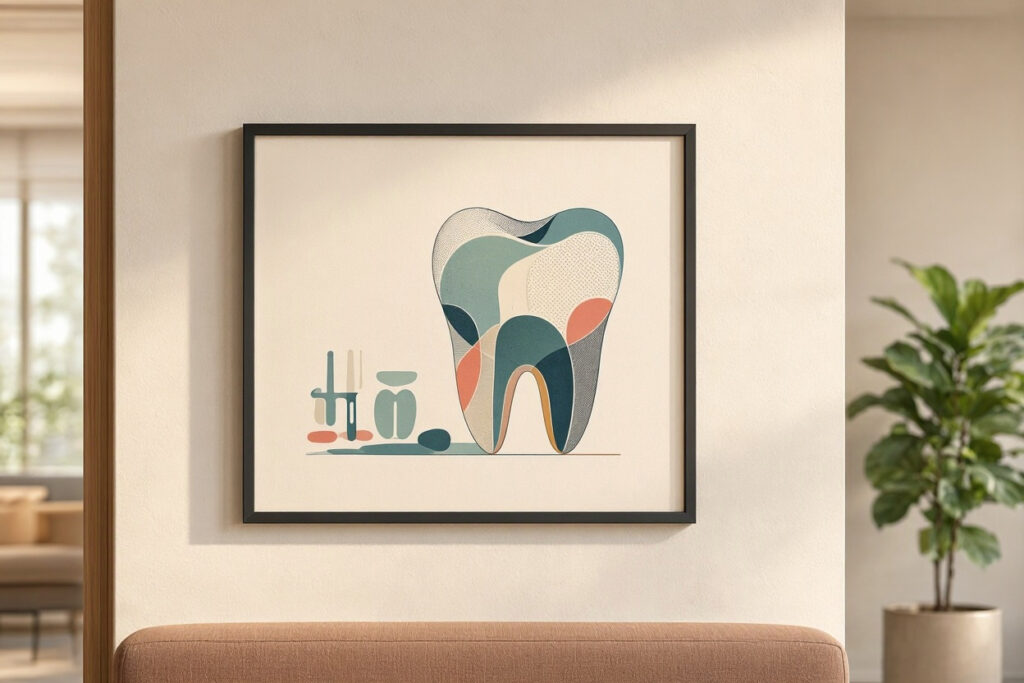
- Dental or medical imagery: Even cheerful tooth cartoons can feel pointed to an anxious patient.
- Dark, stormy, or high-contrast scenes: These raise arousal rather than lower it.
- Faces with intense expressions: Staring portraits can feel unsettling in small rooms.
- Busy patterns: Visual noise competes with the calm you’re trying to create.
Framing and Hanging Done Properly
Beautiful art looks cheap when framed badly or hung carelessly.
Framing Decisions
| Framing Option | Pros | Cons | Best Use |
|---|---|---|---|
| Gallery-wrapped canvas | No frame needed, easy to dust, modern look. | Edges can dent; not ideal for fine art. | Large nature imagery, treatment rooms. |
| Metal frame with acrylic glazing | Durable, wipeable, lightweight. | Acrylic scratches more easily than glass. | High-traffic corridors and waiting areas. |
| Wood frame with glass | Classic, polished appearance. | Heavier; glass is a breakage risk. | Reception and management offices. |
| Frameless acrylic panels | Sleek, modern, easy to clean. | Can look flat; limited size options. | Contemporary practices, small spaces. |
Avoid ornate frames with deep carved grooves. They collect dust and are difficult to disinfect properly.
Hanging Heights and Hardware
Center artwork at roughly 57 to 60 inches from the floor in areas where people stand, and lower—around 54 inches—in areas where patients sit. Use proper anchors rated for the piece’s weight. A heavy canvas falling from a wall in a treatment room is a genuine safety incident waiting to happen.
Budgeting for Art Realistically
You don’t need a gallery budget to build a collection that looks intentional.
| Budget Level | What You Can Achieve | Suggested Approach |
|---|---|---|
| Under $500 | A few quality prints in matching frames. | Buy two or three large prints rather than ten small ones. |
| $500 – $1,500 | A cohesive collection for waiting and reception areas. | Mix prints with one or two originals. |
| $1,500 – $5,000 | Art throughout patient-facing areas, some commissioned. | Commission one statement piece; fill in with prints. |
| $5,000+ | A curated, gallery-style collection with rotation. | Work with an art consultant or gallery on a multi-year plan. |
A Practical Rule
Spend more on fewer pieces. Three well-chosen, properly framed works will always look better than a dozen small, mismatched prints. Also budget for framing separately—framing often costs as much as the art itself.
Digital Art and Rotating Displays
Digital frames and screens offer flexibility that traditional art cannot.
Where Screens Work Well
- Waiting areas where content can rotate between calming imagery and health education.
- Treatment room ceilings, giving reclined patients something gentle to watch.
- Hallways where a screen can display team photos, community news, or seasonal art.
Where Screens Fall Short
Screens in every room create a clinical, tech-heavy feel. They also require content management—a screen showing the same loop for six months looks worse than a blank wall. If you go digital, commit to updating content regularly.
“We installed one screen in the waiting area showing slow nature footage. It replaced a wall of framed prints. Patients love it, and we can update it seasonally without buying anything new.” — Kevin Adeyemi, Practice Manager
Caring for Your Art Collection
Dental offices are tough on art: humidity, cleaning chemicals, UV exposure, and constant traffic.
- Control humidity: Keep pieces away from sterilization rooms and sinks. Moisture warps prints and damages frames.
- Avoid direct sunlight: UV fades pigments quickly. Use UV-filtering glazing or reposition pieces away from windows.
- Dust gently: Use a soft, dry microfiber cloth. Never spray cleaner directly onto the artwork or glass.
- Clean glass carefully: Spray cleaner onto the cloth, not the surface, to avoid liquid seeping behind the glazing.
- Inspect quarterly: Check for loose frames, water stains, fading, and damaged corners. Fix small issues before they spread.
- Document your collection: Keep a simple list with photos, purchase dates, and values for insurance purposes.
An FAQ on Dental Office Art
1. How much should a dental practice spend on art?
A reasonable guideline is one to two percent of your overall interior design budget. For a modest refresh, $500 to $1,500 covers waiting and reception areas well. Larger practices may invest $3,000 to $10,000 or more.
2. Is it better to buy originals or prints?
Prints are perfectly acceptable and often more practical. Buy high-quality reproductions from reputable printers. One original piece can anchor a collection of prints and elevate the whole arrangement.
3. Can I display art made by patients?
Yes, with written permission from parents or guardians. Children’s art adds warmth and personality. Use removable hanging systems so pieces can rotate without damaging walls.
4. How often should art be rotated or replaced?
Rotate seasonal or temporary pieces every three to six months. Review the permanent collection every two to three years and replace anything faded, damaged, or no longer fitting your brand.
5. Does art need to match between rooms?
It should feel cohesive rather than identical. Carry the same color palette and style language throughout, but allow treatment rooms to be simpler and more minimal than waiting areas.
6. Is it safe to hang glass-framed art in treatment rooms?
Use acrylic glazing instead of glass in treatment rooms. It’s lighter and safer if it falls. Secure all frames with appropriate anchors and avoid hanging anything heavy directly above a patient’s head.
Important Note for Readers
Check with your landlord before hanging anything on rented walls, and use appropriate anchors for your wall type. Avoid hanging heavy pieces above seating or treatment chairs. Confirm that any framed pieces can be cleaned with the disinfectants your team uses, and test on an inconspicuous area first.
Conclusion
Dental office art is a long-term investment in patient comfort and practice identity.
Sourcing wisely—local artists, quality prints, and commissions—builds a collection with real character.
Proper framing, hanging, and maintenance keep art looking professional for years.
Consistent rotation and care ensure your walls keep calming patients long after opening day.
Additional Resource: For research and guidance on how visual art affects health outcomes, visit the Arts & Health Alliance. https://www.artsandhealthalliance.org/