IKEA Dental Office Cabinets: Can They Work in a Clinical Practice?
Dental office cabinetry is expensive. A full set of custom clinical cabinets can cost tens of thousands of dollars, a number that makes many new practice owners wince. So it’s no surprise that a common question keeps surfacing in dental forums and planning meetings: can IKEA cabinets work in a dental office?
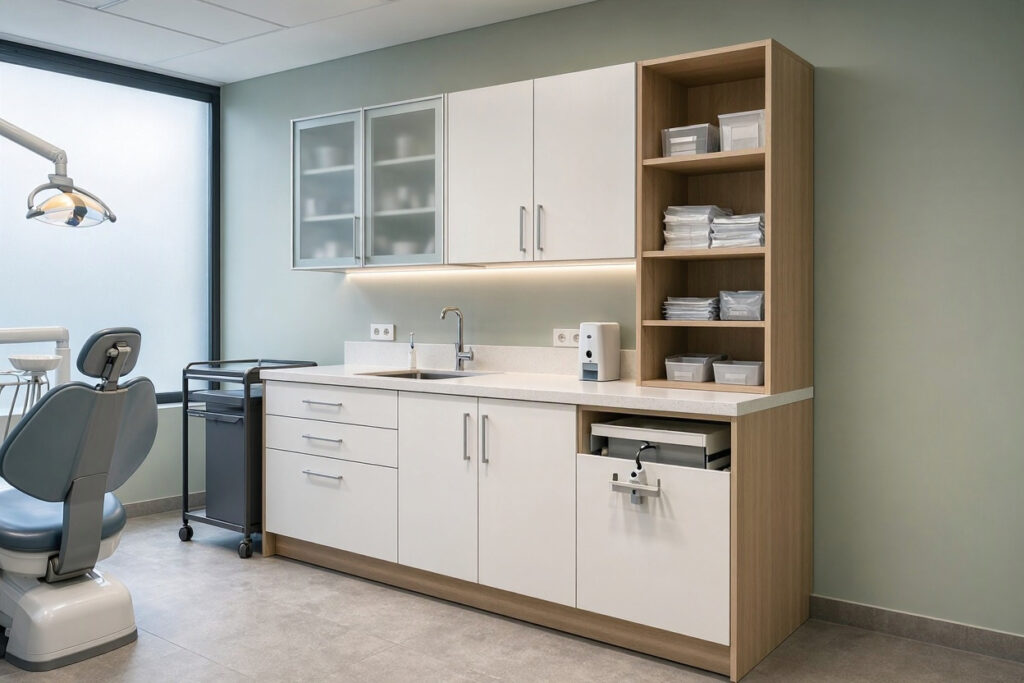
The honest answer is: sometimes, with conditions. IKEA cabinet systems offer genuine affordability and smart organization, but they were designed for homes, not clinical environments. Understanding where they shine and where they fall short will help you decide whether they belong in your practice—and in which rooms.
This guide gives you a realistic, practical assessment. No hype, no dismissal—just what actually works.
The Appeal of IKEA Cabinets for a Dental Office
The case for IKEA is straightforward.
Cost Savings
IKEA cabinet systems cost a fraction of custom dental millwork. For a practice watching every dollar, that difference can free up budget for equipment that directly affects patient care.
Available Immediately
Custom cabinets can take eight to twelve weeks or more. IKEA stock is available now, which matters enormously when you’re racing toward an opening date.
Modular and Replaceable
IKEA’s modular systems let you add, reconfigure, or replace individual units. If a door gets damaged, you can buy a replacement rather than rebuilding an entire run of cabinets.
Smart Internal Organization
IKEA’s interior fittings—drawer dividers, pull-out trays, adjustable shelves—are genuinely well-designed. For organizing supplies, they compete well with specialty dental storage at a much lower price.
“We used IKEA cabinets in our staff break room, our business office, and our sterilization storage. Three years in, they’re holding up fine. I wouldn’t put them in the operatories, but for non-clinical areas they’ve been excellent value.” — Dr. Owen Marsh, DDS
The Honest Limitations
IKEA cabinets are not clinical-grade equipment. Pretending otherwise leads to expensive mistakes.
Moisture Vulnerability
Most IKEA cabinet boxes are particleboard with a melamine or foil finish. Particleboard swells and crumbles when water penetrates edges or seams. In a dental office, sinks, sterilizers, and frequent wiping create exactly the moisture conditions these cabinets handle worst.
Cleaning and Disinfection
Clinical surfaces need to withstand repeated disinfection with hospital-grade products. Many IKEA finishes are not rated for harsh chemicals. Repeated exposure can dull, discolor, or degrade the surface. The seams and edge banding also create crevices that are difficult to clean thoroughly.
Not Designed for Clinical Load
Dental supplies are heavy and dense. Drawers full of instruments, impression materials, and bulk consumables place loads that residential drawer slides weren’t engineered to handle long-term.
Warranty Realities
IKEA’s warranties are written for residential use. Commercial use may void coverage. Read the fine print before assuming you have protection.
No Compliance Certification
Specialty dental cabinets may carry certifications related to fire rating, moisture resistance, or healthcare suitability. IKEA cabinets carry no such certifications. Your local inspector may have opinions about this.
Where IKEA Cabinets Make Sense
Despite the caveats, there are places where IKEA cabinetry is a genuinely smart choice.
| Area | Suitability | Reasoning |
|---|---|---|
| Staff break room | Excellent | Residential-grade durability is adequate; moisture risk is low. |
| Business office | Excellent | Standard office storage needs; no clinical cleaning requirements. |
| Reception back office | Good | Holds files and supplies; moderate use. |
| Sterilization storage (clean side) | Fair | Only if kept strictly dry and away from sinks and steam. |
| Treatment room operatories | Poor | Moisture, chemicals, and heavy daily use exceed design limits. |
| Sterilization wet side | Very poor | Constant moisture will destroy particleboard quickly. |
| Any area with a sink | Poor | Under-sink cabinets are the first to fail. |
Which IKEA Lines Are Worth Considering?
IKEA offers several cabinet systems. They are not equal for this purpose.
| IKEA System | Construction | Best Use in a Dental Office |
|---|---|---|
| SEKTION | Particleboard boxes, modular, extensive interior fittings. | Break room, office storage, dry storage areas. |
| KNOXHULT | Ready-assembled, budget-friendly, simpler. | Small break rooms or temporary setups. |
| BESTÅ | Shelving and storage, lighter construction. | Reception display and light office storage. |
| METOD (regional) | European equivalent of SEKTION. | Same guidance as SEKTION. |
| IVAR | Solid pine shelving. | Dry stockroom shelving; easy to seal with polyurethane. |
For most dental offices, SEKTION is the most practical system because of its interior organization options. But its particleboard core is the exact feature that limits clinical use.
Practical Modifications If You Proceed
If you decide to use IKEA cabinets in lower-risk areas, a few modifications dramatically extend their life.
- Seal all cut edges and seams: Apply clear silicone sealant or edge banding to every exposed particleboard edge, especially around sinks and countertops.
- Upgrade drawer slides: Replace standard slides with heavy-duty, full-extension slides rated for commercial use.
- Add waterproof liners: Use shelf liners and drawer mats to protect surfaces from spills.
- Elevate off wet floors: Use adjustable legs or plinths to keep cabinet bases dry during mopping.
- Ventilate sterilization areas: Ensure exhaust ventilation so steam doesn’t condense on cabinet surfaces.
- Choose foil or high-gloss finishes carefully: These are easier to wipe than matte wood effects, but verify chemical compatibility with your disinfectants.
- Test your disinfectant first: Wipe an inconspicuous spot with your most-used disinfectant and check for damage after a week.
“We sealed every edge and swapped the drawer slides before installation. It added maybe fifteen percent to the cabinet cost and saved us a lot of grief. Two years later, the staff room cabinets still look new.” — Rachel Nguyen, Practice Consultant
Cost Comparison: IKEA vs. Specialty Cabinets
Numbers vary by region and configuration, but the gap is real.
| Option | Approximate Cost per Linear Foot | Durability in Clinical Use |
|---|---|---|
| IKEA SEKTION | $150 – $350 | Moderate in dry areas, poor in wet areas. |
| Semi-custom dental cabinets | $300 – $700 | Good to excellent with proper materials. |
| Custom millwork | $700 – $1,200+ | Excellent; designed for clinical environments. |
| Stainless steel clinical cabinets | $500 – $1,000+ | Excellent hygiene and durability. |
The IKEA savings are substantial. But if you have to replace moisture-damaged cabinets in two years, the savings evaporate. Cost-per-year of use is the fair comparison, not sticker price.
A Realistic Hybrid Approach
Many practices land on a sensible middle path: use IKEA for low-risk areas and invest in clinical-grade cabinetry where it counts.
IKEA for:
- Break room
- Business office
- Reception storage
- Dry stockroom shelving
Specialty cabinets for:
- Treatment room operatories
- Sterilization rooms (both sides)
- Any cabinet containing a sink
- Areas subject to heavy disinfection
This approach captures most of the cost savings while protecting the areas where failure is most expensive and disruptive.
An FAQ on IKEA Dental Office Cabinets
1. Can IKEA cabinets be used in dental treatment rooms?
Not recommended. Treatment rooms involve moisture, chemical disinfectants, and heavy daily use that exceed the design limits of residential cabinetry. Use clinical-grade cabinets in operatories.
2. Will using IKEA cabinets void the warranty?
IKEA warranties are generally written for residential use. Commercial use may void coverage. Read the specific warranty terms for the product line you’re considering.
3. How long do IKEA cabinets last in a dental office?
In dry, low-use areas like an office or break room, five to ten years is realistic. In wet or clinical areas, expect significantly shorter lifespans—sometimes only two to three years.
4. Are IKEA cabinets compliant with dental office regulations?
They carry no healthcare-specific certifications. Your local inspector may require clinical cabinetry to meet certain standards. Confirm requirements with your inspector before installation.
5. What is the best way to protect IKEA cabinets from moisture?
Seal all exposed edges and seams with silicone, use waterproof liners, elevate cabinets off wet floors, and keep sinks well-sealed and ventilated. Nothing fully waterproofs particleboard, so prevention matters more than protection.
6. Can I mix IKEA cabinets with dental-grade cabinets?
Yes, and many practices do. Use IKEA in non-clinical areas and specialty cabinets in treatment and sterilization areas. Coordinate finishes so the office still looks cohesive.
7. Which IKEA cabinet line is best for a dental office?
SEKTION is the most practical for dry storage areas because of its modularity and interior fittings. IVAR solid pine shelving works well in dry stockrooms when sealed with polyurethane.
Important Note for Readers
Before installing IKEA cabinets anywhere in a dental office, check with your local health inspector about requirements for clinical cabinetry. Requirements vary significantly by region. Also verify that your chosen finishes are compatible with the disinfectants your team uses daily—this simple test prevents premature deterioration. If you rent your space, confirm any installation plans with your landlord.
Conclusion
IKEA dental office cabinets are a practical option in the right places and a costly mistake in the wrong ones.
For break rooms, offices, and dry storage, IKEA delivers strong value and smart organization.
For treatment rooms and sterilization areas, clinical-grade cabinetry remains the safer investment.
A hybrid approach—IKEA where it fits, specialty cabinets where it counts—often serves practices best.
Additional Resource: For guidance on infection control practices that affect cabinetry and surfaces, visit the CDC’s Dental Infection Control page. https://www.cdc.gov/oralhealth/infectioncontrol/index.html