Dental Office Dramatic Play: Turning Fear into Fun Through Pretend Play
Children learn through play. They process new experiences by acting them out, and they conquer fear by pretending to be in control. That is why dental office dramatic play is such a powerful tool. A pretend dental clinic—whether in a classroom, a playroom, or your actual waiting area—lets children explore the sights and sounds of dentistry on their own terms. This guide explains how to set up dramatic play that reduces anxiety, teaches healthy habits, and makes your practice memorable for families.
What Is Dental Office Dramatic Play?
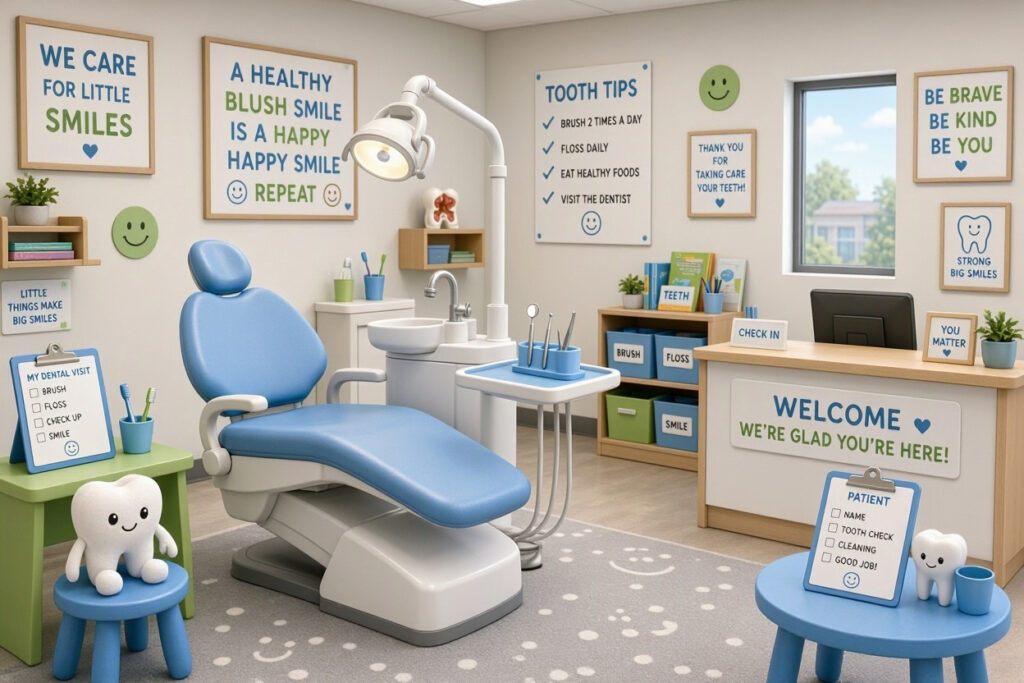
Dramatic play is pretend play with roles, props, and a scenario. A dental office dramatic play setup gives children the chance to be the dentist, the hygienist, the receptionist, or the patient. They use toy instruments, take pretend appointments, and practice “checking teeth.”
This kind of play is common in preschools and kindergarten classrooms. It is also increasingly popular in pediatric dental offices, where a small play area can transform a child’s first visit.
“When a child plays dentist, they stop being the helpless patient and become the one in charge. That shift changes everything.” — Early Childhood Education Specialist
Why Dramatic Play Belongs in Pediatric Dentistry
Children fear the unknown. A dental visit involves strange lights, sounds, and tools. Dramatic play makes those elements familiar before they become real.
Key Benefits of Dental Dramatic Play
- Reduces anxiety: Familiarity replaces fear.
- Builds cooperation: Children who have “played dentist” are calmer in the chair.
- Teaches oral health: Brushing and flossing become play, not chores.
- Supports language skills: Children practice new vocabulary like “cavity” and “x-ray.”
- Encourages empathy: Playing the patient helps children understand others.
- Creates positive memories: The dental office becomes a place associated with fun.
Setting Up a Dramatic Play Dental Office
You do not need a big budget. A corner of a waiting room, a classroom, or a playroom can become a dental clinic with a few simple props.
The Core Zones
A complete dramatic play dental office has four areas.
| Zone | Purpose | Key Props |
|---|---|---|
| Reception desk | Check-in and appointments | Toy phone, clipboard, appointment book, name badges |
| Waiting area | Practice patience | Small chairs, magazines, a toy aquarium |
| Treatment room | Pretend checkups | Reclining chair, toy mirror, toothbrush, flashlight |
| Prize station | Reward at the end | Sticker box, small toys, “certificate” |
Prop Ideas That Work
- Toy dental instruments: Mirror, probe, suction, and a small flashlight.
- Stuffed animals or dolls: Perfect “patients” for checkups.
- Pretend teeth: A large model of teeth for brushing practice.
- White coats and badges: Dress-up items for the “dentist.”
- Clipboards and forms: Simple checklists for “appointments.”
- A reclining chair: A beanbag chair or a small lawn chair works well.
- A treasure chest: For the end-of-visit prize.
Tip: Label each area with simple signs. Children love reading “Reception” and “Treatment Room” while they play.
How to Set Up Dramatic Play in Your Waiting Area
Some pediatric practices include a small dramatic play corner in the waiting room. This serves two purposes: it entertains children and it gently introduces them to the visit ahead.
Setup Guidelines
- Keep it visible: Parents should see the play area from their seats.
- Keep it clean: All props should be wipeable and easy to sanitize.
- Keep it safe: No small parts, sharp edges, or choking hazards.
- Keep it contained: A small rug or low shelf defines the space.
- Keep it rotating: Change props monthly to keep interest high.
Important Note: Do not use real dental instruments in dramatic play. Even retired tools can confuse or frighten children. Use toy versions only.
Dramatic Play in Classrooms and Preschools
Teachers often set up dental office dramatic play during a health unit. If you are a dental practice, you can support local schools with donated prop kits.
What to Include in a Classroom Kit
- Toy dental tools
- Stuffed animal patients
- Pretend appointment cards
- A simple “how to brush” poster
- Stickers and certificates
- A short guide for teachers
Tip: Offer to visit the classroom in person. A quick demonstration by a real dental professional makes the play more meaningful.
Dramatic Play and Anxiety Reduction
Research on pediatric anxiety shows that preparation helps. Children who know what to expect handle medical and dental visits better.
How Pretend Play Prepares Children
- Familiarity: They see the tools and hear the words before the real visit.
- Control: They play the dentist and decide what happens.
- Repetition: They repeat the scenario until it feels safe.
- Language: They learn to name what they see and feel.
- Reward: They practice the prize at the end, which builds positive anticipation.
Comparison Table: Play vs. No Play Before a Dental Visit
| Child Experience | With Dramatic Play | Without Dramatic Play |
|---|---|---|
| First visit anxiety | Lower | Higher |
| Cooperation in the chair | Better | More resistance |
| Vocabulary for feelings | Stronger | Limited |
| Memory of the visit | Positive | Often negative |
Encouraging Dramatic Play at Home
Parents can support dental health at home with simple pretend play. Share these ideas with your patients’ families.
Home Play Ideas
- Brush a stuffed animal’s teeth: Practice gentle brushing motions.
- Play “dentist office”: Use a flashlight and a small mirror.
- Read dental-themed books: Stories about first visits help children prepare.
- Count teeth: A fun way to build familiarity with their own mouths.
- Practice the chair: Let children recline in a chair and open wide while a parent counts teeth.
Tip: Send home a small “play dentist” kit with new pediatric patients. A toy mirror and a sticker chart cost little and create huge goodwill.
Dramatic Play and Oral Health Education
Play is one of the best teaching tools. Children absorb lessons when they are having fun.
Educational Moments in Play
- Brushing technique: Show the circle motion on a model.
- Healthy foods: Sort play food into “tooth-friendly” and “sometimes” piles.
- Flossing: Use a large model or a picture to show how floss works.
- Visit routine: Practice checking in, sitting in the chair, and getting a prize.
Important Note: Keep education light during play. The goal is comfort and fun, not a lecture. Children learn more when they are relaxed.
Budgeting for a Dramatic Play Setup
A dramatic play area can fit nearly any budget.
| Setup Level | Typical Cost | What You Get |
|---|---|---|
| Basic corner | $50 – $150 | Toy tools, stuffed animal, stickers |
| Mid-level area | $150 – $500 | Small furniture, signs, dress-up items |
| Full playroom | $500 – $2,000 | Dedicated space, themed decor, quality props |
| Classroom kit donation | $75 – $250 | Props plus teacher guide |
Note: Many props can be donated by staff or families. Ask your team for gently used toys and dress-up items.
Maintenance and Hygiene
Play areas need regular cleaning, especially in a healthcare setting.
Daily Cleaning
- Wipe hard toys with disinfectant.
- Launder fabric items weekly.
- Check for broken or worn props.
Weekly Deep Clean
- Sanitize all instruments and surfaces.
- Rotate props and clean storage bins.
- Inspect for safety hazards.
Important Note: Follow your practice’s infection control policy for all play items. Treat toys like any other shared surface in the office.
Common Mistakes to Avoid
- Using real instruments: Confusing and potentially unsafe.
- Making the play area too clinical: It should feel fun, not like a mini operatory.
- Forgetting hygiene: Shared toys need regular cleaning.
- Ignoring older children: Add props that suit ages 8 to 12, not just toddlers.
- Overcomplicating it: Simple props spark more imagination than elaborate ones.
Frequently Asked Questions
What is dental office dramatic play?
It is pretend play where children act out a dental visit. They use toy instruments, stuffed animals, and simple props to role-play being a dentist or patient.
How does dramatic play reduce dental anxiety?
It makes the office and tools familiar before a real visit. Children feel in control when they play the dentist, which lowers fear.
What props do I need for a dental dramatic play area?
Toy dental tools, stuffed animals, a reclining chair, clipboards, white coats, and a prize box. Keep everything clean and safe.
Can I set up dramatic play in my dental waiting room?
Yes, if space allows. Keep it visible to parents, easy to sanitize, and free of small parts or safety hazards.
How do I keep dramatic play props clean?
Wipe hard toys daily with disinfectant, launder fabric items weekly, and follow your practice’s infection control policy.
Additional Resource
For dramatic play ideas and early childhood learning resources, visit the National Association for the Education of Young Children (NAEYC) for play-based learning guidance.
Conclusion
Dental office dramatic play turns fear into familiarity and visits into adventures. Set up a simple pretend clinic with toy tools, stuffed patients, and a prize station. Keep it clean, safe, and fun. Children who play dentist become children who cooperate in the chair, and that is a win for everyone.