Does NYU Dental Offer Implants?
New York University College of Dentistry is one of the largest and most respected dental schools in the United States. Located in Manhattan, it provides comprehensive dental care to patients at reduced prices. Many people wonder if NYU Dental offers dental implants and how to access this service.
This guide explains the dental implant services available at NYU College of Dentistry. You will learn about the types of implants offered, the costs, the treatment process, and how to become a patient.
Overview of NYU College of Dentistry
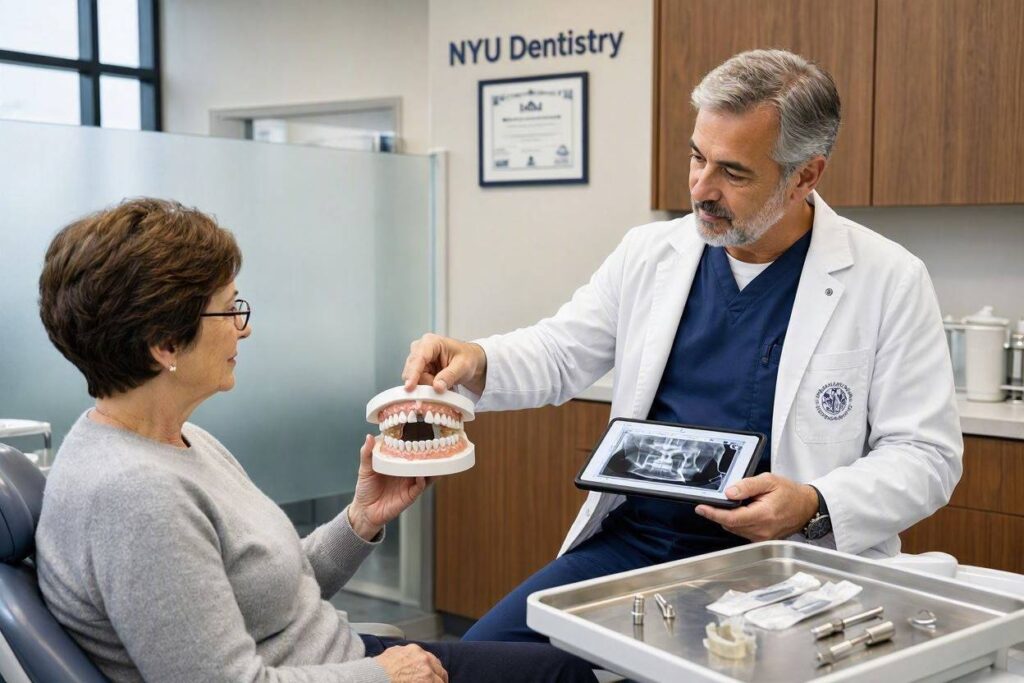
NYU College of Dentistry is a leading dental education institution. It trains future dentists and dental specialists while providing care to the community. The college operates several clinics where students perform treatments under the supervision of experienced faculty.
The college is known for offering high-quality care at prices that are significantly lower than private practice fees. Patients can save 30% to 60% on dental treatments, including implants.
Does NYU Dental Offer Implants?
Yes, NYU College of Dentistry offers dental implant treatment. The college has dedicated implant programs and clinics where patients can receive implant placement and restoration.
Implant Programs at NYU
NYU has several programs that provide implant treatment. These include the general dentistry clinics, the postgraduate periodontics clinic, the oral surgery clinic, and the prosthodontics clinic.
Each program has different levels of expertise and different pricing. The complexity of your case determines which program is most appropriate.
Types of Implants Available at NYU
NYU offers a full range of implant treatments.
Single Tooth Implants
Single tooth implants replace one missing tooth. This is the most common type of implant treatment at NYU.
Multiple Tooth Implants
For patients missing several teeth, NYU offers multiple implants and implant-supported bridges.
Full Arch Implants
Full arch implants replace all the teeth in one or both jaws. NYU offers the All-on-4 and All-on-6 techniques.
Implant-Supported Dentures
Implant-supported dentures provide a more stable alternative to traditional dentures. NYU offers this option for patients who need full arch replacement.
Mini Implants
Mini implants are available for patients with limited bone or for denture stabilization.
Cost of Dental Implants at NYU
The cost of dental implants at NYU is significantly lower than private practice fees. Here is what to expect.
Single Implant Costs
A single dental implant at NYU costs between $1,500 and $3,000. This includes the implant post, abutment, and crown. Private practice fees for the same treatment range from $3,000 to $6,000.
Full Arch Costs
Full arch implants at NYU cost between $15,000 and $25,000 per arch. Private practice fees range from $20,000 to $35,000.
Additional Costs
Bone grafting, if needed, costs $400 to $2,000 per site at NYU. Extractions cost $80 to $300 per tooth.
Cost Comparison Table for NYU Implants
Here is a quick reference table comparing NYU implant costs to private practice fees.
| Treatment Type | NYU Cost | Private Practice Cost |
|---|---|---|
| Single Tooth Implant | $1,500 – $3,000 | $3,000 – $6,000 |
| Implant-Supported Bridge | $3,000 – $8,000 | $5,000 – $15,000 |
| Implant-Supported Denture | $10,000 – $20,000 | $15,000 – $30,000 |
| Full Arch Implants | $15,000 – $25,000 | $20,000 – $35,000 |
| Bone Grafting | $400 – $2,000 | $500 – $3,000 |
How to Become a Patient at NYU Dental
Becoming a patient at NYU College of Dentistry involves a specific process.
Step One: Initial Screening
Call the college to schedule an initial screening appointment. During this visit, your dental needs are assessed, and you are assigned to the appropriate clinic.
Step Two: Comprehensive Examination
You undergo a comprehensive examination, including X-rays and possibly 3D scans. This helps the dental team develop a treatment plan.
Step Three: Treatment Planning
The dental team discusses your treatment options and develops a personalized plan. You receive an estimate of the costs and timeline.
Step Four: Treatment
Treatment begins according to the plan. For implants, this includes the surgical placement and the restorative phase.
What to Expect at NYU Dental
Receiving treatment at a dental school is different from a private practice. Here is what to expect.
Student Providers
Most treatments are performed by dental students or residents. They are supervised by experienced faculty members who check their work at each step.
Longer Appointments
Appointments at NYU take longer than at private practices. Students work more slowly, and faculty must approve each step.
Multiple Visits
You may need more visits to complete your treatment compared to a private practice. This is a trade-off for the lower cost.
High-Quality Care
Despite the lower cost, the quality of care at NYU is high. The college uses modern technology and follows strict protocols.
Advantages of Getting Implants at NYU
There are several advantages to choosing NYU for dental implants.
Significant Cost Savings
The most obvious advantage is cost. You can save 40% to 60% compared to private practice fees.
Access to Specialists
NYU has specialists in every field of dentistry. Your case is managed by a team of experts.
Advanced Technology
The college uses the latest technology, including 3D imaging and computer-guided implant placement.
Quality Assurance
All work is supervised by experienced faculty, ensuring high standards of care.
Disadvantages to Consider
There are also some disadvantages to consider.
Longer Treatment Time
Treatment at NYU takes longer than at a private practice. If you need implants quickly, this may not be the best option.
Less Personalized Care
You may see different students at each visit. Continuity of care can be a concern.
Limited Availability
Some clinics have waiting lists. You may need to wait several weeks or months for your first appointment.
Important Notes for Patients
- NYU College of Dentistry offers dental implants at reduced prices.
- Students perform treatments under faculty supervision.
- Costs are 40% to 60% lower than private practice fees.
- Appointments take longer and may require more visits.
- The quality of care is high despite the lower cost.
- Call to schedule an initial screening appointment.
Frequently Asked Questions
Does NYU Dental offer dental implants?
Yes, NYU College of Dentistry offers comprehensive dental implant treatment through several of its clinics.
How much do implants cost at NYU?
A single implant at NYU costs between $1,500 and $3,000. Full arch implants cost $15,000 to $25,000 per arch.
Are NYU dental implants good quality?
Yes, NYU uses high-quality materials and modern technology. All work is supervised by experienced faculty.
How do I become a patient at NYU Dental?
Call the college to schedule an initial screening appointment. You will be assessed and assigned to the appropriate clinic.
Do students perform the implant surgery?
Yes, dental students and residents perform the surgery under the supervision of experienced faculty.
How long does treatment take at NYU?
Treatment takes longer than at a private practice. The implant process takes three to six months, and appointments are longer.
Does NYU accept dental insurance?
Yes, NYU accepts many dental insurance plans. Check with the college for specific details.
Is there a waiting list for NYU Dental?
Some clinics have waiting lists. Call the college for current information on availability.
Conclusion
NYU College of Dentistry offers dental implant treatment at significantly reduced prices. Students and residents perform the work under the supervision of experienced faculty. Costs are 40% to 60% lower than private practice fees, making implants more accessible. The trade-off is longer appointments and more visits. Despite the lower cost, the quality of care is high. If you are seeking affordable dental implants in New York City, NYU is an excellent option to consider.
Additional Resource
For more information on NYU College of Dentistry and its clinics, visit the NYU Dentistry website at www.dental.nyu.edu. You can find information on services, fees, and how to become a patient.