Are Dental Implants Safe?
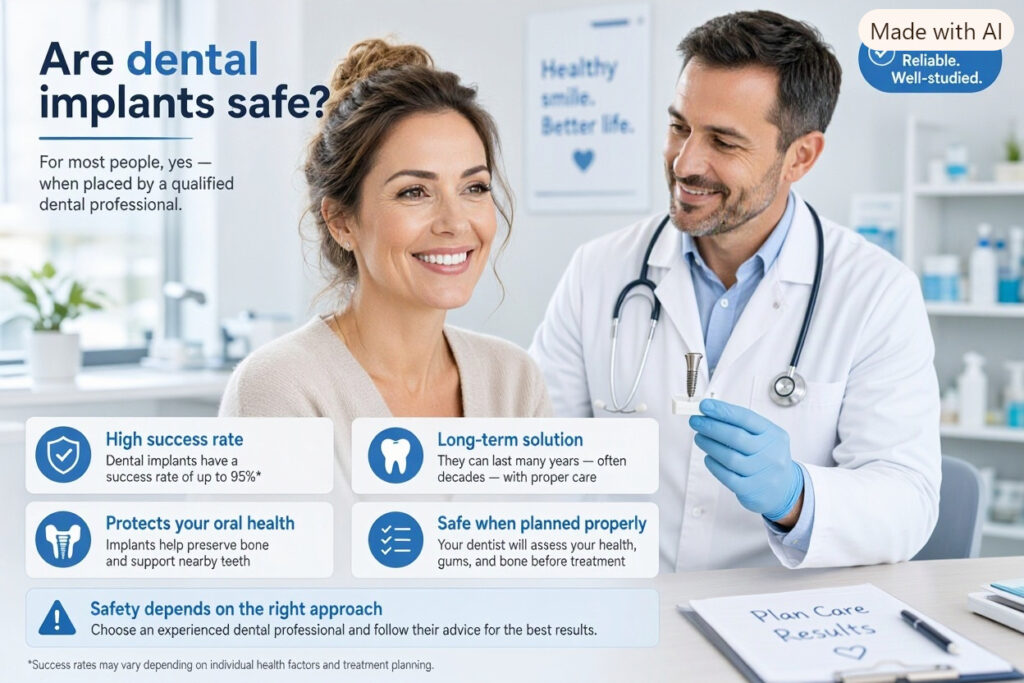
When you’re considering any medical or dental procedure, safety tops the list of concerns. Dental implants have been used successfully for over 50 years, helping millions of people regain their smiles and confidence. But are they truly safe? What does the research say, and what risks should you understand before proceeding?
This article provides an honest, evidence-based look at dental implant safety. We’ll cover the science behind their safety, potential risks, and how to minimize complications. By the end, you’ll have a clear picture of what to expect and how to make an informed decision.
A Brief History of Dental Implants
Decades of Proven Success
Dental implants aren’t a new invention. Modern implant dentistry traces its roots to the 1960s when Swedish researcher Dr. Per-Ingvar Brånemark discovered that titanium bonds with bone—the process we now call osseointegration. His first patient received implants in 1965, and those implants functioned for over 40 years.
Since then, implant technology has advanced dramatically. Today’s implants benefit from:
- Refined surgical techniques
- Advanced imaging and planning tools
- Better materials and surface treatments
- Improved understanding of healing processes
“Dental implants have one of the highest success rates of any elective surgical procedure. Decades of research and clinical experience support their safety.” — Dr. Robert Langdon, Oral Surgeon
Regulatory Oversight
In the United States, dental implants require FDA clearance before use. Manufacturers must demonstrate safety and effectiveness through clinical testing. This regulatory oversight adds another layer of safety assurance.
The Science Behind Implant Safety
Biocompatible Materials
Titanium, the primary implant material, is incredibly well-tolerated by the human body. It doesn’t trigger allergic reactions in most people and doesn’t corrode in the oral environment. This biocompatibility is why titanium is also used in joint replacements, pacemakers, and other medical devices.
Some patients wonder about titanium allergies. True titanium allergy is extremely rare—so rare that it’s estimated to affect less than 0.6% of the population. If you have concerns, your dentist can perform allergy testing before surgery.
Osseointegration: Nature’s Seal
When titanium fuses with bone, it creates a barrier that bacteria can’t penetrate. This biological seal protects the implant from infection deep within the jaw. The gum tissue also forms a tight seal around the implant, further protecting the underlying bone.
Sterile Surgical Environment
Implant placement occurs under strict sterile conditions. Your dental team follows protocols similar to hospital surgery, minimizing infection risk. Instruments are sterilized, and the surgical site is carefully prepared.
Safety Statistics You Should Know
Implant Success Rates
The numbers tell an encouraging story:
| Time Frame | Success Rate |
|---|---|
| 1 year | 98-99% |
| 5 years | 97-98% |
| 10 years | 95-97% |
| 20 years | 90-95% |
These rates compare favorably to many other medical procedures. For perspective, consider that hip replacement success rates hover around 95%, and heart bypass surgery success rates range from 85-95%.
Comparing Risks
Let’s put implant risks in perspective:
| Procedure | Major Complication Rate |
|---|---|
| Dental Implants | 1-5% |
| Hip Replacement | 2-5% |
| Wisdom Tooth Extraction | 3-5% |
| Root Canal | 1-3% |
Dental implants rank among the safest elective procedures when performed by qualified professionals.
“I often tell patients that dental implants have a higher success rate than most surgeries they’ll ever have. The key is proper planning and execution.” — Dr. Amanda Foster, Prosthodontist
Potential Risks and Complications
Understanding the Reality
While implants are safe, no surgical procedure is entirely risk-free. Understanding potential complications helps you prepare and recognize warning signs.
Surgical Risks
Infection
As with any surgery, infection is possible. Your dentist prescribes antibiotics as a precaution and provides care instructions to minimize risk. Most infections resolve quickly with treatment.
Bleeding
Excessive bleeding during or after surgery is uncommon but possible. Your dentist takes precautions to control bleeding and advises you on what to do if bleeding occurs.
Nerve Damage
The lower jaw contains nerves that provide sensation to your lips and chin. Rarely, implant placement can cause temporary or permanent numbness. Advanced imaging helps dentists avoid nerve structures.
Sinus Problems
Upper jaw implants can occasionally penetrate the sinus cavity, causing sinusitis or other issues. Special techniques, including sinus lifts, prevent this complication.
Long-Term Risks
Peri-implantitis
This gum infection around implants is the most common long-term complication. It’s similar to periodontitis around natural teeth. Good hygiene prevents most cases.
Implant Fracture
Implants rarely break, but excessive force can cause fractures. Night guards protect against grinding-related damage.
Bone Loss
Without proper care, bone around implants can recede. Regular monitoring catches this early.
Table: Complication Rates and Prevention
| Complication | Frequency | Prevention Strategy |
|---|---|---|
| Infection | 1-2% | Antibiotics, sterile technique |
| Nerve damage | <1% | Advanced imaging, skilled surgery |
| Sinus problems | 1-3% (upper jaw) | Sinus lift, careful planning |
| Peri-implantitis | 5-10% (long-term) | Excellent hygiene, regular checkups |
| Implant fracture | <1% | Night guard, avoid hard foods |
Who Should Avoid Dental Implants?
Absolute Contraindications
Some conditions make implants too risky:
- Active cancer treatment affecting the jaw
- Severe uncontrolled diabetes with poor healing capacity
- Active intravenous bisphosphonate use (may cause bone death)
- Severe immune deficiency disorders
Relative Contraindications
These conditions require careful evaluation but don’t necessarily rule out implants:
- Controlled diabetes — Usually safe with good blood sugar management
- Smoking — Increases risk; quitting improves outcomes
- Bone density issues — Bone grafting can address this
- Gum disease — Treat before implant surgery
- Certain medications — Some affect healing; discuss with your dentist
- Pregnancy — Usually deferred until after delivery
Important Note: Always disclose your complete medical history and all medications to your implant dentist. This information is crucial for safe treatment planning.
Safety Measures in Modern Implant Dentistry
Advanced Imaging
Modern implant dentistry uses:
3D Cone Beam Scans
These detailed images reveal bone density, nerve locations, and sinus anatomy. Your dentist plans the implant position with precision before surgery begins.
Digital Planning Software
Computer software simulates implant placement, allowing your dentist to choose optimal positions and angles. This precision improves outcomes and safety.
Surgical Guides
Custom-made guides transfer the digital plan to the surgical site. These guides ensure the implant goes exactly where planned.
Sterile Protocols
Your dental team follows strict infection control measures:
- Sterilized instruments
- Sterile drapes and gloves
- Antibacterial rinses before surgery
- Clean surgical environment
- Proper waste disposal
Antibiotic Prophylaxis
Many dentists prescribe antibiotics before and after implant surgery. This precaution dramatically reduces infection risk, especially in patients with certain health conditions.
Choosing a Safe Provider
Credentials to Look For
Not all dentists who place implants have advanced training. Look for:
Formal Education
Dentists who complete implant-focused residencies or continuing education programs have specialized knowledge.
Experience
Ask how many implants your dentist has placed. Experienced providers typically achieve better outcomes.
Membership in Professional Organizations
Organizations like the Academy of Osseointegration and the American Academy of Implant Dentistry set high standards.
Case Presentation
Reputable dentists share before-and-after photos and patient testimonials. They’re transparent about their results.
Questions to Ask Your Dentist
Before committing to implant treatment, ask:
- How many implants have you placed?
- What is your success rate?
- What imaging will you use for planning?
- How do you handle complications?
- What follow-up care do you provide?
- Can you provide references from satisfied patients?
“The provider matters more than the implant brand. A skilled surgeon with good planning will achieve better results than a less experienced provider using premium implants.” — Dr. Michael Torres, Periodontist
The Role of Your Health in Implant Safety
Medical Conditions to Discuss
Certain health conditions affect implant safety:
Diabetes
Good blood sugar control is essential. Poorly controlled diabetes impairs healing and increases infection risk. Your dentist coordinates with your physician to optimize control before surgery.
Autoimmune Diseases
Conditions like lupus or rheumatoid arthritis may affect healing. Medication use is also important to discuss.
Osteoporosis
Bone density affects implant success. Some osteoporosis medications (especially bisphosphonates) affect bone healing. Discuss all medications with your dentist.
Heart Conditions
Some heart conditions require antibiotic prophylaxis before surgery. Your dentist and physician determine if this is needed.
Medications That Matter
Some medications affect implant safety:
- Blood thinners — May increase bleeding risk
- Bisphosphonates — Can cause bone healing problems
- Immunosuppressants — May affect healing and infection risk
- Chemotherapy — Affects healing; implant timing matters
Always provide a complete medication list to your implant dentist.
Smoking: The Biggest Risk Factor
How Smoking Affects Implants
Smoking significantly reduces implant success rates. Here’s why:
Reduced Blood Flow
Nicotine constricts blood vessels, reducing oxygen and nutrients to healing tissues.
Impaired Healing
Smoking slows tissue repair and bone regeneration.
Increased Infection Risk
Smoking weakens immune response, making infections more likely.
Bone Loss
Smoking accelerates bone loss, compromising implant support.
The Numbers
| Patient Group | Implant Failure Rate |
|---|---|
| Non-smokers | 1-3% |
| Former smokers | 3-5% |
| Current smokers | 10-15% |
Quitting for Success
If you smoke, quitting before implant surgery significantly improves your chances of success. Even quitting a few weeks before surgery helps. Your dentist can provide resources for smoking cessation.
Note: Some dentists decline to place implants in active smokers due to high failure risk. Others proceed with counseling about risks and quit-smoking resources.
What to Expect After Surgery
Normal Healing Signs
After implant surgery, expect:
- Mild swelling for 2-3 days
- Some discomfort manageable with pain relievers
- Minor bleeding for 24 hours
- Temporary sensitivity
- Slight bruising
These symptoms typically resolve within a week.
When to Call Your Dentist
Contact your dentist immediately if you experience:
- Severe pain not controlled by medication
- Excessive bleeding that won’t stop
- High fever
- Significant swelling that worsens
- Numbness that doesn’t fade
- Signs of infection (pus, persistent bad taste)
Early intervention prevents small problems from becoming serious.
Frequently Asked Questions
Are dental implants safer than dentures?
Both are safe options. Implants carry surgical risks but avoid the ongoing issues some denture wearers face (slipping, sore gums, bone loss). The “safer” choice depends on your individual health and needs.
Can implants cause cancer?
No research links dental implants to cancer. Titanium is a safe, biocompatible material used in many medical devices.
Are there safer alternatives to implants?
Bridges and dentures don’t require surgery, making them safer for some patients. However, they have their own drawbacks, including adjacent tooth damage and ongoing maintenance needs.
Do implants affect MRI scans?
Titanium implants cause minimal artifact on MRI scans and don’t prevent you from receiving MRIs. Inform your radiologist about any implants.
Can I have implants if I’m pregnant?
Implant surgery is typically deferred until after pregnancy. The procedure isn’t dangerous, but it’s unnecessary during pregnancy and can be postponed.
Are metal-free implants available?
Yes, some manufacturers make ceramic or zirconia implants. These appeal to patients wanting metal-free options, though titanium remains the gold standard with more research support.
How safe is the surgery for elderly patients?
Age alone doesn’t increase implant risk. Many patients in their 70s and 80s receive implants safely. Your overall health matters more than your age.
Conclusion
Dental implants are safe, well-researched, and highly successful. With success rates exceeding 95% at 10 years, they’re among the most reliable dental procedures available. Proper patient selection, careful planning, and skilled surgery minimize risks.
In summary: Dental implants are safe for the vast majority of patients, backed by decades of research and clinical success rates above 95%. While risks exist—infection, nerve damage, and implant failure—these complications are uncommon and largely preventable through careful planning, good health management, and excellent oral hygiene. Choosing an experienced dentist and disclosing your complete medical history are essential steps toward safe, successful implant treatment.
Additional Resource
For safety information on dental devices, visit the FDA’s Center for Devices and Radiological Health at www.fda.gov/medical-devices.