Rogers AR What Are Dental Implants?
Living with missing teeth affects every dimension of your daily life. It changes the way you eat, the way you speak, and the way you feel when you smile. For residents of Rogers, Arkansas, the search for a reliable, permanent solution leads many to one of modern dentistry’s most transformative innovations: the dental implant. This is not a temporary patch or a removable appliance. It is a complete, biologically integrated tooth replacement system.
This comprehensive guide is written for the Rogers community. You will learn, in clear and precise terms, what a dental implant is, the three components that make up the system, and the detailed surgical and restorative process. We will explore the different types of implant solutions and, most importantly, why this treatment offers health benefits that no other tooth replacement option can match.
Understanding the Biology of Tooth Loss
A natural tooth is more than what you see above the gum. The visible white crown is the part you use to chew. Below the gum line, hidden from view, is the tooth root. This root sits securely in a socket within the jawbone. The root’s most vital function is not just anchorage. It is the preservation of the bone itself.
Every time you bite and chew, the roots of your teeth transmit mechanical pressure and vibration into the surrounding jawbone. This is a biological stimulus. The body senses this pressure and responds by constantly renewing the bone cells, keeping the jaw dense, strong, and healthy. When a tooth is extracted or lost, this essential stimulus vanishes. The body detects a lack of activity and begins a natural process of resorption. The bone in that area slowly shrinks in width and height. Over years, this bone loss can alter the fundamental shape of your face, leading to a collapsed, aged profile. A successful tooth replacement must restore this lost stimulation.
What Exactly is a Dental Implant?
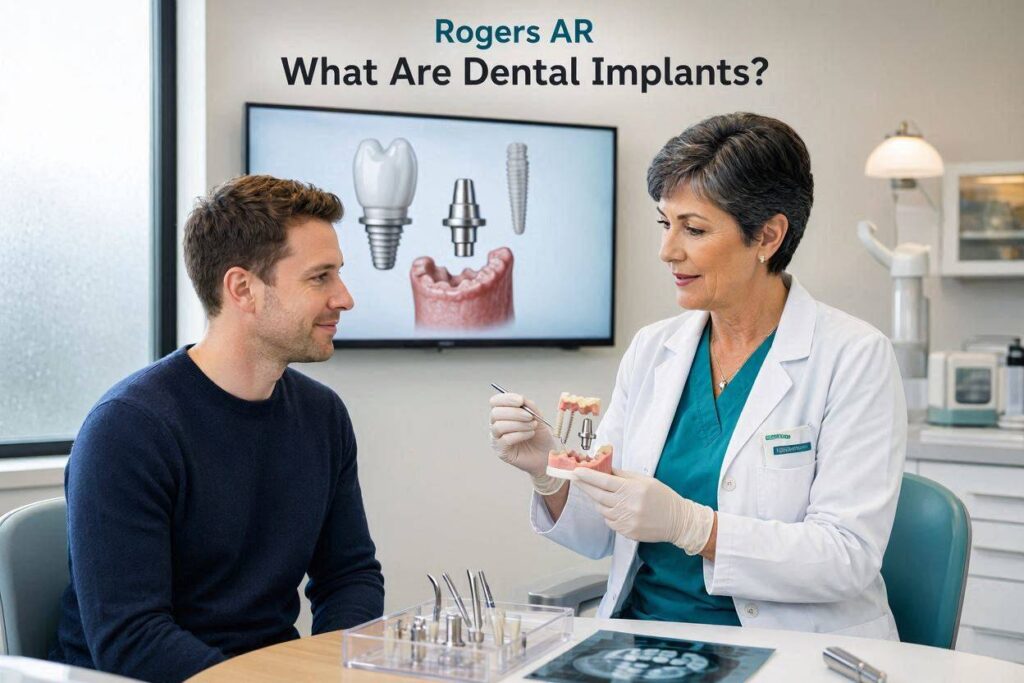
A dental implant is a state-of-the-art medical device designed to replace the entire structure of a missing tooth, from root to crown. It is not one piece but a sophisticated system of three interconnected components, each with a specific function.
The Implant Fixture: The Titanium Root
The foundation of the system is the implant fixture itself. This is a small, precision-engineered post, typically shaped like a screw. It is manufactured from medical-grade titanium alloy, a material chosen for a unique biological property: biocompatibility. The human body does not recognize titanium as a foreign invader. It does not trigger an immune rejection response. Instead, living bone cells have a natural affinity for titanium’s surface.
When a skilled surgeon places this titanium post into the precise location of the missing tooth root, a remarkable healing process begins. The bone cells grow directly onto the microscopic roughness of the implant surface. They create a structural and functional connection. This process, called osseointegration, effectively fuses the implant to the jawbone. Once integrated, the titanium fixture serves as a man-made tooth root, ready to support the visible tooth.
The Abutment: The Precision Connector
Once osseointegration is complete, a second small component is attached. This is the abutment. It is a connector post that screws into the implant fixture and sits just above the gum line. The abutment’s job is to provide a stable, precisely shaped anchor point for the final crown. Modern digital workflows allow for the creation of custom-milled abutments that are designed for the individual patient’s unique gum contours, which is critical for a natural aesthetic outcome.
The Implant Crown: The Custom-Crafted Tooth
The third and final component is the visible tooth, the dental crown. This is not a generic, mass-produced tooth. It is a custom work of art. Using a digital scan of your mouth, a master dental ceramist designs and mills the crown from a solid block of high-strength, aesthetic ceramic. Materials like layered zirconia or lithium disilicate (e.max) are selected for their ability to mimic the way natural tooth enamel reflects and transmits light. The crown is then bonded or screwed to the abutment, completing the restoration. The result is a tooth that is virtually indistinguishable from the ones you were born with.
The Dental Implant Procedure: A Step-by-Step Roadmap for Rogers Patients
The journey to a restored smile follows a deliberate, biologically driven timeline. A reputable implant practice in Rogers, AR, will never rush the healing phases.
Phase 1: Diagnostic Discovery and 3D Virtual Planning
Your implant journey begins with a comprehensive examination. The cornerstone of this diagnostic phase is a Cone Beam Computed Tomography (CBCT) scan. This advanced technology provides a three-dimensional X-ray of your jaw, allowing the surgeon to visualize the bone in a way that a two-dimensional, flat X-ray simply cannot. Using the 3D model, the surgeon can measure the precise height, width, and density of the bone, identify the exact location of nerves and sinuses, and virtually plan the surgery on a computer screen before any actual procedure is performed. This is the blueprint for a safe and predictable outcome.
Phase 2: Foundational Bone Grafting (If Necessary)
If the CBCT scan reveals that the jawbone has insufficient volume or density to support an implant, this step is necessary. A bone graft is a procedure to rebuild the deficient bone. The surgeon places bone grafting material—which can be synthetic, from a tissue bank, or harvested from another site in your own mouth—into the atrophic area. This graft acts as a scaffold, encouraging your body’s own cells to migrate in and create new, living bone. For upper back teeth, a sinus lift may be required to raise the floor of the maxillary sinus and create adequate vertical bone height. Healing from these preliminary grafts takes several months.
Phase 3: Surgical Implant Placement
On the day of surgery, your comfort is paramount. The procedure is performed under local anesthesia, and the practice will offer sedation options, from nitrous oxide to IV sedation, based on your needs and the complexity of the case. The surgeon makes a small access incision in the gum and creates a precisely sized channel in the bone using a series of drills guided by the 3D plan. The titanium implant is then inserted into this channel. The gum is closed, and the healing phase begins.
Phase 4: The Biological Miracle of Osseointegration
This is the most critical phase. Over the next 3 to 6 months, the patient goes about their life wearing a temporary tooth or healing denture. Deep within the jaw, the bone cells are actively growing onto the implant surface, locking it into place. This process of osseointegration is what differentiates a dental implant from any other type of dental procedure.
Phase 5: Final Restoration and Smile Unveiling
Once the implant is confirmed to be stable and fully integrated, the patient returns for the restorative phase. The surgeon attaches the abutment to the implant. The restorative dentist then uses a digital intraoral scanner to capture a perfect 3D image of the implant’s position. The custom crown is fabricated and, in a final appointment, is secured. The new tooth is now a permanent, fully functional part of your smile.
Types of Implant Solutions Available in Rogers, AR
The implant system is versatile and can be adapted to any level of tooth loss.
Single Tooth Replacement: A single implant fixture and crown replace one missing tooth. It is a completely independent unit that does not involve any adjacent teeth.
Multiple Tooth Replacement (Implant Bridge): When several teeth are missing in a row, two or more implants can support a fixed porcelain bridge. This avoids the need for a removable partial denture.
Full-Arch Restoration (All-on-4): For patients with no teeth on an upper or lower arch, four to six implants can support a full set of fixed, non-removable teeth. This technique often provides immediate function, with the patient leaving the surgery with a provisional set of teeth.
Implant-Retained Overdenture: For patients who prefer a removable option, two to four implants with special snap-attachments can secure a denture. The denture snaps into place, eliminating the slipping and rocking of a traditional denture, but is removable for cleaning.
The Unmatched Health and Quality-of-Life Benefits
The advantages of dental implants extend far beyond a cosmetic smile improvement.
Jawbone Preservation and Facial Structure: Only an implant replaces the root and transmits chewing forces to the bone, stopping the resorption process. This preserves the natural shape of your jaw and face, preventing the sunken look associated with long-term denture wear.
Protection of Natural Teeth: A traditional tooth-supported bridge requires grinding down the healthy teeth on either side of a gap. A dental implant fills the space without any damage to the surrounding natural teeth. This is a massive long-term health advantage.
Normalized Eating and Speaking: Because an implant is anchored in the bone like a real tooth, you can eat all foods without hesitation. There is no slipping, no clicking, and no anxiety about the tooth coming loose during a conversation or a meal.
Long-Term Economic Value: While the upfront cost is higher, an implant is a long-term solution. A bridge often needs replacement after 10-15 years. A well-maintained implant can last a lifetime, making it the most cost-effective choice over a patient’s life.
Dental Implant Candidacy
Most adults in reasonable health with one or more missing teeth are candidates for dental implants. The main requirement is sufficient jawbone to anchor the implant, or the medical ability to undergo a bone graft to create that foundation. Chronic, uncontrolled conditions like diabetes can impair healing and increase risk. Smoking is a significant risk factor for implant failure, and most surgeons will discuss a smoking cessation plan prior to surgery. A thorough review of your full medical history with your Rogers implant dentist is an essential part of the process.
What to Look for in a Rogers AR Implant Provider
When you search for a “Rogers AR implant dentist,” look for specific qualifications. The provider should have significant, verifiable training in surgical implant placement, not just a weekend course. Look for a specialist, such as an oral surgeon or periodontist, or a general dentist who holds a Fellowship or Diplomate status with a recognized implant organization like the American Academy of Implant Dentistry (AAID). The practice must utilize 3D CBCT technology for planning and diagnosis. A consultation should include a review of the dentist’s own portfolio of before-and-after cases, a detailed, all-inclusive written treatment plan, and a transparent discussion of all risks and benefits.
Conclusion
A dental implant is a three-part medical device—titanium root, connector abutment, and custom ceramic crown—that replaces a missing tooth in its entirety. It works through the biological process of osseointegration, fusing with the jawbone to create a stable foundation that stops bone loss and preserves facial structure. For residents of Rogers, AR, the implant journey involves precise 3D virtual planning, a surgical placement phase, a months-long healing period for biological fusion, and a final custom restoration. The result is a tooth that functions, feels, and looks completely natural, offering a lifetime of confident smiles.
FAQ
1. Is the implant procedure painful?
No. The placement is done under local anesthesia. Post-operative soreness is normal and is usually well-managed with standard pain relief medication.
2. How long does a dental implant last?
With excellent oral hygiene and regular dental check-ups, the implant fixture itself can last a lifetime. The crown, like any dental restoration, may eventually need replacement due to normal wear.
3. How much do dental implants cost in Rogers?
The cost varies based on the number of implants and need for grafting. The fee for a single implant, including all components, is a significant investment, and you should receive a detailed, all-inclusive quote at your consultation.
4. Will insurance cover my implant?
Dental insurance often pays a portion of the restorative crown cost under major services, but rarely the surgical placement. Medical insurance may cover the bone graft if it is medically necessary.
5. What is the success rate?
In healthy individuals with good oral hygiene, dental implants have a long-documented success rate of over 95%.
Additional Resource
For a thorough understanding of the science of bone healing and the materials used in oral surgery, explore the patient education resources on the official website of the American Association of Oral and Maxillofacial Surgeons (AAOMS).