What Are Garner NC Dental Implants?
Tooth loss creates a void that is more than just a cosmetic concern. It affects the way you speak, the foods you can enjoy, and the long-term structure of your face. For residents of Garner, North Carolina, dental implants represent the most advanced and biologically complete solution to this problem. The term “Garner NC dental implants” describes the delivery of this sophisticated tooth replacement therapy by local professionals who are trained in the surgical and restorative phases of the procedure.
This comprehensive guide is written specifically for the Garner community. You will gain a precise understanding of what a dental implant is, the materials and science behind it, the detailed step-by-step process of receiving one, and the profound health benefits that make it the gold standard in restorative dentistry.
The Hidden Biology of Tooth Loss
A natural tooth is composed of two main sections: the clinical crown, which is the visible white portion, and the root, which is anchored deeply within the jawbone. The root’s importance extends far beyond simple mechanical retention. Every act of chewing generates forces that travel down the root and into the surrounding alveolar bone. This mechanical stimulation is a critical biological signal. It informs the body that the bone in that region is necessary and functionally active. In response, the body continuously remodels and maintains that bone tissue.
When a tooth is lost, this vital stimulus is extinguished. The body interprets the absence of pressure as a signal that the bone is no longer needed. A slow, progressive process of resorption begins. The jawbone shrinks in both vertical height and horizontal width. Over the years, this bone atrophy can lead to visible facial collapse, a sunken appearance around the mouth, and a weakened foundation for any remaining teeth. A successful tooth replacement strategy must not just fill the empty space above the gum; it must address the loss of the root and the subsequent bone loss.
The Dental Implant: A Complete Anatomical Replacement
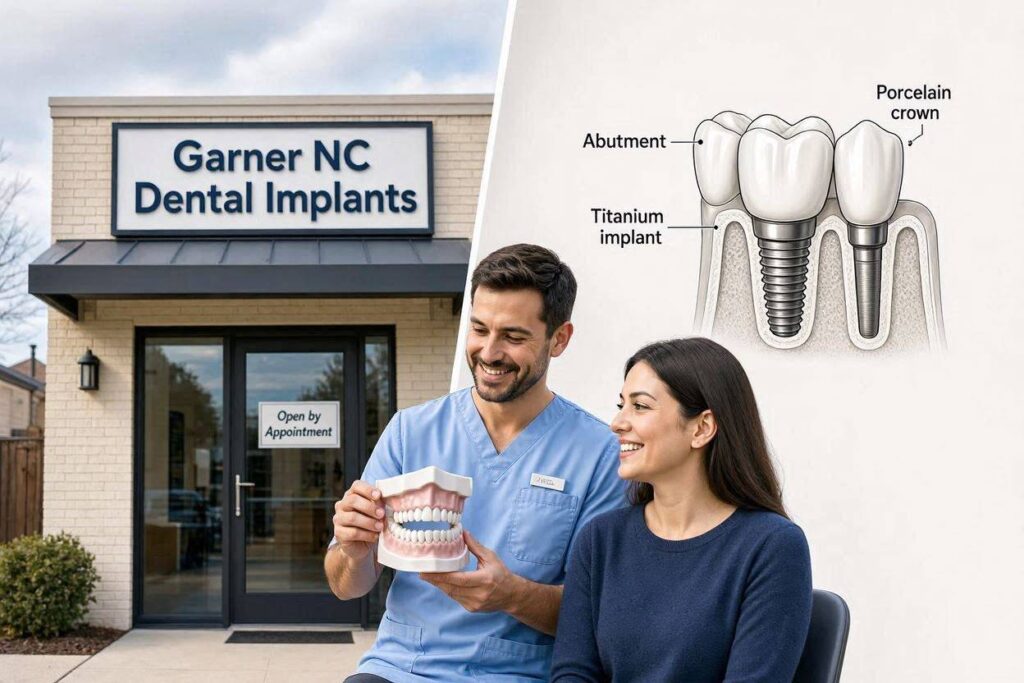
A dental implant is a sophisticated medical device system that replaces the entire structure of a missing tooth, from the root to the crown. It is a three-component assembly, with each part playing a distinct and essential role.
Component 1: The Implant Fixture (The Artificial Root)
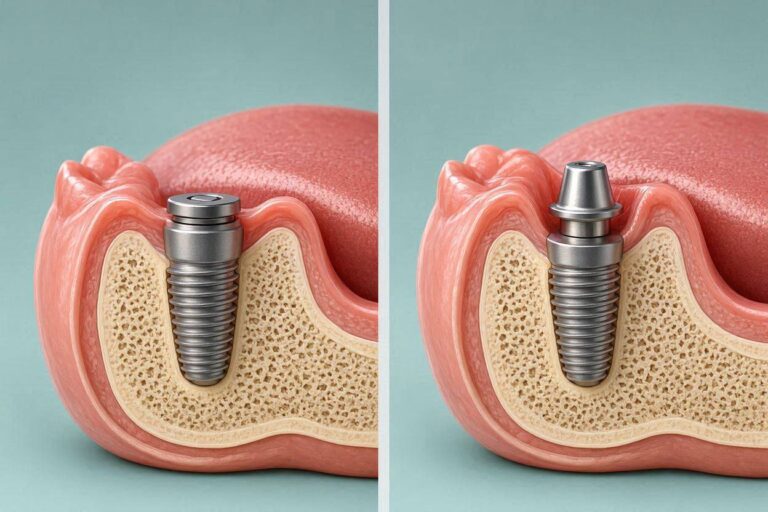
The implant fixture is the part that is surgically placed within the jawbone. It is a small, high-precision post, similar in form to a cylinder or a screw. This fixture is manufactured from medical-grade titanium alloy. Titanium is the material of choice for a single, crucial reason: biocompatibility. The human body does not reject titanium. The immune system does not attack it as a foreign invader. Instead, living bone tissue has a unique affinity for the titanium oxide layer that forms on its surface. The bone cells actively grow and adhere to this surface, creating a direct structural and functional connection. This process, known as osseointegration, locks the implant into the jaw, transforming it into a synthetic tooth root.
Component 2: The Abutment (The Precision Connector)
After the healing phase is complete, a second small component is attached. This is the abutment. It is a connector post that is secured to the implant fixture. It passes through the gum tissue and serves as the anchor platform for the final tooth. In a modern, high-quality restoration, the abutment is a custom-fabricated piece, designed using digital CAD/CAM software to perfectly match the contours of the patient’s gum and provide an ideal emergence profile for the crown.
Component 3: The Implant Crown (The Visible Tooth)
The final component is the prosthetic crown, the part you see and use. This is a custom-milled restoration, fabricated by a master dental ceramist from a solid block of high-strength ceramic. The materials of choice, typically layered zirconia or lithium disilicate, are selected for their ability to withstand the forces of chewing and to optically mimic the translucency, color, and texture of natural enamel. The crown is then cemented or screwed onto the abutment, completing the restorative process.
The Phased Process of Receiving an Implant in Garner, NC
The path from a missing tooth to a fully functional, permanent implant restoration is a carefully managed, multi-phase biological and clinical process. An experienced Garner implant practice will follow a strict, scientifically validated sequence.
Step 1: The Comprehensive Diagnostic and 3D Planning Session
Your implant journey begins not with a surgical instrument, but with a diagnostic scan. The standard of care is a Cone Beam Computed Tomography (CBCT) scan. This is a specialized, low-radiation 3D X-ray that produces a highly accurate, virtual model of your jaws, teeth, nerve pathways, and sinuses. Using this scan, the implant dentist can measure the precise height and width of the available bone, identify the exact location of the mandibular nerve (which must be avoided at all costs), and plan the virtual placement of the implant in three-dimensional space.
Step 2: Foundational Bone Grafting (When Necessary)
If the CBCT scan reveals that the jawbone is too thin, too short, or too soft to support an implant, this does not disqualify you. It simply means a preparatory procedure is required. A bone graft is a surgical procedure where a sterile grafting material is placed into the area of deficiency. This material acts as a biological scaffold, encouraging your own body to regenerate new, living, vascularized bone. In the upper posterior jaw, a sinus lift may be needed to raise the floor of the maxillary sinus. This foundational grafting phase requires its own healing time, typically 4 to 9 months, before the implant can be placed.
Step 3: Atraumatic Surgical Implant Placement
The implant placement procedure is performed in the dental office under local anesthesia. Your comfort is managed with sedation if desired. The surgeon creates a small access point in the gum and prepares a precisely sized channel in the bone using a series of surgical drills. The titanium implant fixture is then threaded or pressed into this channel with a high degree of primary stability. The gum tissue is sutured closed, and a temporary tooth or healing cap is placed.
Step 4: Osseointegration—The Biological Healing Phase
This is the most important phase and the one that defines implant science. Over the next 3 to 6 months, the patient goes about their normal daily life. Beneath the gums, the body is actively engaged in osseointegration. Osteoblasts—bone-building cells—are migrating to the implant surface and depositing new bone matrix. This new bone fuses intimately with the titanium oxide layer. At the end of this phase, the implant is not just mechanically tight; it is biologically fused to the skeleton.
Step 5: Digital Restoration and Delivery
Once healing is confirmed, the restorative phase begins. The implant is uncovered, and the custom abutment is placed. The dentist captures a digital impression using a handheld intraoral scanner. This scan is sent to a high-end dental laboratory. A ceramist designs and mills the final custom crown. In the last appointment, the crown is checked for fit, bite alignment, and aesthetics, and is permanently secured.
Types of Implant Solutions
Dental implants can be scaled to treat a single missing tooth or a completely edentulous arch.
- Single Tooth Implant: One fixture and one crown, fully independent of neighboring teeth.
- Implant Bridge: Two or more implants support a span of ceramic replacement teeth.
- Full-Arch Restoration (All-on-4): A full arch of fixed, non-removable teeth supported by a minimal number of strategically placed implants.
- Implant Overdenture: A removable denture that snaps onto implants for vastly improved stability.
The Irreplaceable Health Benefits
The advantages of dental implants over bridges and dentures are rooted in their ability to mimic the natural tooth root.
- Bone Preservation: Only an implant transmits functional forces to the jawbone, halting the cycle of bone resorption.
- Protection of Adjacent Teeth: A bridge requires the dentist to shave down the enamel of the healthy teeth on either side of the gap. An implant does not compromise any adjacent natural tooth.
- Restored Function: An implant provides a stable biting surface that allows you to eat a full, unrestricted diet with total confidence.
Candidacy for Dental Implants
Most healthy adults with tooth loss are candidates. The primary local requirement is sufficient bone volume, which can be created through grafting. Chronic, uncontrolled systemic conditions, such as poorly managed diabetes, and heavy smoking are significant risk factors for failure and require a candid discussion with your Garner implant surgeon.
Selecting a Qualified Provider in Garner
Your choice of provider is the single most important variable in your outcome. Look for a clinician with a strong background in surgical implant placement. This may be an oral surgeon, a periodontist, or a restorative dentist with advanced Fellowship or Diplomate credentials in implant dentistry. The practice must be equipped with a CBCT scanner and must use it for every case. During your consultation, the dentist should present a personal portfolio of their own before-and-after cases and provide a transparent, all-inclusive, itemized financial treatment plan.
Conclusion
Garner NC dental implants are a comprehensive tooth replacement system composed of a biocompatible titanium root, a precision connector abutment, and a custom-milled ceramic crown. The treatment is a structured process that includes 3D diagnostic imaging, any necessary bone regenerative procedures, a precise surgical placement, a critical period of biological bone healing known as osseointegration, and the final delivery of a custom-crafted crown. The unique biological benefit of an implant is its ability to replace the stimulatory function of a natural tooth root, thereby stopping jawbone loss, preserving facial structure, and providing a permanent, fully functional tooth.
FAQ
1. Is the procedure painful?
No. The surgery is performed under local anesthetic. Post-procedure discomfort is generally mild and manageable with medication.
2. How long will my implant last?
With proper oral hygiene and regular professional check-ups, the implant fixture itself is designed to last a lifetime. The crown may need eventual replacement due to normal wear.
3. How do I care for my implant?
Care for it as you would a natural tooth: brush, floss daily with implant-safe tools, and maintain a schedule of professional maintenance cleanings.
4. What is the success rate?
The documented success rate for dental implants in healthy patients is over 95%.
5. Will insurance cover the cost?
Dental insurance often provides a partial benefit for the crown. Your provider’s financial team will verify your exact coverage and explain all costs.
Additional Resource
For reliable, science-based information on the long-term benefits and care of dental implants, visit the patient education section of the American College of Prosthodontists (ACP).