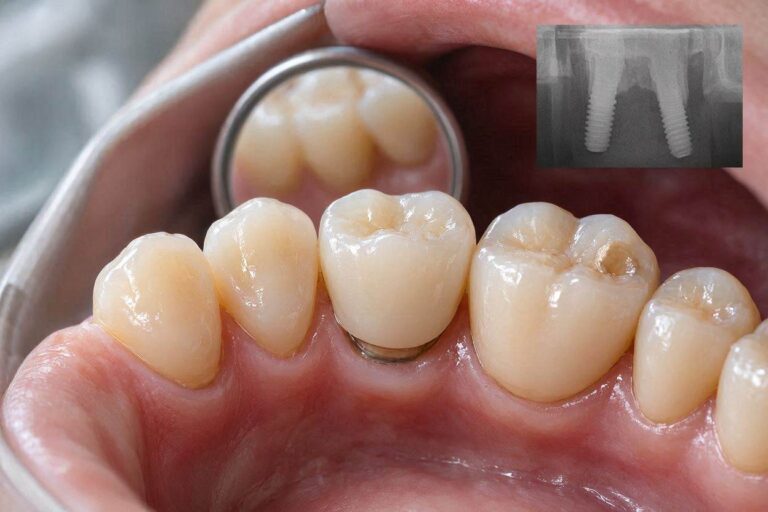
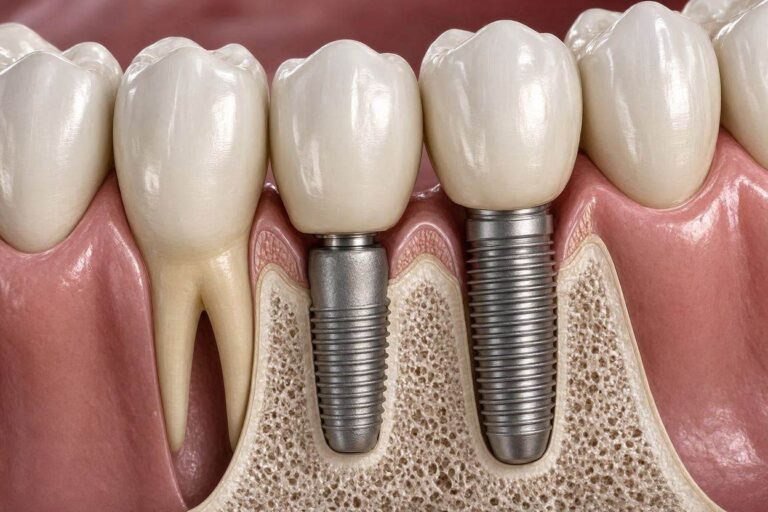
What Is A Screwless Dental Implant?
You hear the term “screwless dental implant” and immediately wonder how it works. Every implant you have seen or heard about involves screws: a screw-shaped implant in the bone, a screw to attach the abutment, maybe a screw to retain the crown. The idea of an implant system without screws seems almost paradoxical. How can the components stay together? How can the crown be secured? Is this a genuine innovation or marketing terminology?
A screwless dental implant refers to implant systems that eliminate the traditional screw-retained connection between components, typically using friction-fit, cementless retention mechanisms or one-piece designs where the implant and abutment are manufactured as a single unit. This guide explains what screwless dental implants are, how they work, their advantages and disadvantages, and whether they might be right for you.
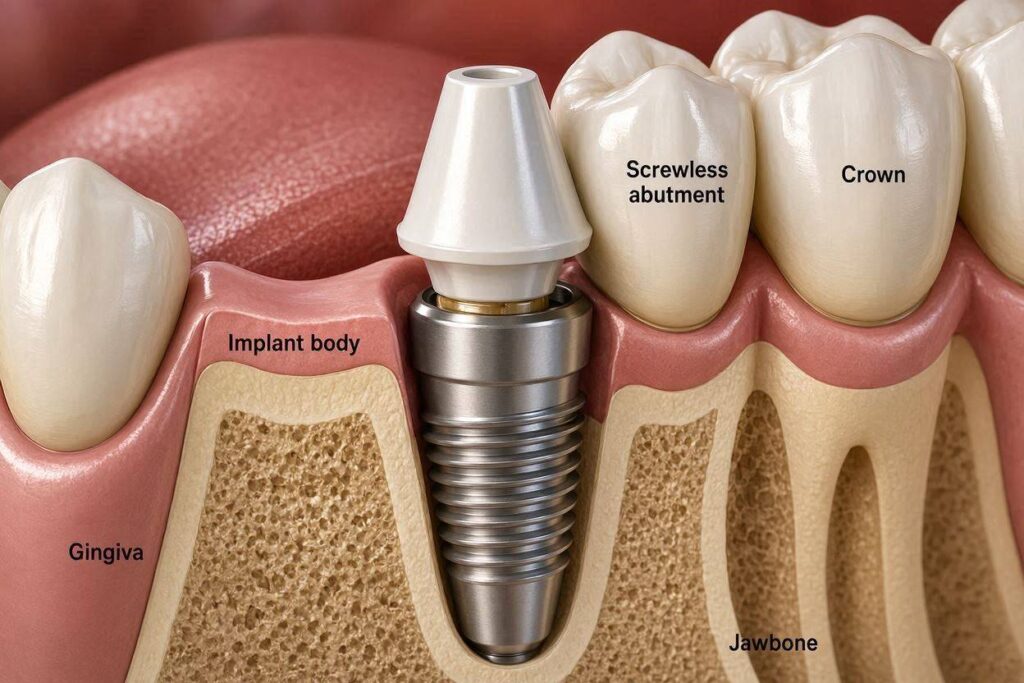
Defining the Screwless Dental Implant
The term “screwless” in implant dentistry applies to systems that eliminate one or more of the traditional screw connections in the implant-abutment-crown assembly.
Where Screws Are Traditionally Used
In a conventional implant system, screws appear at up to three locations:
| Screw Location | Function |
|---|---|
| Implant body threads | The implant itself is a screw threaded into bone |
| Abutment screw | Connects the abutment to the implant fixture |
| Prosthetic screw | Retains the crown to the abutment (in screw-retained restorations) |
What “Screwless” Actually Means
No current implant system eliminates the screw threads on the implant body that engage bone. The term “screwless” refers to eliminating the abutment screw, the prosthetic screw, or both.
Types of screwless systems:
| System Type | What Is Eliminated | How Connection Works |
|---|---|---|
| One-piece implant | Abutment screw | Implant and abutment are a single piece of titanium or zirconia |
| Friction-fit abutment | Abutment screw | Abutment is pressed into the implant using precise mechanical fit |
| Cementless crown retention | Prosthetic screw and cement | Crown snaps or friction-fits onto the abutment |
| Full screwless | Abutment screw and prosthetic screw | One-piece implant with snap-on or friction-retained crown |
One-Piece Dental Implants
The most common form of screwless implant is the one-piece design.
Design
A one-piece implant has the implant body and the abutment machined from a single piece of material. There is no separate abutment and no abutment screw. The implant is placed in the bone, and the abutment portion extends through the gum into the mouth.
Materials
| Material | Characteristics |
|---|---|
| Titanium | Strong, well-documented, metallic color may show through thin gums |
| Titanium alloy | Higher strength than pure titanium |
| Zirconia | White color; aesthetic; metal-free |
How One-Piece Implants Work
- The implant is surgically placed into the bone
- The abutment portion extends through the gum immediately
- There is no second surgery to uncover the implant
- After osseointegration, the crown is fabricated and attached to the abutment portion
- The crown may be cemented or, in some systems, snapped onto the abutment
Comparison: One-Piece vs. Two-Piece Implants
| Feature | One-Piece (Screwless) | Two-Piece (Conventional) |
|---|---|---|
| Components | 1 | 2–3 |
| Abutment connection | None (single piece) | Screw-retained |
| Surgical protocol | Usually one-stage | One-stage or two-stage |
| Prosthetic flexibility | Limited; abutment angle is fixed | High; abutments can be changed |
| Abutment screw loosening | Impossible (no screw) | Possible complication |
| Abutment fracture | Less common (no joint) | Can occur at connection |
| Removal if failure | More difficult | Easier |
| Emergence profile | Pre-determined by implant position | Can be modified with abutment selection |
Friction-Fit Abutment Systems
Some implant systems offer screwless abutment retention using precise mechanical friction.
How Friction-Fit Works
The abutment has a tapered post that precisely matches a tapered socket in the implant. When the abutment is pressed into place, the friction between the precisely machined surfaces holds it securely. This is sometimes called a “cold weld” or “Morse taper” connection, though true cold welding requires specific conditions.
The Morse Taper Connection
A Morse taper is a specific type of friction-fit connection where a tapered male component fits into a matching female socket. The taper angle is shallow enough that the components lock together through friction alone. Some implant systems use this principle.
| Feature | Morse Taper Connection |
|---|---|
| Retention mechanism | Mechanical friction |
| Taper angle | Typically 1–3 degrees |
| Screw required | No |
| Retrievability | Requires specific instruments |
| Bacterial seal | Excellent; very tight fit |
| Long-term stability | Good; resists loosening |
Advantages of Friction-Fit Abutments
- Eliminates abutment screw loosening (a common complication)
- Provides excellent bacterial seal
- Creates a stable, precise connection
- Often allows for platform switching to preserve bone
Disadvantages
- Abutment removal can be difficult if needed
- Requires precise manufacturing tolerances
- May not be retrievable in all cases
Cementless Crown Retention
Some systems eliminate the prosthetic screw and dental cement by using mechanical retention for the crown.
Types of Cementless Retention
| Mechanism | How It Works |
|---|---|
| Friction grip | Crown has a precisely matched socket that grips the abutment |
| Snap attachment | Crown has a flexible component that snaps over a retentive feature on the abutment |
| Spring retention | Internal spring elements engage a groove on the abutment |
| Magnetic retention | Magnets in the crown and abutment hold the restoration in place |
Advantages of Cementless Crowns
- Retrievability: The crown can be removed without damage for maintenance or repair
- No cement complications: Eliminates cementitis (inflammation from retained cement)
- Cleaner: No excess cement to clean up during delivery
- Predictable retention: Known retention force, unlike cement
Disadvantages
- Retention force may decrease over time with repeated removal
- May be more expensive than cemented crowns
- Some systems may have a slight tactile sensation of movement
- Not all systems are compatible with all implant brands
Clinical Scenarios for Screwless Implants
Screwless systems offer particular advantages in specific situations.
Narrow Spaces
One-piece implants can be made with smaller diameters than two-piece systems because there is no internal connection to accommodate. This makes them suitable for narrow ridges or spaces where a standard implant cannot fit.
Aesthetic Zones
Zirconia one-piece implants are white, eliminating the risk of gray metal showing through thin gum tissue. For patients with thin gingival biotypes or high smile lines, this aesthetic advantage can be significant.
Patients with Metal Sensitivity
Zirconia one-piece implants are metal-free, making them suitable for patients with confirmed titanium allergies or those who prefer metal-free restorations.
Situations Where Screw Loosening Is a Concern
Abutment screw loosening is one of the most common mechanical complications in implant dentistry. Screwless connections eliminate this risk entirely.
Advantages of Screwless Implant Systems
Elimination of Abutment Screw Complications
| Complication | Incidence with Screwed Abutments | Incidence with Screwless |
|---|---|---|
| Screw loosening | 5–15% over 5 years | 0% |
| Screw fracture | 1–2% | 0% |
| Connection contamination | Possible | Reduced risk |
Simplified Prosthetic Workflow
With one-piece implants, there is no abutment selection, no abutment try-in, and no abutment screw torquing. The restorative process can be simpler and faster.
Fewer Components
Fewer components mean:
- Less inventory for the dental practice
- Fewer parts that can be lost or mismatched
- Potentially lower cost
- Simpler treatment for the patient
Potential for Better Soft Tissue Response
The absence of a microgap between implant and abutment eliminates a potential site for bacterial colonization. Some research suggests better soft tissue health around one-piece implants compared to two-piece systems, though the evidence is not conclusive.
Disadvantages and Limitations of Screwless Implants
Limited Prosthetic Flexibility
This is the most significant limitation. With a one-piece implant, the abutment angle is determined by the implant position. If the implant is not ideally positioned, correcting angulation with an angled abutment is not possible. The crown must be fabricated to accommodate the existing abutment angle.
Surgical Precision Required
Because the abutment position cannot be adjusted after placement, the surgical placement must be more precise. There is less margin for error than with two-piece systems that allow abutment angle correction.
Cementation May Still Be Required
Many one-piece implants require cement-retained crowns. While the abutment connection is screwless, the crown attachment may still involve cement, with its associated risks.
Removal Difficulty
If a one-piece implant fails and must be removed, the procedure is more challenging than removing a two-piece implant. There is no abutment to remove first, and the integrated one-piece design requires more bone removal for extraction.
Limited Long-Term Data for Some Systems
While one-piece implants have been used for decades, some of the newer screwless retention mechanisms for crowns have limited long-term clinical data.
Screwless vs. Screw-Retained: A Balanced Comparison
| Factor | Screwless (One-Piece) | Screw-Retained (Two-Piece) |
|---|---|---|
| Abutment screw loosening risk | None | Present |
| Prosthetic flexibility | Limited | High |
| Surgical precision requirement | Higher | Standard |
| Abutment angle correction | Not possible | Possible |
| Retrievability | Challenging | Good |
| Component count | Lower | Higher |
| Cement need | Often still needed for crown | Not needed for screw-retained crowns |
| Microgap elimination | Yes | Minimal but present |
| Aesthetic options | Good (especially zirconia) | Excellent |
| Long-term data | Good for one-piece; limited for some crown retention | Extensive |
Who Is a Candidate for Screwless Implants
Screwless implants may be appropriate for:
- Patients with limited interdental space requiring narrow implants
- Patients with metal sensitivity (zirconia one-piece)
- Patients in aesthetic zones with thin gum tissue (zirconia)
- Patients who have experienced abutment screw loosening with previous implants
- Selected single-tooth replacements in non-aesthetic zones
They may be less appropriate for:
- Full arch restorations requiring precise abutment alignment
- Cases where implant position is compromised and angle correction is needed
- Patients with significant bruxism (one-piece implants may not offer the same prosthetic flexibility for managing forces)
- Cases where future retrievability is a priority
Conclusion
A screwless dental implant refers to systems that eliminate traditional screw connections, most commonly through one-piece designs where the implant and abutment are a single unit, or through friction-fit connections that retain components without screws. These systems offer distinct advantages including elimination of abutment screw loosening, a simplified component inventory, potentially improved soft tissue response due to the absence of a microgap, and in the case of zirconia, superior aesthetics. However, they come with significant limitations, primarily reduced prosthetic flexibility since abutment angulation cannot be adjusted after implant placement. Screwless implants require particularly precise surgical placement and may be more challenging to remove if failure occurs. They represent a valid alternative to conventional two-piece systems in appropriately selected cases.
Frequently Asked Questions
Are screwless dental implants better than traditional implants?
Neither is universally better. Screwless implants eliminate abutment screw complications but sacrifice prosthetic flexibility. The best choice depends on the specific clinical situation, the surgeon’s experience, and the patient’s needs.
Can a screwless implant be used for a full arch restoration?
One-piece implants are less commonly used for full arch restorations because aligning multiple one-piece abutments precisely for a passive-fitting prosthesis is challenging. Two-piece systems with angle-correcting abutments offer more flexibility for full arch cases.
Do screwless implants cost more?
The implant itself may cost similarly. The total treatment cost depends on the overall treatment plan. Fewer components may reduce some costs, but the need for very precise surgical placement may add to planning requirements.
How is the crown attached to a screwless implant?
It depends on the system. Crowns on one-piece implants are often cemented. Some systems use friction-fit or snap-on crowns that retain mechanically without cement or screws.
Can a screwless implant be converted to a conventional one later?
No. A one-piece implant cannot be converted to a two-piece system. If prosthetic circumstances change significantly, the implant would need to be removed and replaced with a two-piece system.
Additional Resources
- International Congress of Oral Implantologists: www.icoi.org
- American Academy of Implant Dentistry: www.aaid.com
- International Team for Implantology: www.iti.org