What Is Prosthesis in Dental Implant?
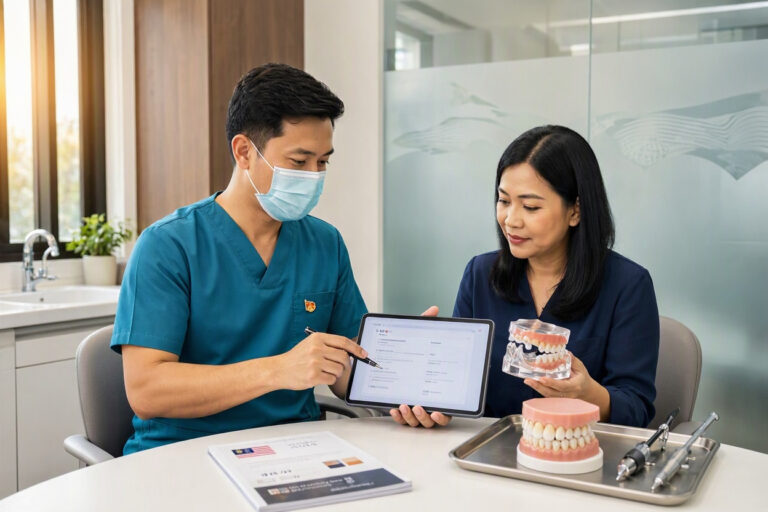
The word “prosthesis” often conjures images of artificial limbs—a prosthetic leg or a prosthetic arm. In dentistry, the term carries a parallel meaning, yet it remains a source of confusion for many patients embarking on their implant journey. You might hear your dentist say, “We will take an impression for the final prosthesis,” or “Your temporary prosthesis will be delivered today.” What exactly are they referring to? In the context of dental implants, the prosthesis is not the implant post buried in your bone. It is the visible, functional tooth or set of teeth that attaches to the implant. It is the final product, the reason you underwent surgery in the first place. This article provides a complete, clear, and comprehensive guide to the prosthesis in implant dentistry. You will understand the different types, the materials, how they attach, and how they are fabricated. This knowledge will empower you to have informed discussions with your restorative dentist.
Defining the Dental Implant Prosthesis
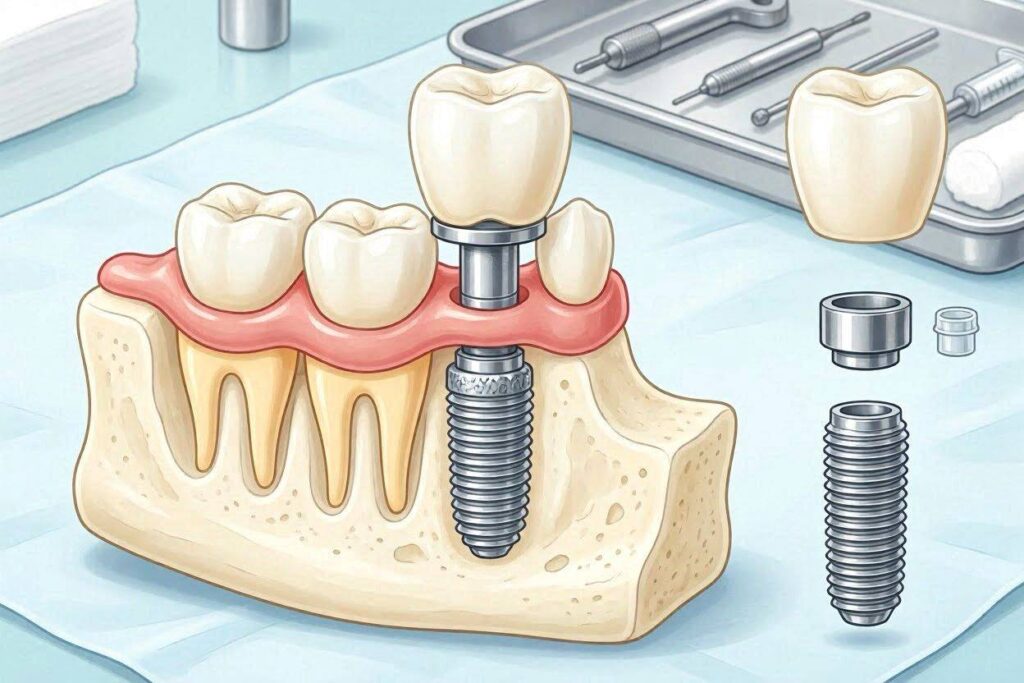
A dental implant is an assembly of three main components: the implant fixture (the root), the abutment (the connector), and the prosthesis (the tooth). The prosthesis is defined as any artificial replacement for a missing natural tooth, multiple teeth, or all of the teeth, which is supported by and attached to one or more dental implants. The key word is “supported by.” Unlike a traditional denture that rests on your gums, an implant prosthesis derives its retention, stability, and support directly from the osseointegrated implant posts. It does not move when you chew, speak, or laugh. It is fixed, or in some cases, it is a removable overdenture that “snaps” onto the implants with precision attachments but is taken out by the patient for cleaning. The prosthesis is custom-fabricated for your mouth, by a dental laboratory technician, based on a prescription, impression, and specific instructions from your dentist.
The Distinction from an Abutment
Patients often blur the line between the abutment and the prosthesis. The abutment is the intermediate connector. It is screwed directly into the implant fixture. It can be made of titanium or zirconia. The prosthesis is the final tooth restoration that is placed over or attached to the abutment. Think of the implant as a steel pile driven into the ground, the abutment as the base plate bolted to the pile, and the prosthesis as the beautiful architectural structure built on top. You can have a crown (single tooth prosthesis), a bridge (multiple teeth prosthesis), or a full-arch bridge (complete arch prosthesis) all supported by implants.
Types of Implant Prostheses
The type of prosthesis is dictated by the number of missing teeth and the restorative plan. A single missing tooth and a completely edentulous jaw require fundamentally different prosthetic designs.
The Single Crown Prosthesis
This is the most straightforward implant prosthesis. It replaces one tooth, from the gum up. The crown is either cemented onto the abutment or, in the increasingly preferred modern method, it is screw-retained. A screw-retained crown is a single unit where the crown and abutment are fused, or the crown has a small screw access hole that is sealed with composite. The crown is custom-shaded, shaped, and textured by the ceramist to match your adjacent natural teeth. It fills the gap, restores your bite, and looks entirely natural. It is cleaned with floss, an interdental brush, or a water flosser, just like a natural tooth.
The Implant Bridge (Fixed Partial Denture)
For multiple missing teeth, an implant-supported bridge is the prosthesis of choice. Instead of placing an implant for every single missing root, two implants can support a multi-unit bridge. The classic example is two implants supporting a three-unit bridge, with a central false tooth (pontic) suspended between them. The bridge is fabricated as one solid piece of zirconia or porcelain-fused-to-metal, and it is screwed or cemented onto the abutments. This prosthesis distributes forces across the implants and is an excellent, cost-effective solution. The pontic is meticulously shaped to rest gently on the gum, allowing a floss threader or an interdental brush to clean under it.
The Full-Arch Fixed Prosthesis (All-on-4, Hybrid Bridge)
This is the life-changing prosthesis for a patient who has lost all their teeth in a jaw. Four, five, or six implants are placed, and a full arch of 10 to 14 teeth is fabricated as a single, rigid prosthesis. This is permanently screwed into the multi-unit abutments. The patient does not remove it. It is only removed by the dentist during maintenance visits. This prosthesis has a titanium or zirconia framework with individually bonded acrylic or ceramic teeth, or it can be a monolithic, fully contoured zirconia arch. It replaces the teeth and also some of the lost pink gum tissue with pink porcelain or acrylic flanges. It restores a patient’s complete smile, bite, and facial support.
The Implant Overdenture (Removable Prosthesis)
For a patient with a severely resorbed jaw, two or four implants can be used to anchor a removable, full denture. The denture base has special attachments, like a Locator or a ball attachment, that “click” onto the implants. The patient can firmly snap the denture into place for all-day function and then remove it at night for cleaning. This is a vastly superior solution to a conventional loose denture. It requires fewer implants than a fixed bridge and is therefore more affordable. The prosthesis itself is a traditional acrylic denture, but its internal surface houses the precision attachments.
Materials Used in Implant Prostheses
The material selection for your prosthesis is a balance of strength, aesthetics, and cost. The same material is not ideal for a single front tooth as for a full-arch back tooth bridge.
Zirconia (Zirconium Dioxide)
Zirconia is a high-strength, white ceramic. For single crowns and short bridges in the posterior, monolithic, full-contour zirconia is an exceptionally strong and aesthetic option. It has a flexural strength of 1,000-1,200 MPa, making it virtually unbreakable under normal chewing forces. For full-arch prostheses, a milled zirconia framework or a full monolithic zirconia arch is the premium choice. It is highly biocompatible, resists plaque accumulation, and when layered with staining and glaze, can look beautifully natural. Its slight opacity makes it less ideal for a single anterior crown in a highly aesthetic zone, where a more translucent material is preferred.
Lithium Disilicate (IPS e.max)
This glass-ceramic is the gold standard for anterior single-crown aesthetics. It has a unique ability to transmit and scatter light in a way that mimics natural tooth enamel and dentin. It can be fabricated as a monolithic, high-translucency block, or it can be layered with specialized ceramic powders by a master ceramist. Its flexural strength is around 400 MPa, which is excellent for a single crown and an anterior bridge, but it is not the first choice for a full-arch posterior bridge where extreme forces are encountered.
Porcelain-Fused-to-Metal (PFM)
This is the traditional, time-tested material. A metal substructure, made of a base metal alloy or a noble metal, provides a strong, well-fitting framework. Porcelain is then baked onto the metal in layers to create the aesthetic tooth shapes. PFM is strong, durable, and cost-effective. Its major aesthetic disadvantage is the dark metal margin, which can show at the gumline if recession occurs. It is still widely used for implant bridges in non-aesthetic zones.
Acrylic and Composite Hybrid
For full-arch fixed prostheses, a hybrid denture is a very popular option. It combines a lightweight titanium framework with high-impact acrylic denture teeth and pink acrylic gums. This prosthesis is less expensive than full zirconia, is lighter, and individual teeth can be repaired or added if an implant fails. The acrylic teeth will, over 5-10 years, wear and need replacement or relining, whereas a zirconia arch is virtually wear-proof. The choice between a zirconia final bridge and a titanium-acrylic hybrid is a major restorative decision.
The Prosthetic Workflow: From Impression to Delivery
The fabrication of an implant prosthesis is a multi-step collaboration between the restorative dentist and the dental laboratory.
- Osseointegration Confirmed: The dentist has verified that the implant is fused to bone.
- Abutment Selection and Impression: A scan body or an impression coping is attached. A precise digital intraoral scan or a physical impression is taken.
- Laboratory Phase: The dental technician pours a master cast or uses a 3D-printed model. They design and mill or cast the abutment and the framework for the prosthesis. They then apply the ceramic, acrylic, or composite teeth.
- Try-In Appointment: For complex bridge cases, a wax try-in or a milled try-in prosthesis is placed in the mouth to verify fit, bite, lip support, and aesthetics before final processing.
- Delivery Appointment: The final prosthesis is torqued down, the occlusion is meticulously checked and adjusted, the screw access channels are sealed, and oral hygiene instructions are given.
Screw-Retained vs. Cemented Prosthesis
This is a critical design choice. A screw-retained prosthesis has a small access channel through the crown, allowing it to be screwed directly into the abutment or the implant. Its major advantage is retrievability. The dentist can unscrew it to inspect the implant, clean the tissue, or repair the porcelain without destroying the prosthesis. It also eliminates the risk of retained cement, which is a major cause of peri-implantitis. The access hole is filled with a small piece of PTFE tape and a tooth-colored composite. A cemented prosthesis has no screw access hole. It is cemented onto the custom abutment with a special dental cement. It offers better aesthetics for an angled implant and is sometimes the only viable option if the screw channel would emerge on the facial surface of a front tooth. The risk is that excess cement can become trapped under the gum and cause a deep, destructive infection.
Important Note: Your prosthesis is a precision medical device. It will serve you for decades only if you maintain it with meticulous daily hygiene and professional maintenance. The junction where the prosthesis meets the gum is a bacterial seal. If you neglect cleaning this seal, the bacteria will destroy the bone supporting the prosthesis, and the entire implant foundation can fail. A prosthesis is a lifelong commitment to excellent home care and regular professional recall visits.
Conclusion
The prosthesis in dental implant treatment is the custom-fabricated, implant-supported artificial tooth or set of teeth that restores visible function and aesthetics, ranging from a single crown to a full-arch fixed bridge or a removable overdenture. It is made of durable, biocompatible materials like zirconia, lithium disilicate, or hybrid acrylic on metal, and it is delivered after osseointegration is confirmed. The design choice between screw-retained and cemented, and the material selection, are critical decisions that determine the long-term success and maintainability of the restoration.
FAQ
1. How long will my implant prosthesis last?
With proper care, a well-fabricated ceramic or zirconia prosthesis can last 15-25 years or longer. The implant fixture can last a lifetime. The teeth of an acrylic hybrid prosthesis may need to be replaced or relined due to wear, typically every 5-10 years.
2. Can I whiten my implant prosthesis if it stains?
No. Teeth whitening agents only work on natural tooth structure. External stains on a ceramic prosthesis can be polished off by a professional hygienist. If the color is intrinsically wrong or darkened, the prosthesis must be remade.
3. What is a provisional or temporary prosthesis?
This is a temporary tooth or bridge, usually made of acrylic, that is placed on the implant during the osseointegration healing period or while the final prosthesis is being fabricated. It provides aesthetics, shapes the gum tissue, and is non-functional for chewing.
Additional Resource
For more information on restorative implant dentistry and prosthetic options, visit the American College of Prosthodontists: https://www.prosthodontics.org/