What Is the Best Dental Implant Company?
If you are missing a tooth—or several teeth—you have probably started researching dental implants. And very quickly, you ran into a big question: what is the best dental implant company?
It makes sense to ask. You want something that lasts. You want something safe. And you do not want to pay for a brand name if a cheaper option works just as well.
Here is the honest truth. There is no single “best” company for everyone. But there are definitely better and worse choices depending on your situation, your bone health, your budget, and your dentist’s experience.
In this guide, we will walk through the top dental implant brands in the world. We will compare them like normal people compare cars or laptops. No fake claims. No hidden marketing. Just useful facts.
By the end, you will know exactly what to ask your dentist and how to make a confident choice.
How to Think About Dental Implant Brands (Before We Compare)
Before we name names, let us clear up a few myths.
Myth 1: The most expensive brand is always the best
Not true. Expensive brands often have more clinical research behind them. But a mid-tier brand placed by an excellent surgeon will almost always beat a top-tier brand placed by a beginner.
Myth 2: All implants are the same
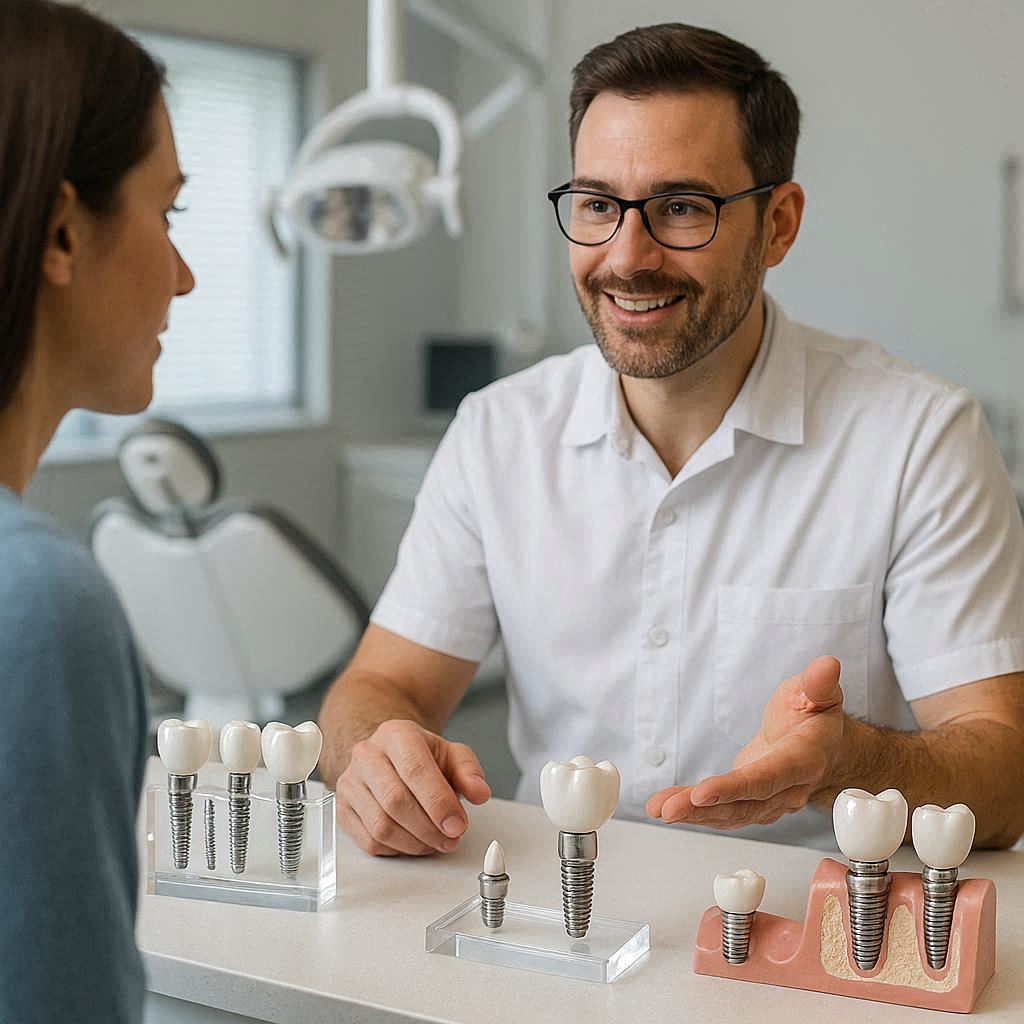
Also not true. Implants differ in surface texture, shape, connection type, and material purity. These differences affect how fast bone grows around the implant (osseointegration) and how long it lasts.
Myth 3: You can buy implants online and bring them to any dentist
Please do not do this. Dental implants are medical devices. Dentists are legally and ethically responsible for the parts they use. Most will refuse to place patient-supplied implants.
Important note: A dental implant is not like a screw from a hardware store. It must be sterile, traceable, and matched to specific surgical tools. Always let your dentist supply the implant.
What Makes a Dental Implant Company “Good”?
Let us break this into simple terms. A great implant company offers four things:
- Proven clinical data – Studies showing high success rates over 10+ years.
- Consistent manufacturing – No weak batches, no metal impurities.
- Good surface technology – The implant surface must encourage bone growth.
- Wide availability and support – Your dentist can get tools, parts, and training easily.
If a brand fails in any of these areas, avoid it.
The Top Dental Implant Companies Compared
We will now look at the most respected names in the industry. These are the companies you will hear about if you visit a specialist in the US, Canada, Europe, Australia, or most of Asia.
| Company | Best for | Surface technology | Price range (per implant, without crown) | Track record |
| — | — | — | — | — | — |
| Nobel Biocare | All-around excellence, immediate loading | TiUnite | $500–$700 | 40+ years |
| Straumann | Bone density issues, fast healing | SLActive | $550–$750 | 60+ years |
| Zimmer Biomet | Value + quality | Tapered Screw-Vent | $400–$600 | 30+ years |
| Dentsply Sirona (Astra Tech) | Soft tissue health | OsseoSpeed | $450–$650 | 30+ years |
| BioHorizons | US-made, laser-lok surface | Laser-Lok | $400–$550 | 25+ years |
| MIS Implants | Budget-friendly | Seal, V3 | $250–$400 | 20+ years |
| Neodent | Affordable, Straumann-owned | Neoporous | $300–$450 | 15+ years |
*Note: Prices are estimates for the implant component only. A full tooth replacement (implant + abutment + crown) typically costs $3,000–$6,000 total.*
Now let us go deeper into each brand.
Nobel Biocare – The Industry Leader
Nobel Biocare is often the first name people mention. They invented the modern dental implant concept back in the 1960s. Their founder, Professor Per-Ingvar Brånemark, discovered that titanium fuses with bone.
What makes Nobel special?
- TiUnite surface – A unique porous surface that attracts bone cells very quickly.
- Immediate placement – Their designs allow same-day teeth in many cases.
- Huge product range – From single teeth to full arches (All-on-4).
Who is Nobel best for?
Patients who want the most predictable, well-studied option. Also excellent for complex cases with low bone volume.
Any downsides?
Yes. Nobel implants are expensive. Also, some general dentists find their tools less intuitive than Straumann’s.
Reader quote (paraphrased from a dental forum): “I have Nobel implants from 1998. They still feel like my natural teeth.”
Straumann – The Precision Choice
Straumann is Swiss. They are famous for extreme precision and excellent bone-level technology. Many periodontists (gum specialists) prefer Straumann.
What makes Straumann special?
- SLActive surface – Heals in 3–4 weeks instead of 6–8 weeks. Great for smokers or people with diabetes.
- Bone level design – Keeps the implant edge slightly below the bone, which looks more natural.
- Roxolid material – A stronger titanium alloy that allows smaller implants.
Who is Straumann best for?
Patients with lower bone density, smokers, or anyone who wants faster healing. Also great for front teeth where aesthetics matter most.
Any downsides?
Straumann is also pricey. And their prosthetic parts (the pieces that hold the crown) cost more than average.
Zimmer Biomet – The Reliable Workhorse
Zimmer is an American giant. They make everything from hip replacements to dental implants. Their dental division is very strong but often overlooked.
What makes Zimmer special?
- Tapered Screw-Vent design – Very stable even in soft bone.
- Excellent value – You get near-premium quality for a mid-tier price.
- Large US presence – Easy for American dentists to get parts quickly.
Who is Zimmer best for?
Patients who want a solid, no-nonsense implant without paying for a “luxury” brand. Also excellent for lower molars where strength matters most.
Any downsides?
Less flashy marketing. Some dentists say their documentation is more complicated than Nobel’s.
Dentsply Sirona (Astra Tech) – The Soft Tissue Specialist
Astra Tech implants are now part of the Dentsply Sirona family. These implants are famous for keeping the gums healthy around them.
What makes Astra Tech special?
- OsseoSpeed surface – Stimulates bone growth while reducing inflammation.
- MicroThread design – Mimics natural tooth roots very closely.
- Connective contour – Preserves gum tissue height better than most brands.
Who is Astra Tech best for?
Patients with thin gums or a history of gum disease. Also excellent for aesthetic zones where you do not want dark metal showing through the gum.
Any downsides?
The connection system is unique. If your dentist does not use Astra often, they may not have the right tools.
BioHorizons – The American Innovator
BioHorizons is based in Alabama, USA. They are smaller than the giants but very respected. Their Laser-Lok surface is genuinely unique.
What makes BioHorizons special?
- Laser-Lok technology – Microscopic channels that attract gum cells to attach directly to the implant. This creates a biological seal against bacteria.
- US manufacturing – Strict quality control.
- Excellent customer support – Many dentists praise their training.
Who is BioHorizons best for?
Patients who want an American-made product with a proven biological advantage. Also great for people prone to gum infections.
Any downsides?
Less international availability. Outside North America, parts can be harder to find.
Budget-Friendly Options That Are Still Good
Not everyone can afford Nobel or Straumann. That is fine. Good results do not require the most expensive brand. But you should avoid no-name implants from unknown factories.
MIS Implants
MIS is an Israeli company. They make solid, simple implants at roughly half the price of premium brands. Their Seal surface is well-studied. Many low-cost dental schools and clinics use MIS successfully.
Neodent
Neodent is Brazilian but now owned by Straumann. That means they benefit from Straumann’s quality control but sell at a lower price. Their Neoporous surface works well. Neodent is very common in Latin America and parts of Europe.
When are budget implants a good idea?
- You have healthy bone and gums.
- You do not smoke.
- Your dentist has placed hundreds of that specific brand.
- The implant comes with a warranty (most good budget brands offer 5–10 years).
When should you avoid budget implants?
- You have low bone density.
- You grind your teeth heavily.
- You need a front tooth with perfect aesthetics.
- Your dentist recommends against them.
Important note: Never choose an implant brand based only on price. A failed implant costs more to remove and replace than a good implant costs to place correctly the first time.
What About Korean or Chinese Implant Brands?
Korean brands like Osstem, Dentium, and MegaGen are very popular in Asia and increasingly in Europe and the US. They offer good quality at low prices.
Chinese brands exist too, but quality varies wildly. Stick to brands with ISO 13485 certification and long-term studies.
Korean implants – pros
- Excellent value (often $200–$350 per implant)
- Good surface technology (Osstem’s TSIII surface is solid)
- Widely used in dental schools
Korean implants – cons
- Less long-term data (10+ year studies are fewer than Nobel or Straumann)
- Parts compatibility can change without notice
- Some US dentists refuse to place them due to liability concerns
Our take: Korean implants are fine for straightforward cases with an experienced dentist. For complex cases, stick with Swiss, Swedish, or American premium brands.
The Hidden Factor Most Patients Ignore: The Dentist’s Skill
Here is something we cannot say loudly enough. The implant brand matters far less than the person placing it.
A top surgeon with a budget implant will succeed 98% of the time. A beginner with a Nobel implant will fail much more often.
What to look for in a dentist or surgeon
- Training – Did they complete a university-based implant program?
- Volume – Do they place at least 50–100 implants per year?
- Technology – Do they use 3D CT scans (CBCT) and surgical guides?
- Follow-up – Do they have a hygiene protocol for checking your implant yearly?
Questions to ask before treatment
- Which implant brand do you use most often?
- Why do you prefer that brand?
- How many of that brand have you placed?
- What is your personal success rate?
- Do you offer a warranty on the implant?
If a dentist hesitates or gives vague answers, get a second opinion.
Surface Technology Explained (Without the Science Overload)
The surface of a dental implant is not smooth like a metal screw. It is rough, porous, or textured. This helps bone cells grab on and grow into the implant.
Here are the main surface types you will see:
| Surface name | Company | What it means for you |
|---|---|---|
| TiUnite | Nobel Biocare | Very fast bone attachment. Great for immediate loading. |
| SLActive | Straumann | Ultra-fast healing. Safe for smokers and diabetics. |
| OsseoSpeed | Dentsply (Astra) | Boosts bone growth while reducing inflammation. |
| Laser-Lok | BioHorizons | Creates a gum attachment seal. Reduces infection risk. |
| Neoporous | Neodent | Good balance of speed and cost. |
Do you need the fanciest surface? Not always. Healthy patients with good bone do well even on basic surfaces like machined titanium. But if you have risk factors (smoking, diabetes, osteoporosis), a premium surface can make a real difference.
Connection Types: Why They Matter for Long-Term Care
The “connection” is where the implant meets the crown (or denture). Different companies use different designs. This matters because:
- A bad connection can loosen or trap bacteria.
- A rare connection makes future repairs difficult.
Most common connection types
- Internal hex – Used by Nobel, Zimmer, and many others. Reliable and common.
- Internal octagon – Used by Straumann. Very stable but requires special tools.
- Conical (Morse taper) – Used by Ankylos, Bicon, and some Astra implants. Excellent seal against bacteria.
The practical advice
Choose a brand that is widely available in your country. If you move or your dentist retires, another dentist should be able to service your implant. Nobel, Straumann, and Zimmer are safe bets globally.
Full Arch Implants (All-on-4, All-on-6) – Which Brand Wins?
If you need to replace all teeth in one jaw, you will hear about All-on-4 or All-on-6. This is where four or six implants support a fixed bridge of teeth.
Nobel Biocare invented the All-on-4 concept
They have the most research and the most experience. Their multi-unit abutments make the procedure very efficient.
Straumann offers the All-on-4 equivalent (called Pro Arch)
Very similar results. Some surgeons prefer Straumann’s screw-retained designs.
Zimmer and Dentsply also offer full-arch solutions
They work well but have less published research than Nobel.
Our recommendation for full arch: Unless you have a strong reason to choose otherwise, go with Nobel Biocare. The All-on-4 system is what most specialists train on.
Warranty and Long-Term Support
A good implant company stands behind its product.
| Company | Implant warranty | Notes |
|---|---|---|
| Nobel Biocare | Lifetime (limited) | Covers manufacturing defects. Does not cover bone loss or poor hygiene. |
| Straumann | Lifetime | One of the best warranties in the industry. |
| Zimmer Biomet | 10–15 years | Varies by product line. |
| Dentsply (Astra) | 10 years | Solid but shorter than premium peers. |
| BioHorizons | Lifetime | Excellent US-based support. |
| MIS | 5 years | Standard for budget brands. |
| Neodent | 5–10 years | Depends on distributor. |
Important note: A warranty does not guarantee your implant will last forever. You must brush, floss, and visit your dentist regularly. The number one cause of implant failure is not the brand. It is peri-implantitis (infection around the implant).
Real-World Success Rates by Brand
Let us look at actual 10-year survival rates from peer-reviewed studies. These numbers reflect ideal conditions (non-smoker, healthy bone, good oral hygiene).
| Brand | 10-year survival rate | Typical failure reasons |
|---|---|---|
| Nobel Biocare | 95–98% | Infection, overloading, poor placement |
| Straumann | 95–98% | Same as above |
| Zimmer | 94–97% | Slightly higher early failure in very soft bone |
| Dentsply Astra | 95–97% | Connection screw loosening |
| BioHorizons | 94–96% | Less data, but promising |
| MIS | 90–95% | Higher variation by clinician |
| Neodent | 91–95% | Less long-term data |
For healthy patients, all premium brands perform similarly. The differences appear in difficult cases.
What the Best Dental Implant Company Is for Specific Situations
Let us make this very practical. Here is our brand pick based on your personal situation.
You are young (under 40) and healthy
Pick: Nobel Biocare or Straumann.
Why: You need something that lasts 40+ years. These brands have the longest track records. Parts will still be available decades from now.
You are over 65 with low bone density
Pick: Straumann with SLActive surface.
Why: Faster healing and better bone integration in weaker bone.
You smoke or have diabetes
Pick: Straumann SLActive or Nobel Active.
Why: Both surfaces reduce healing time. Smoking and diabetes slow healing. You need the fastest possible osseointegration.
You have thin gums or a history of gum disease
Pick: Dentsply Astra Tech or BioHorizons.
Why: Astra preserves soft tissue. BioHorizons Laser-Lok creates a bacterial seal.
You need a single front tooth
Pick: Straumann Bone Level or Astra Tech.
Why: These designs keep the implant edge below the bone. No dark metal shadow through the gum.
You need a full arch of teeth (All-on-4)
Pick: Nobel Biocare.
Why: They invented the protocol. Most experienced specialists use Nobel for this specific procedure.
You are on a tight budget but still want quality
Pick: Neodent or MIS placed by an experienced surgeon.
Why: Good surfaces, reasonable warranties, and Straumann’s backing for Neodent.
You want an American-made implant
Pick: Zimmer Biomet or BioHorizons.
Why: Both manufacture in the USA. Both have strong clinical data.
Brands to Be Cautious About
We do not want to name names unfairly. But here are red flags.
Red flag 1 – No published clinical studies
If a company cannot show you a single independent 5-year study, walk away.
Red flag 2 – Constantly changing product lines
Some small brands discontinue implants every few years. Good luck finding a replacement part later.
Red flag 3 – No warranty or vague warranty language
Legitimate implant companies offer at least 5 years. Many offer lifetime.
Red flag 4 – Significantly cheaper than everyone else ($100 per implant or less)
At that price, manufacturing quality is suspicious. You risk metal impurities, poor threading, or contamination.
How to Verify a Dentist’s Claim About a Brand
Sometimes a dentist says, “I only use the best brand.” That might be true. Or they might use a brand because they get a discount or free trips to conferences.
Ask these follow-up questions politely:
- “What percentage of your implants are that brand?”
- “Have you published any research on that brand?”
- “If I wanted a different brand, would you place it?”
If the dentist refuses to discuss other brands, consider that a yellow flag. A confident clinician can explain their choice without dismissing alternatives.
The Cost Breakdown: Implant Brand vs. Total Treatment
Many patients over-focus on the implant brand cost. But the implant itself is only 10–15% of the total bill.
Here is a realistic breakdown for a single tooth in the US (private practice):
| Component | Low estimate | High estimate |
|---|---|---|
| Implant (brand dependent) | $300 | $750 |
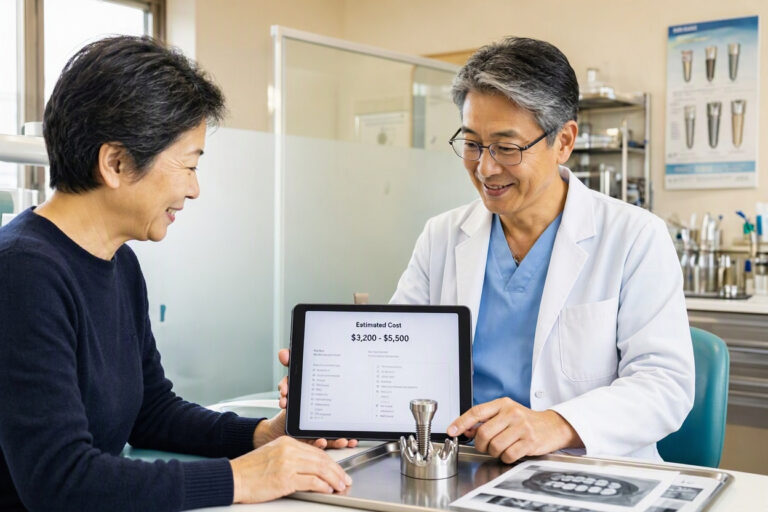
| Abutment (connector piece) | $200 | $500 |
| Crown (the visible tooth) | $800 | $2,000 |
| Surgical placement fee | $1,000 | $2,500 |
| CT scan and planning | $300 | $600 |
| Total | $2,600 | $6,350 |
If you switch from a $300 implant to a $700 implant, your total bill rises by only 6–8%. So do not let a dentist talk you into a cheap implant to save money. The savings are tiny compared to the risk of failure.
Conversely, do not refuse a $700 implant if it is clinically better for your situation.
Dental Tourism and Implant Brands
Many people travel to Mexico, Costa Rica, Colombia, Turkey, or Hungary for cheaper implants. This can work well. But you must be careful about the brand.
What to ask before traveling
- Which brand will you use? (Get a name, not “a good brand.”)
- Is that brand approved in my home country?
- Can I get replacement parts at home?
Brands commonly used in dental tourism
- Neodent – Very common in Latin America. Good quality.
- Conexão – Another Brazilian brand. Decent but less known.
- MIS – Common in Eastern Europe and Turkey.
- Osstem – Common in Southeast Asia and Turkey.
Brands to ask for specifically when traveling
If you want peace of mind, ask for Nobel Biocare or Straumann. They are available globally. The price will be higher than local brands but still much cheaper than in the US or Western Europe.
Warning: If you get an implant abroad from an unknown brand, and it fails, most dentists at home will not touch it. They will recommend removing it and starting over.
Frequently Asked Questions (FAQ)
1. Which dental implant brand do most dentists recommend?
In surveys, Nobel Biocare and Straumann are the most recommended by prosthodontists (implant specialists). General dentists often prefer Zimmer or Dentsply because they are easier to work with for single crowns.
2. Are expensive implants worth the extra money?
For healthy, simple cases, a mid-tier implant works very well. For complex cases, premium implants are worth the extra cost.
3. Can I mix implant brands in my mouth?
Yes. Many patients have, for example, a Nobel implant on one side and a Zimmer on the other. Each implant works independently. But try to keep the same brand within a single bridge or denture.
4. Do dental implants ever fail because of the brand itself?
Rarely with major brands. Failures are almost always due to patient health, smoking, poor oral hygiene, or surgical error. However, no-name brands have higher failure rates due to poor manufacturing.
5. What is the most important factor for implant success?
Your own oral hygiene. Bacteria do not care which brand you have. If you do not clean around the implant, you will develop peri-implantitis, and it will fail.
6. How long do dental implants last from top companies?
With good care, 20 years to lifetime. Nobel and Straumann have implants functioning after 40+ years.
7. Should I choose a brand my dentist does not normally use?
Only if your dentist agrees to place it and has the correct tools. Do not force a brand on a reluctant dentist.
8. Are titanium implants safe?
Yes. Titanium allergies are extremely rare (less than 0.6% of people). For those with confirmed allergies, zirconia implants exist, but they are less studied.
9. What is the best dental implant company for zirconia (metal-free) implants?
Straumann makes a pure zirconia implant called Straumann PURE. Nobel does not currently offer zirconia. Other zirconia brands include Z-Systems and Zeramex, but they have less long-term data.
10. Can I get a dental implant if I have osteoporosis?
Yes, but you may need slower healing surfaces like Straumann SLActive or a longer healing period. Always tell your dentist about your medications, especially bisphosphonates like Fosamax.
Final Checklist Before You Choose an Implant Brand
Use this list when talking to your dentist.
- The dentist recommends a specific brand (not just “a good implant”).
- The dentist has placed at least 50 of that brand.
- The brand has published 5+ year clinical studies.
- The implant surface matches your health profile (smoking, bone density, etc.).
- The brand offers at least a 5-year warranty.
- Replacement parts are available in your country.
- The total treatment price is clear, including any future repairs.
- You understand that your own hygiene is the most important factor.
If you can check all these boxes, you have made a smart choice.
Conclusion
So, what is the best dental implant company? The answer depends on your body, your budget, and your dentist’s skill.
For most people with healthy gums and bone, Nobel Biocare and Straumann are the gold standards. You cannot go wrong with either. If you want excellent value without the premium price, Zimmer Biomet or Neodent are strong choices. For specific needs like thin gums or fast healing, Dentsply Astra Tech or BioHorizons shine.
But remember this: the best implant in the world will fail if placed poorly or neglected. Choose a skilled, experienced dentist first. Then let them guide you to the right brand for your unique mouth.
Your smile is worth the research. Take your time. Ask questions. And do not let anyone rush you into a decision.