What Not To Do Before Dental Implants?
Preparing for dental implant surgery is a proactive process. The steps you take in the days and hours leading up to your procedure directly impact the success of the surgery, the quality of your healing, and the long-term survival of the implant. While your surgical team will provide specific pre-operative instructions, there are critical, non-negotiable things you must avoid. These are not suggestions; they are essential protocols to minimize the risk of surgical complications, implant failure, and post-operative problems.
This comprehensive guide provides a clear, authoritative list of what not to do before dental implant surgery. You will learn about the critical restrictions on eating and drinking related to sedation, the absolute requirement to avoid alcohol and tobacco, the medication rules you must follow, and the lifestyle adjustments that protect your surgical investment.
The Night Before and the Day of Surgery: The Fasting Rules
If your implant procedure involves any level of sedation beyond a simple local anesthetic, the rules on eating and drinking are strict and non-negotiable. The reason is safety. Sedation and general anesthesia relax your body’s protective reflexes, including the gag reflex and the ability to keep your airway clear. Stomach contents can be regurgitated and then aspirated into the lungs, causing a severe, life-threatening condition called aspiration pneumonia.
If You Are Having IV Sedation or General Anesthesia
You must follow the exact instructions provided by your surgical team, which will align with standard medical guidelines:
- Do not eat any solid food for at least 6 hours before your appointment time.
- Do not drink any non-clear liquids (milk, juice with pulp, coffee with cream) for at least 6 hours before.
- You may drink only clear liquids (water, black coffee, clear tea without milk) up to 2 hours before your appointment. After that, you must be strictly NPO (nothing by mouth).
- Do not chew gum or suck on hard candy in the hours immediately before surgery.
If You Are Having Oral Conscious Sedation
Your dentist may advise you to avoid a heavy meal immediately before taking an oral sedative, as a full stomach can delay the absorption of the medication. Follow the specific timing given for your pre-operative pill.
If You Are Having Local Anesthesia Only
If no sedation is planned, you do not need to fast. It is actually advisable to eat a light, normal meal beforehand to maintain stable blood sugar. You should avoid a very heavy, greasy meal that could make you uncomfortable in the dental chair.
The Critical Prohibition on Alcohol
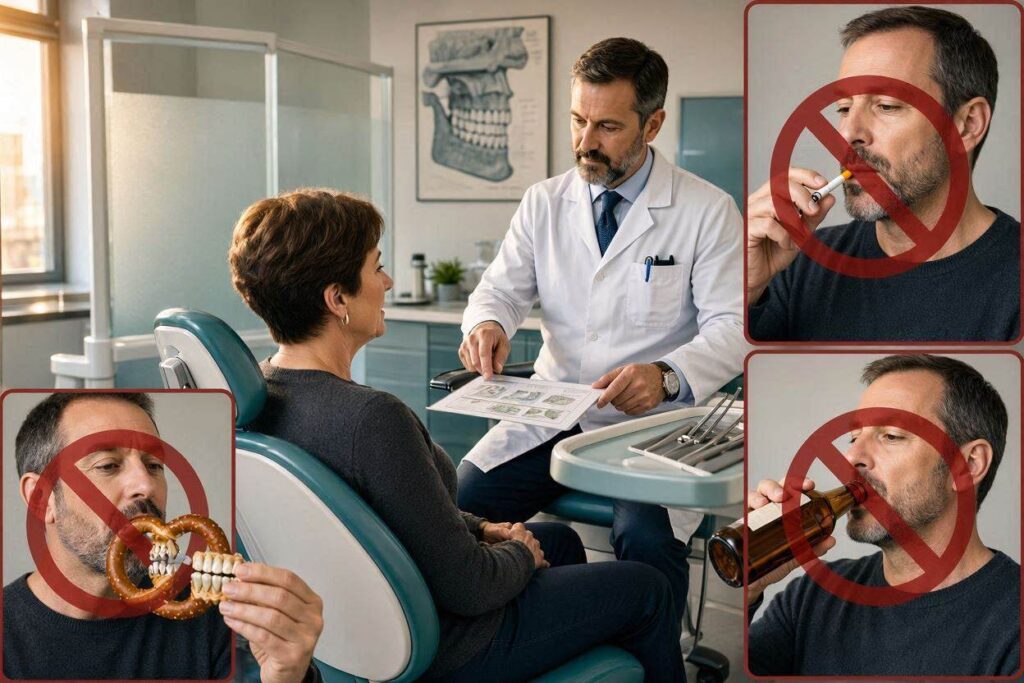
You must avoid alcoholic beverages for at least 24 hours before your implant surgery, and ideally for 48 to 72 hours. Alcohol is a systemic disrupter of the surgical process. It causes dehydration of the oral tissues. It is a vasodilator, meaning it opens up blood vessels, which can increase surgical bleeding and make it harder to control bleeding during and after the procedure. Most critically, alcohol can dangerously interact with the sedative and anesthetic medications used, causing an unpredictable and potentially hazardous sedative effect. It also impairs the liver’s ability to metabolize local anesthetics.
The Absolute, Non-Negotiable Ban on Smoking
If there is one single pre-operative prohibition that matters more than any other, it is smoking. You must not smoke for as long as possible before your implant surgery, with a minimum of 24 hours being the absolute floor, and a strong clinical recommendation for a period of weeks.
Nicotine is a potent vasoconstrictor. It constricts the very small blood vessels—the capillaries—in the gums and the bone. This drastically reduces the blood flow that delivers oxygen and essential healing cells to the surgical site. Carbon monoxide in the smoke binds to hemoglobin, further reducing the oxygen-carrying capacity of your blood. Smokers have a dramatically higher risk of implant failure due to poor osseointegration, delayed wound healing, and post-operative infection. A heavy smoker who cannot commit to a period of cessation around the time of surgery is a poor candidate for elective implant placement.
Medication and Supplement Restrictions
Certain over-the-counter medications and supplements are blood thinners and must be avoided to prevent excessive bleeding.
Discontinue These 7 to 14 Days Before Surgery
- Aspirin: A potent, irreversible inhibitor of platelet function.
- Non-Steroidal Anti-Inflammatory Drugs (NSAIDs): Ibuprofen (Advil, Motrin), Naproxen (Aleve), and similar drugs. These inhibit platelet aggregation. Your surgeon will recommend an alternative for pain relief, typically Acetaminophen (Tylenol), which does not affect bleeding.
- Vitamin E: A high-dose supplement of this vitamin has anticoagulant effects.
- Certain Herbal Supplements: Ginkgo biloba, ginseng, garlic high-dose supplements, fish oil (Omega-3 fatty acids), and St. John’s Wort are known to increase bleeding risk by interfering with platelet function.
This list is not exhaustive. You must provide your surgeon with a complete list of every supplement and herbal remedy you take.
Prescription Anticoagulants and Antiplatelet Drugs
This is the one category you must never alter on your own. If you take prescription blood thinners such as Warfarin (Coumadin), Clopidogrel (Plavix), Apixaban (Eliquis), or Rivaroxaban (Xarelto), you cannot simply stop them. The decision to continue, modify the dose, or temporarily discontinue these medications must be made by the prescribing physician in direct consultation with your implant surgeon. Stopping these drugs can cause a life-threatening stroke or heart attack.
Do Not Come to Your Appointment Sick
You must not undergo an elective surgical procedure if you are actively fighting an infection. If you have a fever, a productive cough, a severe sore throat, or any signs of an acute systemic illness in the days before your surgery, you must call your surgeon’s office immediately. Surgery places a stress on the body’s immune system. An already burdened immune system cannot mount an optimal healing response, increasing the risk of a post-operative infection at the implant site. Your surgery will be rescheduled for when you are fully recovered.
Personal Care and Practical Preparations
Simple, practical steps make the day of surgery safer and smoother.
- Do not wear any facial makeup, lipstick, or heavy lotions. The surgical field must be completely clean. A special antiseptic scrub is used on the skin around your mouth.
- Do not wear contact lenses. Wear your eyeglasses. If you are having sedation, your eyes may remain closed for an extended period.
- Do not wear jewelry, particularly necklaces or earrings, which can interfere with the surgical field or monitoring equipment.
- Do not wear restrictive clothing. Wear a comfortable, loose-fitting, short-sleeved top. The short sleeve is necessary to place the blood pressure cuff and, if needed, the IV line.
- Arrange for a responsible adult driver. If you are having any form of sedation, you cannot drive yourself home. This is not optional. You must have a verified plan for a companion to drive you to and from the appointment and stay with you for several hours afterward.
Conclusion
The most critical things you must not do before dental implant surgery are eating or drinking after the prescribed fasting window if you are receiving sedation, consuming any alcohol for at least 24 hours, and using any form of tobacco for as long as possible. You must also avoid aspirin, NSAIDs, and certain herbal supplements that thin the blood, and you must never independently stop a prescription anticoagulant medication. Arriving on an empty stomach for a sedated procedure, attending your surgery with a clean, makeup-free face, and having a confirmed escort for a safe ride home are all non-negotiable components of a safe and successful surgical day.
FAQ
1. Can I drink water the morning of my implant surgery?
For IV sedation or general anesthesia, you can usually drink clear water up to 2 hours before your appointment. After that, you must be strictly NPO. Confirm the exact time with your surgical team.
2. What happens if I accidentally ate something before IV sedation?
You must inform your surgeon immediately upon arrival. Eating could require your procedure to be postponed to protect your safety from the risk of aspiration.
3. Can I take my regular blood pressure medication on the day of surgery?
Yes, in most cases you should take your regular prescription medications with a small sip of water, especially cardiac and blood pressure medications. You must confirm this with your surgeon during your pre-operative consultation.
4. Why can’t I take ibuprofen before my implant surgery?
Ibuprofen and other NSAIDs inhibit your blood platelets from clumping together, which will increase bleeding during the surgical procedure and impair the formation of a stable blood clot afterward.
5. How long before the surgery should I stop smoking?
The minimum is 24 hours. The ideal clinical recommendation is to stop for at least 1 to 2 weeks before and after the surgery to give your body the best chance for normal healing.
Additional Resource
For a comprehensive understanding of peri-operative patient safety and preparation, consult the resources on anesthesia and surgery provided by the American Society of Anesthesiologists (ASA).