What to Eat During Dental Implant Surgery
The term “during dental implant surgery” may seem contradictory when applied to eating. You cannot eat while the procedure is underway. However, the surgical phase of implant treatment spans a period of months, from the initial placement of the implant through the osseointegration healing period. What you eat throughout this entire phase directly affects your comfort, your healing, and the success of your implant. The diet during implant treatment progresses through distinct stages, each with specific requirements and restrictions. Understanding what to eat at each stage, why certain foods help while others harm, and how to maintain adequate nutrition when your chewing ability is limited transforms the dietary aspect of implant treatment from a frustrating restriction into a manageable, temporary adaptation that supports your long-term outcome.
Why Diet Matters for Implant Success
The connection between what you eat and whether your implant successfully integrates with your bone is direct and biological. Nutrition provides the building blocks for the healing processes that create osseointegration.
The Nutritional Demands of Bone Healing
Bone formation around a dental implant is an energy-intensive process. Your body is literally constructing new living tissue at the cellular level, depositing collagen matrix and mineralizing it with calcium phosphate crystals. This construction project requires adequate raw materials delivered through your bloodstream.
Protein provides the amino acids that form collagen, the organic scaffold of bone. Without adequate protein intake, the osteoblasts cannot synthesize the matrix onto which mineral is deposited. Protein malnutrition impairs wound healing across all surgical disciplines, and implant surgery is no exception.
Calcium and phosphate are the minerals that crystallize into hydroxyapatite, the mineral phase of bone. Adequate intake of these minerals ensures that the bone forming around your implant achieves proper density. Dairy products, fortified alternatives, leafy greens, and supplements can provide these minerals.
Vitamin D regulates calcium absorption and bone mineralization. Deficiency impairs bone healing. Sun exposure, fatty fish, fortified foods, and supplements maintain adequate vitamin D levels. Your surgeon may recommend testing and supplementation before implant surgery.
Vitamin C is essential for collagen synthesis and cross-linking. Without adequate vitamin C, the collagen formed is weak and unstable, compromising the bone matrix and soft tissue healing. Citrus fruits, berries, peppers, and leafy greens provide vitamin C.
How Chewing Forces Affect Osseointegration
Beyond nutrition, the mechanical aspect of eating directly affects implant healing. The implant must remain undisturbed during osseointegration. Micromovement above 100 to 150 microns disrupts the cellular processes that form bone on the implant surface, potentially leading to fibrous encapsulation rather than osseointegration.
Chewing on the implant site transmits forces through the healing tissues to the implant-bone interface. Even light chewing can generate micromovement that exceeds the safe threshold, particularly in the early healing period when primary stability is transitioning to biological stability.
The dietary restrictions during implant healing are not arbitrary. They protect the implant from forces that could compromise osseointegration. Understanding this rationale makes the restrictions easier to accept and follow.
The Risk of Food Impaction and Infection
Food particles that enter the surgical site during the initial healing period can cause problems beyond mechanical disruption. Food debris provides a substrate for bacterial growth, increasing infection risk. Food impaction in the wound can delay healing and cause inflammation.
Protecting the surgical site from food contamination is particularly important during the first week when the wound is open and the blood clot is organizing. After the first week, the wound has sealed sufficiently to resist food impaction, though the implant remains vulnerable to loading forces.
Stage One: The First 24 to 48 Hours
The immediate post-surgical period has the most restrictive dietary requirements. During this time, your primary concerns are protecting the surgical site, managing bleeding, and beginning the healing process.
Immediate Post-Operative Restrictions
For the first 24 hours after surgery, your diet is limited to cool or room-temperature liquids and very soft foods. Nothing hot, as heat increases bleeding by dilating blood vessels. Nothing that requires chewing, as chewing forces can disrupt the forming blood clot. Nothing acidic or spicy, as these can irritate the surgical site.
The blood clot that forms in the surgical site during the first 24 hours is fragile and essential. It provides the scaffold for healing and contains the growth factors that initiate the healing cascade. Disrupting this clot leads to prolonged bleeding, delayed healing, and increased risk of dry socket or implant complications.
You must also avoid creating suction in your mouth. Do not drink through straws. Do not spit forcefully. Do not smoke. Suction can dislodge the blood clot. When rinsing is permitted after 24 hours, swish gently and allow the fluid to fall from your mouth rather than spitting.
Recommended Foods for the First 48 Hours
Cool or room-temperature liquids form the foundation of your diet during the first 24 hours. Water is essential for hydration and healing. Drink plenty of water, but do not use a straw. Sip from a glass or cup.
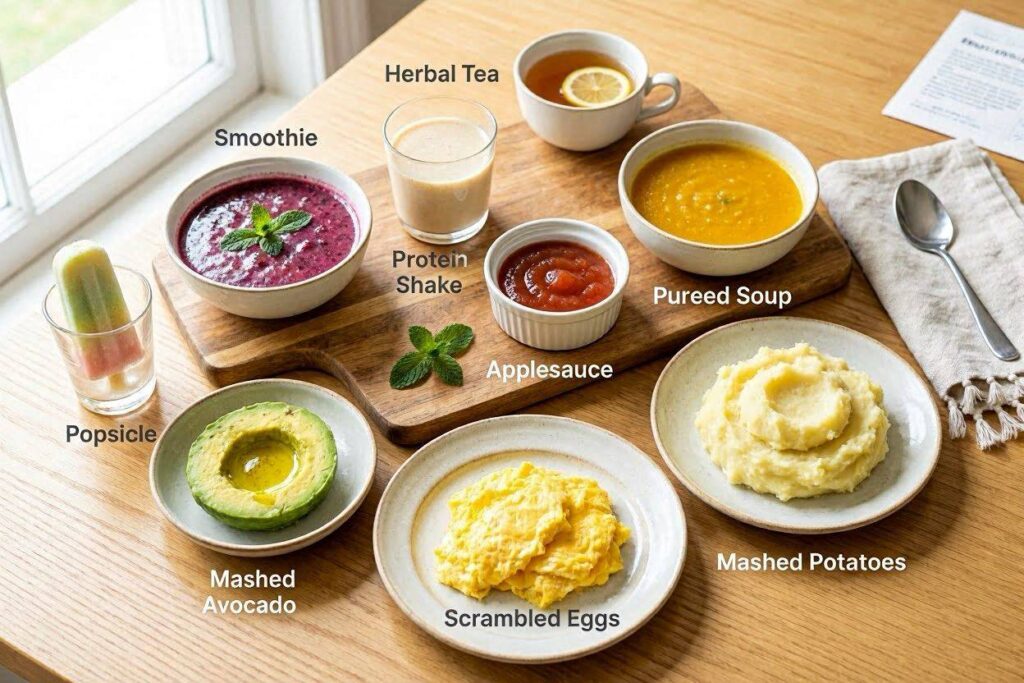
Smoothies provide nutrition in liquid form. Blend fruits, vegetables, yogurt, milk or milk alternatives, and protein powder if desired. Avoid seeds and small particles that could become trapped in the surgical site. Drink from a glass, not a straw.
Meal replacement drinks such as Ensure, Boost, or similar products provide balanced nutrition when you cannot eat solid food. These are particularly useful if your appetite is reduced due to discomfort or medication effects.
Broth and clear soups provide hydration and some nutrition. Avoid hot soup. Let it cool to room temperature or slightly warm before consuming. Strained soups without chunks or particles are safest for the first day.
Yogurt, pudding, and applesauce are appropriate if they are cool and smooth. Do not eat yogurt with fruit pieces or granola during the first 48 hours. Plain, smooth varieties are best.
What to Absolutely Avoid
Hot foods and beverages must be avoided for the first 24 to 48 hours. Heat increases blood flow and can restart bleeding that had stopped. This includes hot coffee, tea, soup, and any heated food.
Straws are forbidden. The suction created when drinking through a straw can dislodge the blood clot. Drink directly from a glass or cup, even if this feels less convenient.
Alcohol must be avoided for at least the first 48 hours and preferably longer. Alcohol impairs blood clotting, interferes with wound healing, and can interact dangerously with pain medications and antibiotics.
Carbonated beverages can irritate the surgical site and should be avoided for the first few days. The carbonation can also create pressure changes in the mouth that may affect the surgical site.
Spicy and acidic foods can irritate the surgical wound and cause discomfort. Avoid hot sauce, citrus juices, tomato-based products, and vinegar-based foods for the first several days.
Stage Two: Days Three Through Seven
After the first 48 hours, the acute phase of healing transitions to a more stable period. Your diet can expand, though significant restrictions remain.
Transitioning to Soft Foods
By day three, the blood clot has begun to organize into granulation tissue. The wound edges are sealing. Bleeding has stopped. You can begin introducing soft foods that require minimal or no chewing.
The key principle remains avoiding any chewing on the surgical side. All food should be soft enough to manage with the non-surgical side of your mouth or to swallow without chewing. If a food requires significant chewing, it is not yet appropriate.
Temperature restrictions begin to relax. Warm foods are generally acceptable by day three, though very hot foods should still be avoided. Let hot foods cool to a comfortable temperature before eating.
Soft Food Options
Scrambled eggs and omelets provide excellent protein and are soft enough to eat without chewing. Prepare them without hard ingredients such as vegetables or meat that would require chewing.
Mashed potatoes, sweet potatoes, and other mashed vegetables are nutritious, filling, and require no chewing. Add butter, cream, or cheese for additional calories and flavor if desired.
Cottage cheese and ricotta cheese are soft protein sources that require no preparation. Eat them plain or with smooth additions such as applesauce.
Oatmeal, cream of wheat, and other hot cereals are soft and comforting. Let them cool to a safe temperature before eating. Avoid varieties with nuts, seeds, or dried fruit.
Smooth soups including tomato soup, butternut squash soup, and pureed vegetable soups provide nutrition and hydration. Ensure soups are free of chunks that would require chewing.
Pasta cooked until very soft, with smooth sauces, can be managed with minimal chewing. Avoid al dente pasta and chunky sauces during this period.
Fish that flakes easily, such as cod, tilapia, or salmon, is soft enough for this stage. Avoid fish with bones and any fish that requires significant chewing.
Foods Still to Avoid
Continue avoiding any food that requires chewing on the surgical side. This includes all meats except very soft fish, raw vegetables, crunchy fruits, bread with crust, chips, crackers, nuts, and seeds.
Continue avoiding hard, crunchy, or chewy foods even on the non-surgical side. The force of chewing on one side can transmit some pressure to the opposite side through the jaw. Protect the implant site completely.
Avoid small, hard particles that could become lodged in the surgical site. This includes seeds, nuts, granola, popcorn, and foods with small bones.
Continue avoiding alcohol, which impairs healing, and carbonated beverages, which can irritate the surgical site.
Stage Three: Weeks Two Through Six
By the second week, the soft tissue has healed substantially. Sutures have dissolved or been removed. The surgical site is less vulnerable to food impaction. Your diet can expand further, though the implant must still be protected from loading.
Expanding Your Diet
During this stage, you can introduce more variety while continuing to avoid chewing on the implant site. The principle remains protecting the implant from forces that could disrupt osseointegration.
Ground meats, including ground beef, turkey, and chicken, are soft enough for this stage. Meatloaf, meatballs, and similar preparations are appropriate. Avoid whole cuts of meat that require tearing and chewing.
Soft bread without crust, pancakes, and waffles can be eaten. Avoid crusty bread, bagels, and toast that require significant chewing.
Soft fruits including bananas, melon, and berries can be eaten. Avoid hard fruits including apples and pears unless they are cooked or pureed. Avoid fruits with small seeds.
Cooked vegetables that are soft, including carrots, green beans, and squash, are appropriate. Avoid raw vegetables and hard or fibrous cooked vegetables.
Rice and soft grains can be eaten. Avoid grains with hard particles or those that require significant chewing.
Continued Precautions
The implant is not yet integrated with the bone. Osseointegration is progressing but incomplete. The implant must still be protected from loading. Continue avoiding chewing on the implant site entirely.
If you have a healing abutment protruding through the gum, food may collect around it. Rinse gently after meals to remove debris. You can clean around the healing abutment with a soft toothbrush as directed by your surgeon.
If a temporary restoration has been placed on the implant, the dietary restrictions may be stricter. Temporary restorations are not designed to withstand normal chewing forces. Follow your dentist’s specific instructions for eating with a temporary implant crown.
Stage Four: Osseointegration Period
Once the soft tissue has healed completely and the implant is stable but not yet restored with a final crown, you are in the osseointegration waiting period. This period typically lasts three to six months, depending on the implant location and individual healing factors.
Eating With a Healing Abutment
If you have a healing abutment in place, you have a metal cylinder protruding through your gum. This abutment is visible and may collect food debris. It is not designed to support chewing forces.
You can eat a normal diet on the non-surgical side of your mouth. Continue avoiding the implant site for chewing. The healing abutment can tolerate contact with soft food but should not be subjected to direct chewing forces.
Clean around the healing abutment after meals. Food debris that accumulates around the abutment can cause inflammation of the surrounding tissue. Gentle brushing and rinsing maintain cleanliness.
Eating With a Temporary Crown
If a temporary crown has been placed on your implant, the restrictions depend on how the temporary was designed. Some temporary crowns are designed to be non-functional, meaning they should not contact the opposing teeth during chewing. Others are designed for limited function.
If your temporary crown is non-functional, continue avoiding the implant site for chewing. The temporary provides esthetics and maintains space but does not support chewing forces.
If your temporary crown is functional, you may be able to chew lightly on that side. Follow your dentist’s specific instructions. Even functional temporaries typically should not be used for heavy chewing.
Nutritional Focus During Healing
The osseointegration period is when bone formation and remodeling are most active. Your nutritional intake during these months directly affects the quality of the bone-implant interface.
Continue emphasizing protein intake to support collagen synthesis and bone formation. Aim for adequate daily protein from a variety of sources including lean meats, fish, eggs, dairy, legumes, and protein supplements if needed.
Ensure adequate calcium and vitamin D intake throughout the healing period. Dairy products, fortified alternatives, leafy greens, and supplements can address deficiencies. Your surgeon may recommend specific supplementation.
A balanced diet with adequate fruits, vegetables, whole grains, and healthy fats supports overall health and healing. A multivitamin may be appropriate if your diet is limited due to ongoing chewing restrictions.
Stage Five: After Final Crown Delivery
Once your final implant crown is placed, you can begin transitioning to normal eating. However, this transition should be gradual, and some permanent modifications to your eating habits are advisable.
Gradual Return to Normal Diet
When your final crown is first delivered, start with softer foods and gradually introduce harder and chewier foods over several weeks. This allows you to adapt to the new crown and allows the surrounding tissues to adapt to functional loading.
Your implant crown does not have the sensory feedback of a natural tooth. You cannot feel how hard you are biting on it the way you can with natural teeth. This lack of proprioception means you must be more conscious of the forces you apply.
Chew on both sides of your mouth to distribute forces evenly. Avoid concentrating all chewing on the implant side, even though the implant can now support normal forces.
Permanent Dietary Considerations
Some foods pose risks to implant crowns and should be approached with caution or avoided entirely. Extremely hard foods including ice, hard candy, and popcorn kernels can fracture ceramic crowns and should never be chewed with implant restorations.
Sticky foods including caramel, taffy, and very chewy bread can dislodge cement-retained crowns or place excessive forces on screw-retained restorations. Consume these foods cautiously.
Your implant crown, particularly if it is ceramic, can chip or fracture under excessive force just as a natural tooth can. Use common sense. If a food seems too hard to chew comfortably, it probably is.
Maintenance of a Healthy Diet
The dietary restrictions of the healing period may have shifted your eating habits. Use the transition to normal eating as an opportunity to establish healthy patterns that support your oral and general health.
A diet low in refined sugar reduces plaque formation and the risk of peri-implant inflammation. The same dietary choices that protect natural teeth from decay protect implants from peri-implant disease.
Adequate intake of fruits, vegetables, lean protein, and whole grains supports immune function and tissue health. The health of the gum tissue around your implant depends on your overall nutritional status.
Sample Meal Plans by Stage
Practical meal planning makes dietary compliance easier. These sample meal plans illustrate appropriate choices at each stage of healing.
First 48 Hours Meal Ideas
Breakfast might be a smoothie made with yogurt, banana, and protein powder, consumed from a glass at room temperature. Alternatively, a meal replacement drink provides balanced nutrition without any preparation.
Lunch could be strained cream of tomato soup, cooled to a comfortable temperature, with a container of smooth yogurt. Clear broth with dissolved gelatin provides hydration and some nutrition.
Dinner might be a cool protein shake followed by pudding or applesauce. Blended vegetable soup, strained and cooled, offers savory nutrition.
Snacks include additional yogurt, pudding cups, or meal replacement drinks. Hydration with water throughout the day is essential.
Days Three Through Seven Meal Ideas
Breakfast could be scrambled eggs with cheese, a bowl of oatmeal, or cream of wheat prepared with milk for additional protein and calcium.
Lunch might be tomato soup with a soft grilled cheese sandwich made with soft bread and no crust, or cottage cheese with soft canned peaches.
Dinner could be mashed potatoes with gravy, soft flaked fish, and overcooked soft vegetables, or pasta with a smooth sauce and ground meat.
Snacks include yogurt, pudding, applesauce, soft bananas, and smoothies. The diet is expanding but still entirely soft.
Weeks Two Through Six Meal Ideas
Breakfast options expand to include pancakes, soft French toast, and soft muffins in addition to eggs and hot cereals.
Lunch could be a tuna salad sandwich on soft bread without crust, or soup with soft bread, or a salad made with soft ingredients like avocado and canned vegetables.
Dinner might be meatloaf with mashed potatoes and soft cooked vegetables, or soft tacos made with ground meat and soft tortillas, or pasta with meat sauce and soft vegetables.
Snacks include soft fruits, cheese, yogurt, and soft granola bars without nuts or hard pieces.
Hydration During Healing
Adequate fluid intake is essential for all phases of healing, yet it often receives less attention than food choices.
Why Hydration Matters
Water is the medium in which all cellular processes occur. Dehydration impairs blood flow, reducing oxygen and nutrient delivery to the healing site. It impairs waste removal, allowing metabolic byproducts to accumulate. It affects medication metabolism and can increase side effects.
The surgical procedure itself causes fluid loss. Bleeding, even the minor bleeding typical of implant surgery, reduces blood volume. The inflammatory response increases fluid requirements. Anesthesia and pain medications can cause dry mouth and increased fluid needs.
Aim for at least eight glasses of water daily during the healing period. More may be needed if you are active, if the weather is hot, or if you are taking medications that increase fluid requirements.
Appropriate Beverages by Stage
During the first 24 hours, water is the ideal beverage. It should be cool or room temperature, never hot. Sip from a glass, never through a straw.
After the first 24 hours, the range of appropriate beverages expands. Warm herbal tea, decaffeinated coffee, milk, and non-acidic juices are acceptable. Continue avoiding straws, carbonated beverages, and alcohol.
Throughout the healing period, water should remain your primary beverage. Sugary drinks promote plaque formation and inflammation. Caffeinated beverages have a mild diuretic effect and should be balanced with additional water intake.
Beverages to Avoid
Alcohol should be avoided for at least one week after surgery and preferably throughout the osseointegration period. Alcohol impairs healing, interacts with medications, and dehydrates.
Carbonated beverages can irritate the surgical site and should be avoided for at least the first week. The carbonation creates pressure changes and the acidity can cause discomfort.
Very hot beverages increase bleeding risk during the first 48 hours and can cause discomfort at the surgical site for several days.
Acidic beverages including citrus juices and sports drinks can irritate the surgical wound during the first week. Dilute them or avoid them until the wound has sealed.
Supplements During Healing
Nutritional supplements may support healing, but they must be used appropriately and with the knowledge of your surgical team.
Beneficial Supplements
Protein supplements, including whey, casein, and plant-based protein powders, help meet increased protein requirements during healing. They are easily consumed in smoothies and shakes during the soft diet phases.
Multivitamins provide a broad spectrum of micronutrients that support healing. A daily multivitamin is appropriate for most patients during the healing period, particularly if dietary intake is limited by the soft diet restrictions.
Vitamin D and calcium supplementation may be recommended if your dietary intake or blood levels are inadequate. Your surgeon can assess the need for these supplements based on your diet and risk factors.
Vitamin C supplementation may be beneficial during healing, as requirements increase during tissue repair. A modest supplement of 500 to 1,000 milligrams daily is generally safe and may support collagen formation.
Supplements to Avoid
Certain supplements increase bleeding risk and should be discontinued before surgery and during the initial healing period. These include fish oil, vitamin E in high doses, ginkgo biloba, garlic supplements, ginseng, and other herbal products with antiplatelet effects.
Your surgeon should provide a list of supplements to avoid before surgery. Resume these supplements only when your surgeon confirms it is safe to do so, typically after the initial healing period when bleeding risk has passed.
St. John’s wort and other herbal supplements that interact with medications should be avoided during the period when you are taking prescription pain medications or antibiotics.
Special Dietary Considerations
Certain patient populations have additional dietary considerations during implant healing.
Diabetic Patients
Blood sugar control affects healing and infection risk. The dietary modifications required during implant healing should not compromise glycemic control.
Work with your physician or diabetes educator to develop a meal plan that accommodates the soft diet requirements while maintaining appropriate carbohydrate intake and blood sugar control. Meal replacement drinks formulated for diabetic patients are available.
Monitor blood glucose more frequently during the initial healing period. The stress of surgery, changes in diet, and changes in activity level can all affect blood glucose. Adjust medications as directed by your physician.
Patients with Food Allergies or Intolerances
The soft diet required during implant healing should be adapted to your specific food restrictions. Dairy-free alternatives including almond milk, soy milk, and oat milk can replace dairy in smoothies and soft foods.
Gluten-free soft foods including rice, quinoa, gluten-free oatmeal, and gluten-free pasta are available for patients with celiac disease or gluten sensitivity. Verify that meal replacement drinks are gluten-free if required.
Work with a dietitian if your food restrictions are extensive and you are concerned about meeting nutritional needs during the healing period. A tailored meal plan ensures adequate nutrition while respecting your dietary limitations.
Vegetarian and Vegan Patients
Meeting protein requirements on a soft vegetarian or vegan diet requires planning. Plant-based protein sources including tofu, tempeh, legumes, and plant-based protein powders provide the amino acids needed for healing.
Soft tofu can be prepared in many ways and requires no chewing. Blended lentil soup, hummus, and bean dips are soft protein sources. Plant-based meal replacement drinks and protein powders supplement protein intake.
Ensure adequate vitamin B12, iron, and zinc intake, as these nutrients are important for healing and may be less available in plant-based diets. Supplements may be appropriate after discussion with your surgeon.
Conclusion
Eating during dental implant treatment progresses through distinct stages, from cool liquids and smooth foods during the first 48 hours, through soft foods that require no chewing during the first week, to gradual dietary expansion during the osseointegration period while continuing to protect the implant from loading forces. Nutrition directly supports the bone healing that creates osseointegration, with adequate protein, calcium, vitamin D, and vitamin C being particularly important during the months when the implant is integrating with the jawbone. The dietary restrictions are not arbitrary but are designed to protect the implant from micromovement that could disrupt healing, prevent food impaction that could cause infection, and avoid creating suction that could dislodge the protective blood clot. Patient adherence to these dietary guidelines protects the significant investment in implant treatment and directly contributes to the long-term success of the restoration.
Frequently Asked Questions
Can I eat immediately after implant surgery?
You should wait until the local anesthetic has worn off before eating to avoid accidentally biting your numb lip, cheek, or tongue. Once numbness resolves, you can consume cool or room-temperature liquids and very soft foods. Avoid hot foods and chewing for the first 24 hours.
When can I eat normal food again?
Soft foods that require no chewing on the implant side can be introduced after the first week. Gradual return to normal diet occurs over several weeks to months, with full normal eating typically possible after the final crown is delivered, approximately three to six months after implant placement.
Can I drink coffee after implant surgery?
Avoid hot coffee for the first 48 hours, as heat increases bleeding. After 48 hours, warm coffee is generally acceptable, but avoid drinking through a straw. Caffeine has a mild diuretic effect, so balance coffee intake with adequate water consumption.
What if I accidentally chew on the implant side?
Occasional light contact is unlikely to cause harm if the implant has good primary stability. However, repeated or heavy chewing on the implant site during healing can disrupt osseointegration. If you accidentally chew on the implant side, do not panic, but be more vigilant about avoiding it going forward.
Can I use a straw if I am careful?
No. The suction created when drinking through a straw can dislodge the blood clot during the first week after surgery, leading to dry socket or wound breakdown. Drink directly from a glass or cup. This restriction applies for at least the first week.
How can I get enough protein on a soft diet?
Eggs, yogurt, cottage cheese, protein shakes, smoothies with protein powder, soft fish, ground meats, and meal replacement drinks provide adequate protein. Aim for protein at every meal. Protein supplements can fill gaps if dietary intake is insufficient.
Are meal replacement drinks enough nutrition during healing?
Meal replacement drinks can supplement your diet but should not be your sole source of nutrition for extended periods. They are formulated to provide balanced nutrition and are particularly useful during the first few days when eating is most restricted. Transition to whole soft foods as soon as you are able.
When can I drink alcohol after implant surgery?
Avoid alcohol for at least one week after surgery. Alcohol impairs healing, interacts with pain medications and antibiotics, and can increase bleeding and swelling. If you choose to drink after the first week, do so in moderation and not while taking prescription pain medications.
Additional Resource
Academy of Nutrition and Dietetics: Nutrition for Wound Healing
https://www.eatright.org/health/wellness/preventing-illness/nutrition-for-wound-healing