Are Dental Implants Worth It?
Dental implants aren’t cheap. When you hear the price tag—often $3,000 to $6,000 per tooth—it’s natural to wonder: “Is this really worth it?” You could buy a car, take a vacation, or renovate your kitchen for that amount. So why spend it on a tooth?
The answer depends on what you value. Implants offer benefits that extend far beyond your mouth—they affect your health, confidence, and quality of life. This article explores the real value of dental implants, helping you decide if they’re worth the investment for your situation.
The True Cost of Missing Teeth
Beyond the Smile
Missing teeth cause problems that go far beyond appearance. Understanding these consequences helps you see implants as an investment, not just an expense.
Bone Loss
When you lose a tooth, the jawbone in that area begins to shrink. Without stimulation from chewing, bone cells stop regenerating. Over time, this bone loss changes your facial structure, making you look older. It also complicates future dental work.
Teeth Shifting
Your remaining teeth naturally drift into the empty space. This shifting causes bite problems, misalignment, and additional tooth loss.
Bite and Jaw Problems
Missing teeth alter how you bite and chew. This imbalance can lead to jaw pain, headaches, and temporomandibular joint (TMJ) disorders.
Nutritional Impact
When chewing becomes difficult, people often avoid healthy foods like vegetables, fruits, and lean meats. This can affect nutrition and overall health.
Speech Changes
Missing teeth affect pronunciation, especially sounds like “s” and “th.” This can impact communication and confidence.
Social and Professional Impact
A missing tooth can affect self-esteem and how others perceive you. Studies show people with incomplete smiles may face bias in social and professional settings.
“Missing teeth aren’t just a cosmetic issue. They’re a health issue that affects your entire body. Implants address the root cause, not just the symptom.” — Dr. Sarah Mitchell, Prosthodontist
The Benefits That Make Implants Worthwhile
Longevity: The Long Game
Dental implants can last 25 years or longer—often a lifetime with proper care. Let’s do the math:
Implant Cost: $4,000
**Lifespan:** 25+ years
**Cost Per Year:** $160
Now compare:
Denture Cost: $1,500
**Lifespan:** 7 years
**Cost Per Year:** $214
Bridge Cost: $3,000
**Lifespan:** 12 years
**Cost Per Year:** $250
When you look at cost per year of service, implants often prove most economical. Add in the benefits of bone preservation and comfort, and the value becomes clear.
Health Preservation
Implants prevent bone loss by stimulating your jawbone. This preservation protects your facial structure and avoids costly bone grafting procedures later. Implants also don’t require grinding down adjacent healthy teeth—a significant advantage over bridges.
Quality of Life
Eating: Enjoy all your favorite foods without worry. Steak, apples, corn on the cob—no restrictions.
Speaking: Talk and laugh with confidence. Implants stay in place, so no slurring or slipping.
Comfort: No sore gums, no adhesive creams, no bulky appliances. Implants feel like your natural teeth.
Confidence: Smile freely without feeling self-conscious. Implants look completely natural.
“My patients tell me the biggest difference isn’t aesthetic—it’s psychological. They feel like themselves again. That’s worth more than any price tag.” — Dr. James Chen, Oral Surgeon
Table: Benefits Comparison
| Benefit | Implants | Bridges | Dentures |
|---|---|---|---|
| Preserves jawbone | Yes | No | No |
| Protects adjacent teeth | Yes | No (requires grinding) | Yes |
| Natural feel | Excellent | Good | Fair |
| Eating comfort | Excellent | Good | Fair |
| Speech clarity | Excellent | Good | Fair |
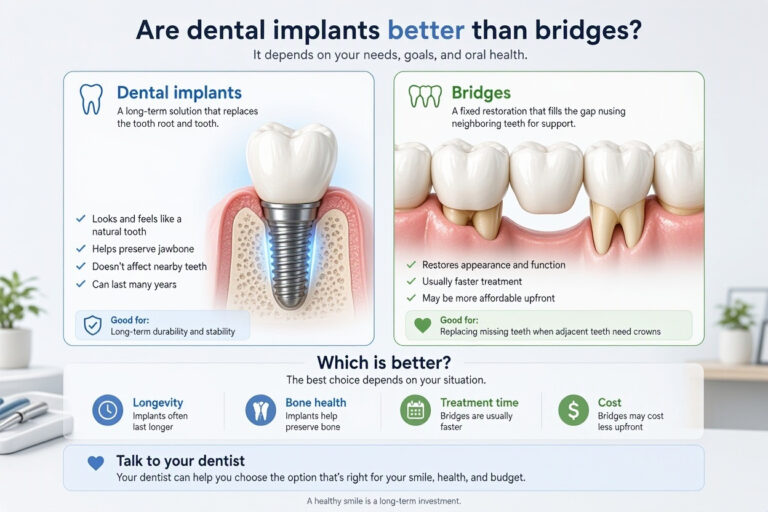
| Lifespan | 25+ years | 10-15 years | 5-10 years |
| Cost per year | Lowest | Moderate | Moderate |
When Implants Are Worth It
Ideal Scenarios
Implants deliver the best value when:
You Have One Missing Tooth
A single implant prevents bone loss and avoids damaging neighboring teeth. It’s the most conservative option for single-tooth replacement.
You’re Missing Multiple Teeth
Implant-supported bridges or dentures offer stability and comfort that traditional options can’t match.
You’re Young
Younger patients enjoy decades of use, maximizing the return on investment.
You Value Health
If preserving jawbone and avoiding future dental work matters to you, implants are worth it.
You’re Tired of Denture Problems
Slipping, clicking, sore gums—implants eliminate these issues.
You Want a Permanent Solution
Implants are designed to last a lifetime. They’re an investment, not a temporary fix.
When Implants Might Not Be Worth It
Implants might not be the best choice when:
You Have Severe Health Issues
Certain medical conditions make implant surgery risky. Your dentist can advise on alternatives.
You Can’t Afford the Investment
While implants save money long-term, the upfront cost can be prohibitive. Financing options exist, but they’re not right for everyone.
You Smoke Heavily
Smoking significantly increases failure risk. Quitting first improves outcomes.
You Have Severe Bone Loss Without Graft Options
Some patients lack sufficient bone for implants. Grafting can help, but it adds cost and complexity.
You’re Satisfied With Dentures
Some patients adapt well to dentures and prefer to avoid surgery.
Important Note: These aren’t absolute contraindications. Consult with your dentist to evaluate your specific situation.
The Financial Picture
What Implants Actually Cost
Costs vary by region, dentist, and complexity:
| Procedure | Average Cost |
|---|---|
| Single Implant (including crown) | $3,000 – $6,000 |
| Implant-Supported Bridge | $6,000 – $10,000 |
| All-on-4 (full arch) | $15,000 – $30,000 |
| Bone Graft | $500 – $2,000 |
| Sinus Lift | $1,000 – $2,500 |
| Extraction | $150 – $500 |
Hidden Costs to Consider
- Imaging and planning: X-rays, 3D scans
- Sedation: If desired
- Temporary restorations: While healing
- Follow-up visits: Monitoring and adjustments
- Potential complications: Additional treatment if needed
Financing Options
Payment Plans
Many dental offices offer in-house financing with monthly payments.
Third-Party Lenders
Companies like CareCredit provide healthcare financing with various terms.
Health Savings Accounts (HSAs)
Some plans allow HSA funds for implant treatment.
Dental Insurance
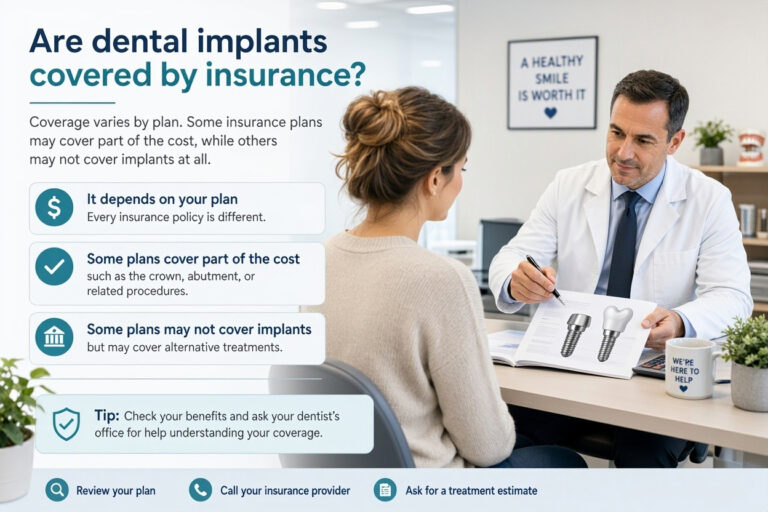
Coverage varies. Some plans cover a portion, typically 50% up to annual maximums.
FSA Funds
Flexible Spending Accounts may cover implants if considered medically necessary.
“Don’t let the sticker price scare you. Ask about financing and insurance. Many patients find implants more affordable than they expected.” — Dental office manager, 15 years experience
Implants vs. Other Options: Real Value Comparison
The Bridge Dilemma
Bridges seem cheaper upfront, but they come with hidden costs:
Adjacent Tooth Damage
Bridges require grinding down two healthy teeth. These teeth may eventually need root canals or crowns.
Bone Loss
Bridges don’t stimulate the jawbone. Bone loss continues under the bridge.
Shorter Lifespan
Bridges last 10-15 years on average. Replacement costs add up.
Future Complications
If one supporting tooth fails, the entire bridge needs replacement.
True Cost Over 30 Years:
- Bridge 1: $3,000
- Bridge 2: $3,500
- Bridge 3: $4,000
- Root canals on supporting teeth: $2,000
- Total: $12,500
Implant True Cost Over 30 Years:
- Implant + Crown: $4,500
- Regular checkups and cleanings: $3,000
- Total: $7,500
Implants win on long-term value.
The Denture Reality
Dentures have their place, especially for patients who can’t undergo surgery. But they come with ongoing challenges:
Bone Loss
Dentures don’t stimulate bone, so jaw shrinkage continues. This changes facial appearance and causes dentures to loosen over time.
Adhesive Costs
Quality denture adhesive costs $100-300 per year.
Frequent Replacements
Dentures need replacement every 5-10 years, costing $1,500-3,000 each time.
Comfort Issues
Sore gums, slipping, and clicking affect quality of life.
Dietary Restrictions
Denture wearers often avoid hard, crunchy foods.
True Cost Over 30 Years:
- Dentures (4 sets): $8,000
- Adhesives: $6,000
- Relines and repairs: $3,000
- Lost wages/discomfort: Priceless
- Total: $17,000
Implant-supported dentures reduce these issues, though at higher upfront cost.
Table: 30-Year Cost Comparison
| Option | Upfront Cost | 30-Year Cost | Pros | Cons |
|---|---|---|---|---|
| Implant | $4,500 | $7,500 | Lasts decades, preserves bone | High upfront cost |
| Bridge | $3,000 | $12,500 | Lower upfront cost | Damages adjacent teeth, shorter lifespan |
| Denture | $1,500 | $17,000 | Lowest upfront cost | Poor comfort, bone loss, frequent replacement |
Patient Stories: Real Experiences
Emily’s Story
“I lost a front tooth in a cycling accident. I was devastated—everyone could see the gap. I considered a bridge, but my dentist explained it would mean damaging my healthy teeth. I chose an implant instead. Yes, it cost more upfront, but three years later, I forget I even have it. Best decision I ever made.”
Robert’s Story
“I wore dentures for 15 years. They clicked when I talked, food got stuck underneath, and I couldn’t eat steak. I finally invested in implant-supported dentures. I wish I’d done it years ago. I eat what I want, speak clearly, and feel confident. The cost seems small compared to what I gained.”
Patricia’s Story
“I’m 72 and needed two implants. I worried about the expense at my age. But my dentist pointed out that I could live another 20 years—and that’s a lot of years to struggle with dentures. My implants have been trouble-free. I’m glad I invested in myself.”
Michael’s Story
“I have diabetes, so I needed careful planning for my implant. My dentist worked with my doctor to ensure everything went smoothly. It was a bit more complicated, but worth it. My implant has been stable for five years now. My blood sugar control improved because I could eat healthier foods again.”
The Emotional and Psychological Value
Confidence Restored
Missing teeth affect self-esteem. Studies show people with incomplete smiles may avoid social situations, feel anxious about their appearance, and experience lower self-confidence. Implants restore that confidence.
Patient Perspectives:
- 92% report improved self-esteem after implants
- 89% report feeling more comfortable in social situations
- 85% report improved quality of life
Relationships and Career
A confident smile affects professional and personal interactions. Whether you’re in a meeting or on a date, feeling good about your smile matters. Implants offer that confidence without the worry of dentures slipping or bridges failing.
Freedom and Spontaneity
Denture wearers know the anxiety of eating in public, worrying about food getting stuck, or their dentures slipping. Implants free you from these concerns. Eat what you want, when you want, where you want—without fear.
“The emotional value of a confident smile is hard to quantify. But when a patient lights up after seeing their new smile, you understand it’s priceless.” — Dr. Amanda Foster, Prosthodontist
Potential Downsides to Consider
Honest Limitations
Not Everyone Qualifies
Bone density, gum health, and overall health must support implant success. Some patients need bone grafting or other preparations.
Surgical Risks
As with any surgery, there are risks—infection, implant failure, nerve damage. These are uncommon but real.
Healing Time
The process takes months, from surgery to final crown. You’ll need temporary teeth during this period.
Ongoing Maintenance
Implants require good oral hygiene and regular dental visits. They’re not “set it and forget it.”
Upfront Cost
The initial investment is significant. While worth it long-term, the initial cost can be a barrier.
Addressing Concerns
“What if my implant fails?”
Failure rates are low (1-5%). If failure occurs, your dentist can usually replace the implant. Many offices offer warranties on their work.
“Is the surgery painful?”
Most patients report minimal discomfort. Recovery involves mild soreness manageable with pain relievers.
“What if I can’t afford it?”
Financing options, payment plans, and HSA/FSA funds can help make implants accessible.
Making the Decision
Questions to Ask Yourself
- How much does my missing tooth affect my daily life?
- Am I willing to make a long-term investment in my health?
- Do I prioritize comfort and natural feel over upfront cost?
- Am I committed to good oral hygiene?
- Do I have realistic expectations about the process?
Questions to Ask Your Dentist
- Am I a good candidate for implants?
- What’s the total cost, including all procedures?
- What financing options do you offer?
- What’s my expected outcome and success rate?
- How long will the entire process take?
- What are the alternatives, and how do they compare?
The Bottom Line
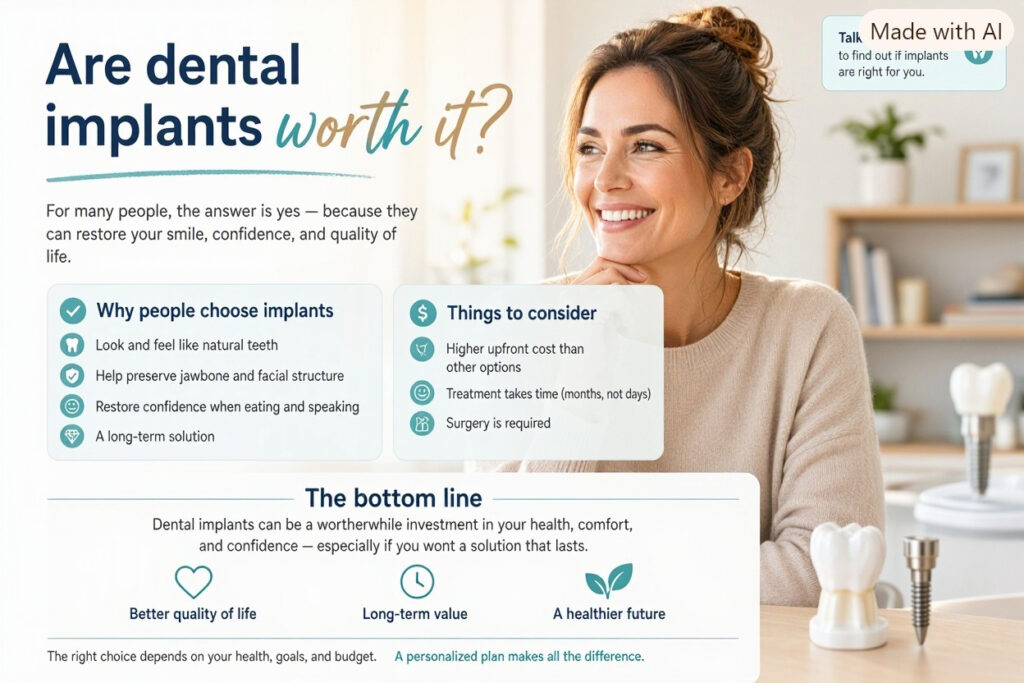
Dental implants are an investment in your health, comfort, and confidence. For most patients with missing teeth, they’re absolutely worth it. The long-term value exceeds the initial cost, and the quality of life improvements are immeasurable.
However, implants aren’t right for everyone. Consider your health, finances, and expectations carefully. Discuss options with your dentist to make an informed decision.
Frequently Asked Questions
Are dental implants really worth the cost?
For most patients, yes. Implants last decades, preserve jawbone, and eliminate denture hassles. The long-term value typically exceeds upfront costs when compared to bridges and dentures over time.
How much do dental implants cost without insurance?
Expect $3,000-$6,000 per implant including the crown. Complex cases requiring bone grafts or sinus lifts cost more. Financing options make implants accessible for many patients.
Can I get implants cheaper?
Implant costs vary. Dental schools offer lower prices with supervised student treatment. Some dentists offer promotional pricing or payment plans. Beware of extremely cheap implants—quality and experience matter.
Do implants have a warranty?
Many dentists offer warranties on their implant work, typically 1-5 years. Premium implant brands often have lifetime warranties on the implant fixture itself (not the crown or surgical work).
Are implants worth it for older adults?
Absolutely. A 70-year-old can expect 20+ years of use from an implant. Dental health matters at every age. Implants improve quality of life regardless of age.
What’s the cheapest tooth replacement option?
Dentures are typically cheapest upfront. However, implants often prove most economical long-term when replacement costs are factored in. Consider cost per year of service, not just initial price.
Can implants fail and waste my money?
Implants fail in 1-5% of cases. Even if failure occurs, replacement is usually possible. The risk of waste is low compared to the high success rate.
Are implants worth it for a single missing tooth?
Yes. A single implant is the most conservative option, preserving adjacent teeth and preventing bone loss. Bridges for single teeth require damaging healthy neighbors.
How do I finance dental implants?
Options include in-house payment plans, third-party healthcare lenders, HSA/FSA funds, and dental insurance. Ask your dentist’s office for financing details.
What if I can’t afford implants?
Discuss alternatives with your dentist. Bridges and dentures are viable options. Some dental schools offer reduced-cost implants. Don’t sacrifice your oral health—explore all options.
Conclusion
Dental implants represent a significant investment, but one that pays dividends in health, comfort, and confidence for decades. When you factor in longevity, bone preservation, and quality of life, the value becomes clear.
In summary: Dental implants are worth it for most patients due to their decades-long lifespan, jawbone preservation, and natural feel, with long-term costs often lower than repeated bridge or denture replacements. While the upfront investment is substantial, financing options and insurance help make implants accessible, and the health and confidence benefits far outweigh the expense. Consider your individual health, finances, and priorities—then discuss with your dentist whether implants align with your goals.
Additional Resource
For cost and financing information, visit the American Dental Association’s consumer resources at www.mouthhealthy.org.