The Real Story Behind RealFit 3D Dentures Cost: A 2026
Choosing a tooth replacement solution is a deeply personal journey. It is rarely just about money. It is about confidence, the joy of eating your favorite foods, and the comfort of smiling without hesitation. If you have been researching modern dentures, you have likely encountered the term “RealFit 3D.” The precision and promise of this technology often lead to one immediate question: What is the real cost of RealFit 3D dentures?
This is not a question with a simple, one-number answer. The price reflects a revolution in dental manufacturing. It encompasses digital precision, high-grade materials, and a custom experience that traditional dentures rarely match. Understanding the cost requires a deep dive into what the technology is, how it differs from the past, and what factors drive the final fee.
This guide provides a transparent, realistic, and comprehensive breakdown. We will explore pricing ranges, compare RealFit 3D to alternatives, and examine the value that defines this investment. Forget the sales pitches. Let’s look at the honest numbers and the genuine value they represent.
Understanding the Technology: What Makes a Denture “RealFit 3D”?
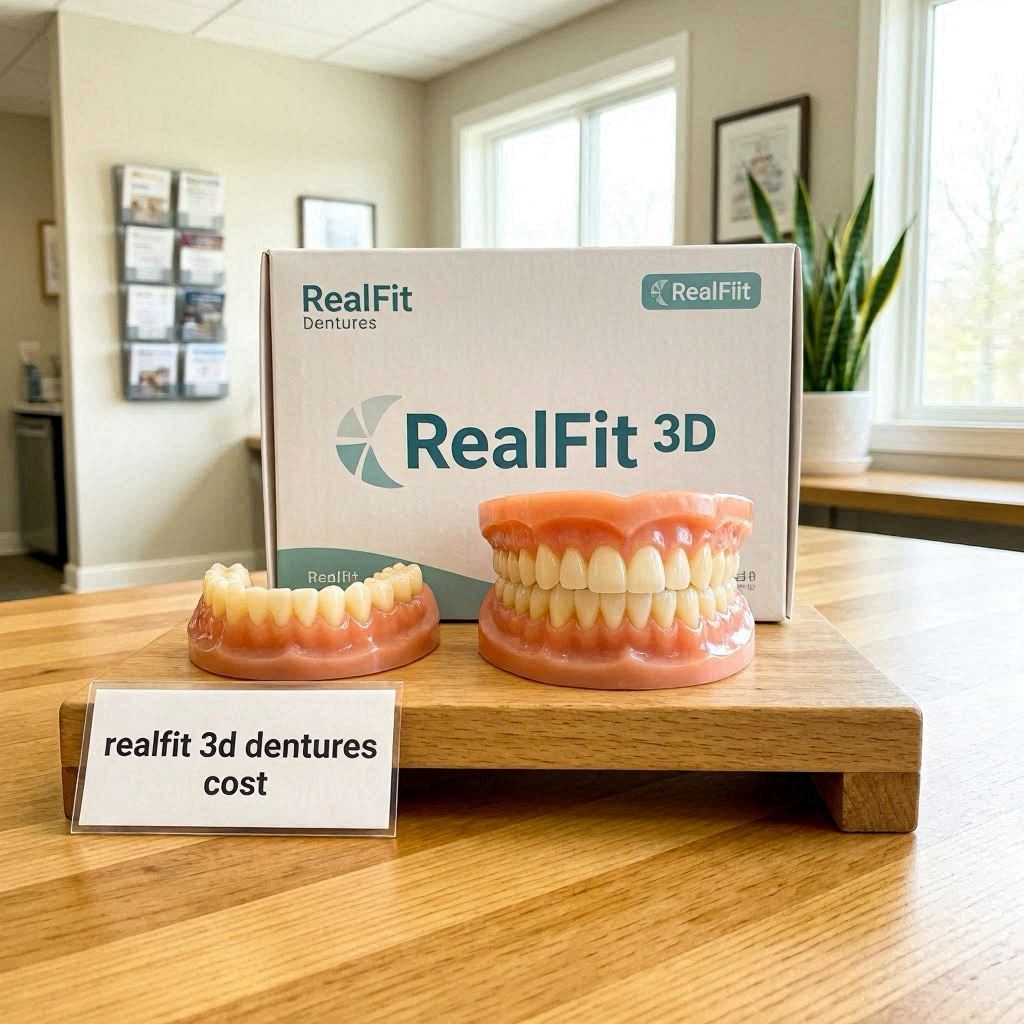
Before we can discuss price, we must define the product. The term “RealFit 3D” refers to a specific category of digitally crafted removable dentures. It is not a single brand in every case, but a manufacturing protocol. AvaDent Digital Dentures are a leading example of this technology, and many dental labs use similar advanced systems. The process entirely eliminates the guesswork of traditional, hand-made dentures.
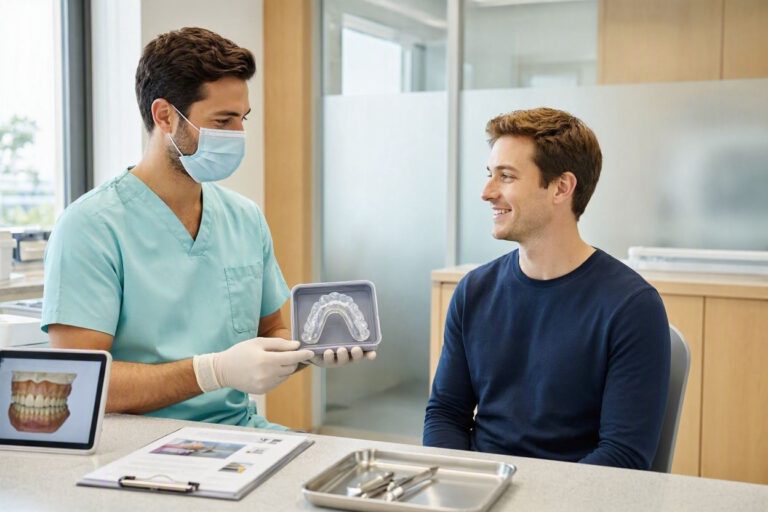
The journey starts with a digital impression. Your dentist may use an intraoral scanner—a wand that captures thousands of images per second—to create a precise 3D model of your mouth. Gone are the trays filled with gooey, gag-inducing alginate. This digital file serves as the foundation.
The denture itself is then milled from a solid puck of pre-cured, high-density acrylic resin. This material is fundamentally different. Traditional denture bases are made by pouring a liquid acrylic and powder mixture into a mold and curing it. This process can cause microscopic shrinkage and porosity, leading to a less accurate fit over time.
A RealFit 3D denture is carved out. The puck is already fully cured under industrial pressure and heat, resulting in a denser, stronger, and bacteria-resistant base. The teeth are typically premium, multi-layered composite or porcelain teeth that are chemically bonded to the milled base. The entire design is finalized on a computer screen, ensuring symmetry, optimal tooth position, and a flawless bite. The result is a denture that is lighter, stronger, and fits with a precision that feels almost like a natural part of your body.
The Ultimate Question: What Is the Average Cost of RealFit 3D Dentures?
You need a number, and we will provide a realistic range. However, please remember that a national average hides the nuances of your specific case. In 2026, the average cost for a complete upper or lower arch of RealFit 3D dentures typically falls between $2,500 and $5,500 per arch.
This price range places RealFit 3D dentures in the premium category of removable prosthetics. A standard, non-digital complete denture might cost between $800 and $1,800 per arch. So, why is there such a significant difference? You are paying for a digitized, streamlined, and hyper-accurate manufacturing process. You are also investing in superior materials. The cost is not an arbitrary markup. It is the direct result of advanced equipment, specialized dental lab technicians, and a product that offers a dramatically better experience.
For a full-mouth restoration involving both upper and lower arches, you should anticipate a total investment of roughly $4,000 to $10,000. Again, this is a baseline. A complex case requiring multiple extractions, bone grafting, or the placement of locator implants for overdentures will push the total treatment cost much higher.
A Detailed Price Breakdown: Where Your Investment Goes
To truly understand the cost of RealFit 3D dentures, you must dissect the total fee. It is not a single product on a shelf. It is a comprehensive service package. Your dentist’s bill includes several distinct, billable components. Here is where every dollar goes.
The Digital Denture Workflow and Lab Fees
The most significant portion—often 40% to 50% of the final cost—is the laboratory bill. This fee is paid by the dentist to the lab, and then incorporated into your total. The lab fee covers the dental laboratory technician’s time and expertise, the use of premium milling machines, and the material puck itself.
A digital denture lab fee is substantially higher than that of a traditional denture. The digital process is front-loaded with design work. A certified dental technician (CDT) must virtually articulate your jaw movements, select the correct molds, and digitally design every contour of the base and teeth. This intellectual and technical labor is expensive. The cost of the solid, milled puck of high-impact acrylic is also higher than liquid monomer and polymer.
The Diagnostic Phase and Treatment Planning
This phase is critical and often billed as a separate code. The diagnostic phase may include a comprehensive exam, a panoramic X-ray or cone-beam computed tomography (CBCT) scan, and digital photographs. The cost here can range from $200 to $600.
The digital impression itself carries a cost, not for materials, but for the technology and time to capture a perfect scan. The diagnostic wax-up or digital mockup allows you to preview your new smile before the denture is even made. You approve the tooth shape, size, and position on a screen. This virtual try-in adds precision and a layer of customization that avoids costly remakes later. This step is a vital part of the value.
Professional Fees and Adjustments
The dentist’s professional fees cover their time, diagnosis, treatment planning, delivery, and all follow-up adjustments. This accounts for a large percentage of your investment. Delivering a digitally milled denture is not as simple as placing it in your mouth and sending you home. The dentist must meticulously analyze the fit, check the seal against your palate, and refine the bite—or occlusion. Minor adjustments are almost always needed.
The fee you pay includes multiple post-insertion visits. A pressure point can develop hours or days later. Your dentist will use a pressure-indicating paste to locate the exact spot and relieve it with a precise bur. This chairside time, skill, and the ongoing care you receive are what you are truly paying for. The cost covers the guarantee of a comfortable fit.
Comparing RealFit 3D to Alternative Tooth Replacement Options
Understanding cost means evaluating alternatives. The true value of a RealFit 3D denture emerges when you place it directly alongside competing treatment options. The table below provides a realistic cost comparison for different solutions, reflecting complete, out-of-pocket fees without insurance.
Cost Comparison Table: RealFit 3D vs. Traditional Dentures vs. Implants
| Treatment Option | Average Cost per Arch (or Unit) | Material & Manufacturing | Key Advantages | Primary Drawbacks |
|---|---|---|---|---|
| Traditional Dentures (Economy) | $800 – $1,800 | Heat-cured acrylic, hand-made with alginate impressions. Generic teeth. | Lowest initial cost. | Prone to shrinkage, poor fit, porous material, higher chance of sore spots. |
| Mid-Range Dentures | $1,800 – $3,000 | Higher-quality teeth, custom shade matching, better lab processing. | Improved aesthetics over economy models. | Still uses hand-crafted, analog methods. Fit is technician-dependent. |
| RealFit 3D Digital Dentures | $2,500 – $5,500 | Milled from solid, pre-cured acrylic puck. Premium multi-layered teeth. Digital impressions and design. | Exceptional fit, durability, denser and bacteria-resistant base, lighter weight. Permanent digital backup file. | Higher initial investment than traditional dentures. |
| Implant-Retained Overdenture (Snap-In) | $8,000 – $20,000+ (per arch) | Milled or traditional denture base with locator attachments connecting to 2-4 dental implants. | Dramatically increased retention and stability. Preserves jawbone. | Significant cost increase. Requires surgery. Not a fixed, permanent set of teeth. |
| Full-Arch Fixed Implant Bridge (All-on-4/6) | $20,000 – $35,000+ (per arch) | A fixed hybrid prosthesis milled from zirconia or acrylic-wrapped titanium, secured by 4-6 implants. | Functions like natural teeth. Does not come out. Highest chewing force. Bone preservation. | Highest cost. Extensive surgery and healing time. Requires meticulous hygiene under the bridge. |
This comparison highlights that RealFit 3D dentures occupy a strategic middle ground. They provide a generational leap in quality and comfort over standard dentures without the surgical complexity and high price of full-arch implant bridges. For a removable solution, they represent the pinnacle of the art.
RealFit 3D vs. Traditional Dentures: A Side-by-Side Value Analysis
A direct comparison reveals why the cost difference exists. A traditional denture starts with an alginate impression. This material shrinks the moment it leaves the mouth. The model poured from it is already slightly inaccurate. The wax try-in is then processed by packing acrylic dough into a flask. The process introduces human error and material shrinkage. The resulting denture often requires extensive grinding to fit and sits on the gums with a compromised seal.
A RealFit 3D denture is born from a digital scan that does not shrink. The design is a mathematical certainty. The base is milled from a puck that does not warp. The fit is passive and precise, distributing pressure evenly across your gum ridges. This drastically reduces painful pressure points. The solid acrylic is virtually non-porous, meaning it absorbs almost no water or oral fluids. It resists odor and bacterial colonization, making it a far more hygienic choice. The digital file also means that if your denture is ever lost or broken, a perfect replica can be milled years later without a new impression—a benefit of immense long-term value.
The Hidden Factors That Significantly Impact Your Final Price
The national average range is a compass, not a map. Your unique clinical situation will determine the final price you pay. Several factors can push the cost of your RealFit 3D dentures from the low end to the high end of the spectrum.
The Complexity of Your Oral Health Status
A patient who lost their teeth a decade ago and has worn dentures presents a different case than a patient who needs all teeth extracted today. The most significant cost driver is the preparatory work. If you need multiple extractions, each tooth removal adds a surgical fee. Complicated surgical extractions for broken, decayed, or impacted teeth will increase the cost further.
After extractions, your jawbone begins a lifelong process of resorption—it shrinks. A patient with a thin, narrow, or flat jaw ridge presents a significant prosthetic challenge. The denture requires more design expertise to achieve a stable fit. Often, a soft liner may be recommended temporarily, adding to the initial cost. In severe cases, bone grafting may be necessary to rebuild the ridge before a denture can even be considered stable. Bone grafting can add $500 to $3,000 or more to your total bill.
Advanced Materials, Premium Teeth, and Custom Characterization
Not all milled dentures are equal. The base resin used by the lab can be a standard pink or a premium, multi-layered resin that mimics the natural variation of gum tissue—from the darker pigment around teeth to the vascularized, reddish hue of the palate. This custom characterization is a labor-intensive art, even in a digital workflow, and it commands a premium.
The teeth are another major variable. Premium denture teeth are fabricated in multiple layers of composite or porcelain to mimic the translucency of enamel and the opalescence of natural dentin. They reflect light like real teeth. You can choose from dozens of molds and shades. The most advanced systems allow for individual tooth articulation, setting each tooth to function in harmony with your unique jaw movements. These premium tooth lines can add $300 to $800 per arch compared to standard mold teeth.
Geographic Location and Practice Overhead
Dental fees are heavily influenced by the cost of living and doing business in your area. A high-end prosthodontic practice in a metropolitan area like Manhattan, San Francisco, or Beverly Hills will have significantly higher fees than a rural practice in the Midwest. Urban practices face higher commercial rents, staff salaries, and equipment financing costs. These overhead expenses are reflected in every procedure. You may find a price for a RealFit 3D denture that is 30% to 50% higher simply because of the practice’s zip code.
It is also important to distinguish between a general dentist and a prosthodontist. A prosthodontist is a specialist in tooth replacement and has three years of advanced training after dental school. Their fees are understandably higher, reflecting their expertise in managing complex full-mouth rehabilitation. For a difficult case, a specialist’s fee is an investment in a predictable, comfortable outcome.
The Life-Changing Benefits: Is the Investment Worth It?
We have discussed the cost. Now we must discuss the return on investment. A RealFit 3D denture is not just another healthcare expense. For many, it is a direct investment in quality of life. The value becomes clear when you measure it against the daily struggles of ill-fitting teeth.
Patients often report a dramatic reduction in sore spots. The precision fit means the denture hugs the gums without rocking or rubbing. The need for messy, chemical-laden denture adhesives is frequently eliminated. The denture stays in place through suction and a perfect border seal. Eating becomes a pleasure again. You can bite into an apple or chew a crisp salad with confidence. The teeth are set in a position that supports your lips and cheeks, restoring a youthful facial profile and preventing the sunken-in look associated with tooth loss and bone resorption.
Psychologically, the benefit is profound. The fear of a denture slipping during a conversation vanishes. The knowledge that your smile looks completely natural and your speech is clear rebuilds social confidence. You are paying for a product that feels like a healing device, not a foreign object. This is the core of its value.
“When I received my digitally milled denture, the feeling was entirely different. It didn’t feel like a plastic plate. It was light, smooth, and the suction was so secure I could finally take a sip of water without that subtle, terrifying lift. I forgot I was wearing it, and that moment was worth every penny.” — A common patient narrative.
Navigating Insurance and Financing for Your 3D Dentures
The cost of RealFit 3D dentures can seem daunting, but you rarely have to pay the entire sum upfront without help. Navigating your financial options is a critical step in your treatment journey.
Understanding Your Dental Insurance Policy
Dental insurance typically categorizes dentures as a “major procedure.” Most plans with major coverage will pay a percentage of the cost, often 50%, up to a defined annual maximum. The annual maximum is the limiting factor. For decades, the average annual maximum in the United States has hovered between $1,000 and $2,000. This means your insurance company will not pay more than that amount in a single calendar year, regardless of the total cost.
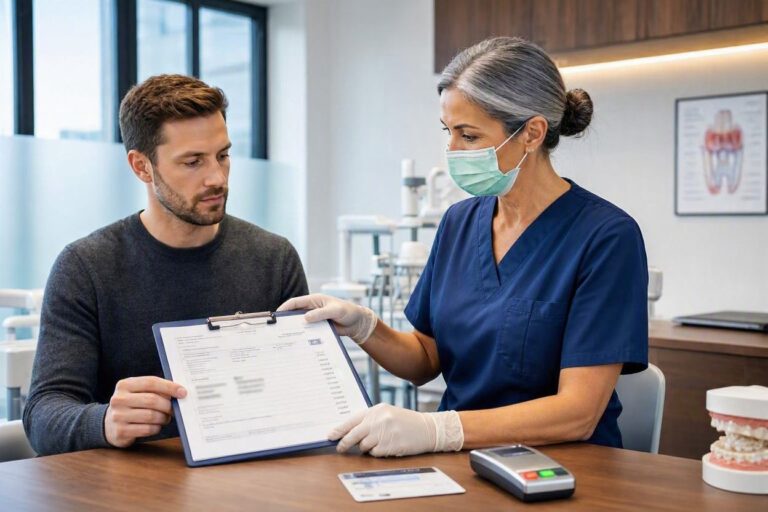
The key is to understand how your policy defines dentures. It may not differentiate between a standard $1,200 denture and a premium $4,500 RealFit 3D denture. It simply sees the procedure code for a complete denture. Therefore, your insurer may pay 50% up to your annual maximum. On a $4,500 denture, the benefit might only be $1,500. You are responsible for the remaining $3,000. Your dentist’s insurance coordinator can file a pre-authorization or pre-treatment estimate. This document provides a non-binding estimate of what your plan will pay, giving you a clear financial picture before you commit.
A common strategy is to use a flexible spending account (FSA) or health savings account (HSA) to pay for the portion not covered by insurance. These accounts allow you to use pre-tax dollars, effectively giving you a 20% to 30% discount on your treatment.
Third-Party Patient Financing Plans
For the substantial out-of-pocket portion, most modern practices partner with healthcare financing companies like CareCredit, LendingClub Patient Solutions, or Alphaeon Credit. These are not traditional credit cards; they are specialized financial instruments for healthcare. They offer promotional financing periods, often from 6 to 24 months, with deferred interest. If you pay the full balance within the promotional period, you pay no interest.
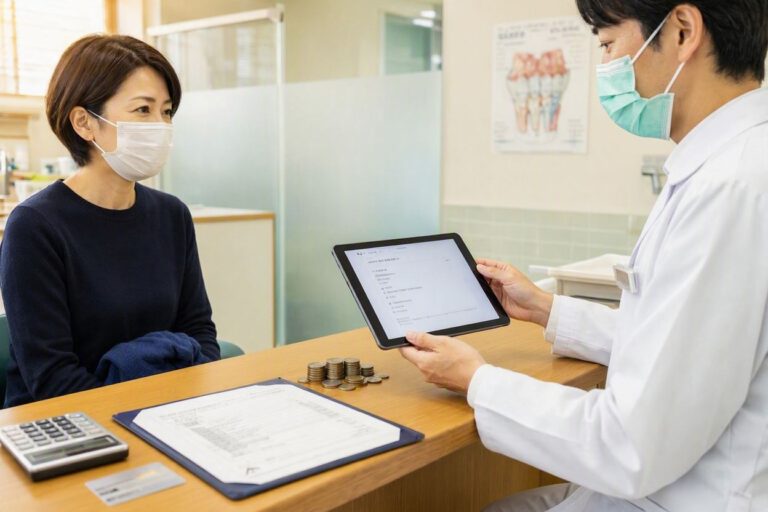
Alternatively, extended payment plans are available, allowing you to spread the cost over 24, 48, or even 60 months with a fixed, often low, interest rate. For example, a $6,000 treatment plan could translate into a manageable monthly payment of around $140 over 48 months. This transforms a large lump sum into a budget-friendly line item. The approval process is usually quick and can be done in the office.
The Digital Denture Process: A Step-by-Step Value Chain
To fully appreciate the cost, walk through the clinical and laboratory journey. Each step adds value and contributes to the final, precise fit.
Step 1: The Digital Consultation and Capture
Your journey begins with a conversation, not a procedure. You discuss your goals, and the dentist performs a comprehensive exam. The foundation of the RealFit 3D process is the digital impression. Your dentist guides a small, pen-shaped camera around your mouth, painting a 3D picture on a screen in real time. This captures the topography of your gums with microscopic accuracy. It is comfortable, fast, and eliminates the anxiety of traditional impressions. The cost here includes the sophisticated intraoral scanner technology and the dentist’s skill in capturing a perfect scan.
Step 2: The Virtual Try-In and Digital Design
The digital files are sent to the lab, where a master ceramist-technician begins the design. Using specialized software, they digitally articulate your jaws on a virtual articulator. They simulate all your jaw movements—chewing, talking, smiling—and design your new smile from a library of thousands of tooth shapes. A critical and valuable step is the virtual try-in. You and your dentist review the proposed smile on a screen. You see the shape, position, and even the character of the teeth before they are made. Adjustments to the midline, the incisal edge position, or the width of the smile are made with a few clicks. This co-diagnosis is priceless and virtually eliminates remakes due to aesthetic misunderstandings.
Step 3: Milling, Finishing, and Clinical Delivery
Once you approve the design, the data is sent to a 5-axis milling unit. A solid, hockey-puck-shaped disc of the chosen resin is loaded, and the machine carves your denture base over several hours. The technician then hand-bonds the premium denture teeth into the milled sockets and meticulously finishes and polishes the base. When the denture arrives at your office, the delivery appointment is a moment of truth. Your dentist seats the denture, performs minor pressure indicator paste adjustments, and verifies the bite. You leave with a restoration and a permanent, archived digital backup file. This file is a form of lifetime insurance against loss or catastrophic breakage.
A Realistic Buyer’s Guide: How to Get an Accurate, Honest Quote
When you visit a dental practice for a consultation, being an informed buyer protects you from sticker shock and hidden fees. Ask for a comprehensive, written treatment plan that itemizes every cost. A transparent practice will have no problem providing this. Here is a checklist of what to ask:
- The Procedure Code: Ask for the specific American Dental Association (ADA) code. A complete digital denture is often coded D6111 (mandibular) or D6110 (maxillary). This code helps you verify insurance coverage.
- Inclusions: Does the quoted fee include the diagnostic scans, the virtual try-in, and all post-insertion adjustments for a defined period (e.g., six months)?
- Exclusions: Are extractions, sedation, or a soft liner a separate, additional cost? Clarify this upfront.
- The Lab Fee Transparency: It is acceptable to ask if the denture is being milled by a certified digital lab and what brand of teeth will be used. This explains a large part of the material cost.
- The Refund/Remake Policy: If, for a clinical reason, the denture cannot fit to your satisfaction, what is the practice’s protocol? A reputable provider stands behind their work.
- Fee Guarantee: Ask how long your quoted fee is valid. Treatment plans are typically honored for 90 days.
A doctor who patiently answers these questions builds trust and proves that the investment is a partnership, not just a transaction.
Long-Term Durability and Maintenance: Protecting Your Investment
A RealFit 3D denture is a durable medical device, but it is not indestructible. The long-term cost of ownership includes professional care. The high-density acrylic is exceptionally resistant to staining and odor, but it requires daily cleaning with a non-abrasive denture brush and a gentle, non-bleach cleanser. Toothpaste is abrasive and will scratch and dull the polished surface.
The most significant long-term risk is not to the denture, but to you. Your jawbone continues to change shape over time. A denture that fit perfectly on day one will eventually lose its intimate fit as your gum ridge resorbs. The denture remains unchanged, but your body does not. This is not a failure of the denture; it is the biological reality of edentulism.
You will need a reline procedure to restore the fit. A reline adds a new layer of acrylic to the tissue-bearing surface of the denture, conforming to your new jaw shape. This procedure is significantly less expensive than replacing the denture. However, a digital denture offers a long-term advantage here as well. Because the digital file is archived, a future reline can be performed with digital precision, or if the tooth position is still ideal but the base is worn, a perfect replica base can be milled from the original file. This is a form of value that traditional dentures simply cannot provide.
Specialized Cases: When the Standard Price Does Not Apply
The standard cost range applies to a straightforward complete denture. Complex clinical scenarios change the equation. For a patient receiving an immediate denture—a prosthesis placed on the day of extractions—the cost structure is different. An immediate digital denture requires advanced pre-surgical planning and a higher level of artistry to digitally sculpt a gum line that will match the post-extraction healing. This service carries a premium because you are paying for the synthesis of surgical and prosthetic skill.
Another specialized case is the digitally milled implant overdenture. This is a RealFit 3D denture that snaps onto two to four dental implants. The laboratory process requires milling housings into the denture to receive locator abutments. The fit must be perfectly passive on the implants to avoid stress and long-term failure. The lab fee for this is considerably higher, and the total fee, including the surgical placement of implants, easily falls into the $10,000 to $25,000 per arch range. Here, the cost is driven by the implant surgery, not just the denture itself.
A Note on the Value of a Digital Backup
In a world of physical objects, a digital file is an intangible asset of immense worth. Standard dentures have a life of loss and breakage. If a dog chews them up or they fall and crack, you must start from scratch. New impressions, new wax try-ins, new everything. The original fit and aesthetic are lost forever.
With a RealFit 3D denture, your exact, approved denture design exists as a secure digital file. The data is stored by the dental lab or practice. In the event of irreparable damage or loss, the file can be called up, a new puck loaded into the mill, and an identical replica fabricated. While you will still pay a lab fee for the new materials and milling time, the clinical time—impressions, design, try-ins—is eliminated. It is a safety net, a form of insurance built into the very process. This peace of mind is a difficult, yet very real, component of the overall value proposition.
A Critical Note on Realism: A digital denture does not fix bone resorption. The technology solves the problems of manufacturing and fit, not biology. A perfectly fitting denture on a severely atrophied ridge is still a denture on a severely atrophied ridge. No denture, no matter how technologically advanced, can stop the progressive loss of jawbone. Only dental implants can do that. Be realistic about what a removable prosthesis can achieve in your specific case. A frank conversation with your dentist about your ridge height and width is mandatory.
Conclusion
The cost of RealFit 3D dentures reflects a revolution in precision, material science, and patient comfort, moving far beyond traditional analog methods. While the investment ranges from $2,500 to $5,500 per arch, the value lies in a durable, bacteria-resistant, and perfectly fitting prosthesis backed by a permanent digital file for future replicas. Ultimately, you are not just buying teeth; you are purchasing a custom-designed medical device aimed at restoring daily confidence, clear speech, and the simple joy of eating without worry.
Frequently Asked Questions
Are RealFit 3D dentures truly more comfortable than traditional dentures?
For the vast majority of patients, yes. The milling process eliminates the shrinkage inherent in traditional acrylic processing, resulting in a passive, intimate fit that dramatically reduces pressure points and the need for adhesives. The dense, solid base also feels lighter and less bulky.
Does dental insurance cover the full cost of a 3D digital denture?
Almost never. Insurance typically covers a set percentage (often 50%) of the denture procedure code, but only up to a low annual maximum, usually between $1,000 and $2,000. You will be responsible for the substantial remaining balance, which can be managed with HSAs, FSAs, or third-party financing.
Can my RealFit 3D denture be repaired or relined like a normal denture?
Yes, it can be repaired and relined by a qualified dental lab. However, a significant advantage is the stored digital file. For major repairs or future needs, an exact replica of your original denture can be milled directly from the original data, saving you the clinical steps of a full remake.
How long does it take to get a RealFit 3D denture?
The clinical time is often shorter than with traditional methods. There are fewer appointments. After the digital impression and final design approval, the lab fabrication time is usually 2-3 weeks. So, the entire process, from initial scan to delivery, can often be completed in 3-4 weeks.
Is the RealFit 3D process available for partial dentures?
Yes, digital workflows are increasingly used for flexible and rigid partial dentures. The process digitally designs the metal or flexible framework and the tooth positions for an optimal fit and aesthetic outcome, though the specific cost structure will differ from a complete denture.
Additional Resource:
For unbiased, science-based information on all tooth replacement options and how to choose a qualified professional, visit the American College of Prosthodontists’ patient education site at www.gotoapro.org.
Disclaimer: The content provided in this article is for informational and educational purposes only and is not a substitute for professional dental advice, diagnosis, or treatment. All cost estimates are general ranges in U.S. dollars for 2026 and will vary significantly based on your unique clinical needs, geographic location, and the treating practitioner’s fees. Always seek the advice of a qualified dental health provider with any questions you may have regarding a dental condition or treatment.