What Is The Current Lifespan Of Dental Implants?
When you invest in dental implants, you are making a significant financial and medical decision. You are not just buying a tooth; you are investing in your quality of life. It is only natural to ask the question: “How long will this last? Will I need to do this again in 10 years?”
Dental implants have earned their reputation as the “gold standard” of tooth replacement for a reason. Unlike bridges or dentures, which have predictable failure rates, a well-placed and well-maintained dental implant can potentially last a lifetime.
However, the answer is not as simple as “forever.” The implant itself is designed to be permanent, but the crown on top of it is subject to the same wear and tear as a natural tooth. This guide will break down the lifespan of each component of an implant, the factors that influence longevity, and the steps you can take to ensure your investment stands the test of time.
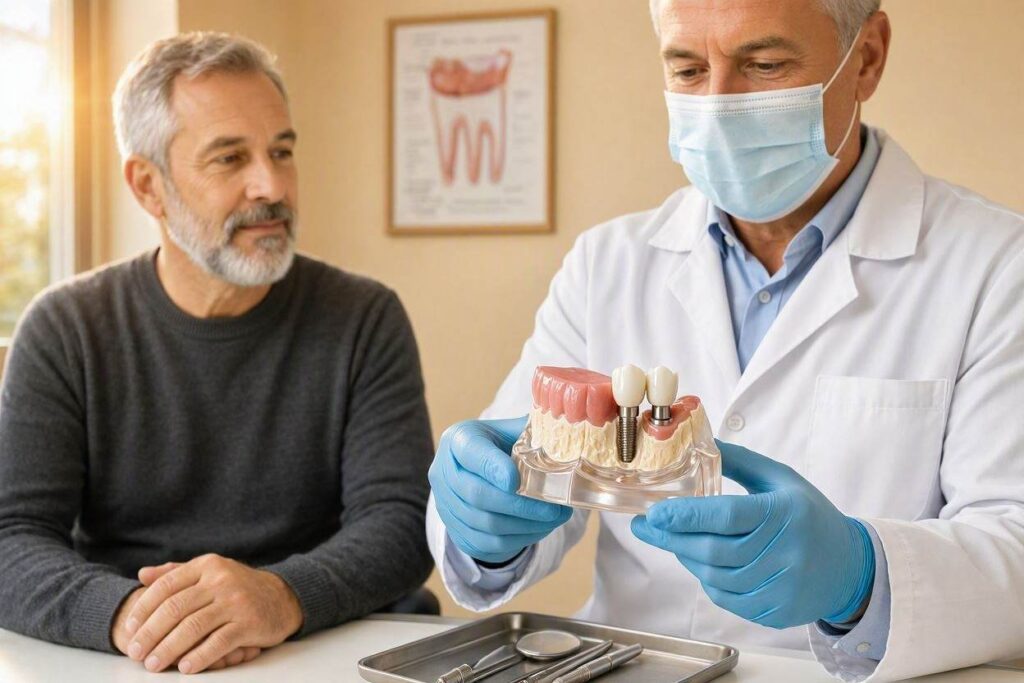
The Implant Fixture: Built to Last a Lifetime
The core of the system is the implant fixture—the titanium or zirconia post that is surgically placed into your jawbone. This piece is specifically designed for permanence.
Why it lasts so long:
The material used (usually medical-grade titanium) is incredibly strong and completely biocompatible. This means your body does not reject it as a foreign object. Instead, the bone cells grow directly onto the surface of the titanium in a process called osseointegration. Once this fusion is complete, the implant essentially becomes part of your skeleton.
Survival Rates:
Studies consistently show that dental implants have a survival rate of 90% to 95% over 10 years, and 80% to 85% over 20 years. These are conservative numbers. Many patients who received implants in the 1980s and 1990s still have them functioning perfectly today.
When an implant does fail, it usually happens early (within the first year) due to a failure of the bone to fuse, or very late, due to infection or trauma. If the implant survives the first year and integrates successfully, the chances of it lasting a lifetime are excellent.
The Crown: The Wear-and-Tear Component
While the implant post is built like a tank, the visible part—the crown—is essentially a high-tech fake tooth. It is made of porcelain, ceramic, or zirconia. This part is not immune to damage.
Just like your natural teeth, the implant crown is subject to:
- Biting Forces: Chewing hard foods, grinding teeth, or clenching can chip or fracture the porcelain.
- Wear: Over decades, the porcelain can wear down.
- Aesthetic Aging: The gum tissue might recede slightly, or the crown might stain, making it look older.
On average, you can expect the crown on an implant to last 10 to 15 years before it might need replacement due to wear, chips, or changes in your bite. However, many patients keep their original crown for 20 years or more with excellent care.
The “Weak Link”: The Abutment Screw
If you have a screw-retained implant, the tiny screw that holds the crown to the abutment (or the abutment to the fixture) is the most common point of mechanical failure.
This screw is designed to be tight, but it can sometimes loosen over time due to micro-movements from chewing. If a screw loosens, the crown will feel wobbly. The good news is that fixing a loose screw is usually a simple, inexpensive procedure. The dentist accesses the screw hole, re-tightens the screw (or replaces it), and you are good to go.
If the screw actually breaks, it can be a complex procedure to remove the broken piece. This is rare, but it happens, usually due to bruxism (teeth grinding).
The Biggest Threat to Longevity: Peri-Implantitis
You might think that the biggest risk to your implant is biting down on something hard. In reality, the biggest threat is a gum disease specific to implants called peri-implantitis.
What is it?
Peri-implantitis is an inflammatory condition that affects the gum and bone surrounding an implant. It is caused by bacteria (plaque and tartar) accumulating around the implant, similar to how gum disease affects natural teeth.
Because an implant does not have the same protective ligament as a natural tooth, bacteria can destroy the bone around the implant much faster. If the bone loss becomes severe, the implant loses its support and becomes loose.
The Silent Killer:
Peri-implantitis is often painless in its early stages. Patients don’t realize they have it until the implant starts to feel loose or the gums start bleeding. Once the bone is lost, it is very difficult to regenerate. This is why maintenance is so critical.
Factors That Determine How Long Your Implant Lasts
Several variables determine whether your implant lasts 10 years or 30+ years. Some are under your control; others are not.
Factors You CAN Control:
- Oral Hygiene: This is the number one factor. You must brush and floss around the implant just like a natural tooth. You should use a water flosser or interdental brushes to clean under the crown.
- Smoking: Smoking restricts blood flow to the gums and bone. Smokers have a significantly higher rate of implant failure and peri-implantitis. Quitting is the best thing you can do for your implant’s lifespan.
- Bite Forces: If you grind your teeth at night (bruxism), you are putting excessive force on the implant, the screw, and the crown. Getting a custom night guard from your dentist protects your investment.
- Routine Maintenance: You must see your dentist or periodontist every 6 months (or as recommended) for a professional cleaning. They have special instruments to clean around implants without scratching the surface.
Factors You CANNOT Control:
- Bone Quality: If you had a lot of bone loss before getting the implant and required a bone graft, the long-term stability might be slightly lower than someone with dense bone.
- Medical Conditions: Uncontrolled diabetes or autoimmune diseases can affect healing and bone maintenance.
- Implant Position: If the implant was placed at a poor angle by an inexperienced surgeon, the forces on it might be unfavorable, leading to long-term bone loss or screw loosening.
Longevity Comparison: Implants vs. Other Options
To appreciate the value of an implant, it helps to compare its lifespan to the alternatives.
| Treatment Option | Average Lifespan | Pros | Cons |
|---|---|---|---|
| Dental Implant (Post) | 25+ years (often lifetime) | Permanent. Prevents bone loss. Feels like a natural tooth. | Higher upfront cost. Requires surgery. |
| Dental Implant (Crown) | 10 – 15 years (sometimes 20+) | Replaceable without removing the post. | Subject to wear and tear. |
| Dental Bridge | 7 – 15 years | Cheaper upfront. No surgery. | Requires grinding down healthy adjacent teeth. The teeth under the bridge can decay. |
| Partial Denture | 5 – 10 years | Cheapest option. Non-invasive. | Removable. Can be uncomfortable. Causes bone loss. Needs adjustments. |
As you can see, while the crown may need replacement eventually, the implant post is the only solution that addresses the root of the problem (the missing tooth root) and can last a lifetime. A bridge might fail after 10 years due to decay on the supporting teeth, requiring an entirely new restoration.
The Cost-Per-Year Analysis
While the initial cost of an implant ($3,000 to $6,000) seems high, the long-term value is undeniable.
- Implant: $4,000 cost / 25 years = **$160 per year.**
- Bridge: $3,000 cost / 10 years = **$300 per year.**
When you factor in the likelihood of needing to replace the bridge (and the potential for damage to the supporting teeth), the implant is often the more economical choice over a lifetime.
How to Maximize the Lifespan of Your Investment
If you want your implant to last forever, treat it like a luxury item that requires maintenance.
- Invest in a Water Flosser: This is the single best tool for cleaning around implants. The pulsating water reaches areas that string floss cannot, flushing out bacteria from the gum pocket around the implant.
- Use a Non-Abrasive Toothpaste: Avoid harsh whitening toothpastes, as they can scratch the glaze on the porcelain crown, making it more prone to staining.
- Get a Night Guard: If you wake up with sore jaws or headaches, you are likely grinding. A night guard absorbs the shock and protects both the crown and the screw.
- Don’t Use Your Teeth as Tools: Opening bottles, tearing packages, or chewing on ice can fracture the porcelain crown. Just because it’s an implant doesn’t mean it’s indestructible.
Conclusion
The current lifespan of a dental implant is excellent. The titanium post itself has the potential to last a lifetime with proper integration and care. However, the crown on top has an average lifespan of 10 to 15 years before it might need to be replaced due to wear. The biggest risk to your implant isn’t breakage; it is the silent bone loss caused by peri-implantitis, which you can prevent with diligent oral hygiene and regular professional cleanings.
Frequently Asked Questions (FAQ)
1. Is it true that implants can fail after 10 years?
Yes, but “failure” usually refers to the loss of supporting bone (peri-implantitis) or mechanical failure (like a broken screw), not the implant rusting or wearing out. If you maintain your cleanings and manage your bite forces, the risk of late failure is low.
2. Can I get an MRI if I have a dental implant?
Yes. Dental implants are made of titanium, which is non-ferromagnetic. It will not be pulled out by the MRI magnet. It might cause some distortion on the image if the MRI is of your head or neck, but it is completely safe.
3. Does the warranty cover the cost of replacing a broken crown?
Some high-end dental offices offer a warranty on their implant crowns (e.g., 5-10 years). This warranty usually covers defects in the materials or workmanship. However, it might not cover damage caused by trauma, teeth grinding, or lack of maintenance. Read the fine print.
4. Will my dental insurance cover the replacement of the crown?
If the crown needs replacement due to age or wear, your insurance will likely treat it as a “major service” and pay 50% (subject to your annual maximum). However, if it is broken due to an accident, they might process it under the same category. Check your policy.
5. How do I know if my implant is failing?
The warning signs are:
- Bleeding or pus around the implant when you brush.
- Swelling or redness of the gums.
- The implant feels loose or wobbly.
- Pain when biting down.
- A bad taste in your mouth.
If you experience any of these, see your dentist immediately. Early intervention is critical.